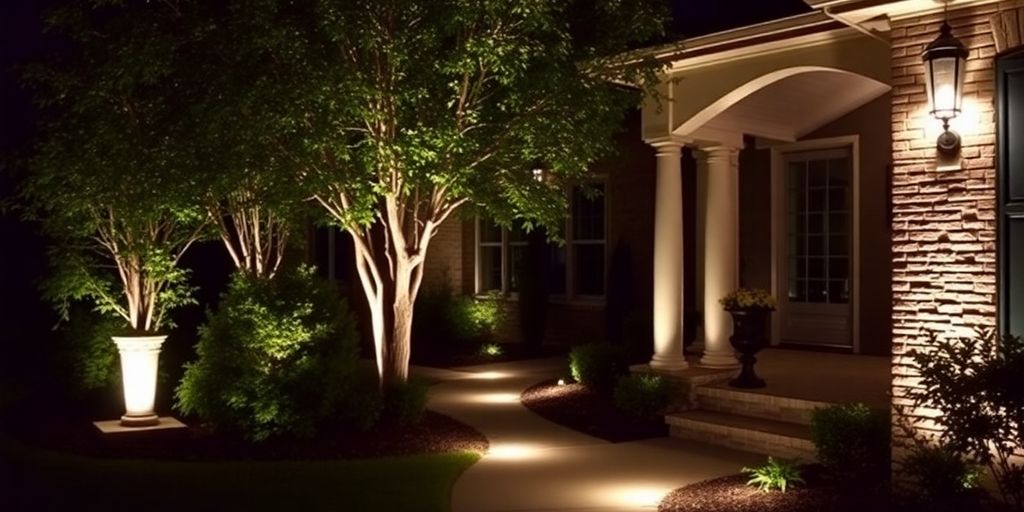
Making your home look great after dark is totally achievable with the right landscape lighting. It’s not just about sticking a few lights in the ground; it’s about using different types of fixtures to highlight your yard’s best features, keep things safe, and make your outdoor spaces usable long after the sun goes down. We’ll break down the best landscape lighting options to help you figure out what works for your place.
Key Takeaways
- Landscape lighting adds beauty and safety to your home’s exterior.
- Different types of lights serve different purposes, from highlighting features to lighting pathways.
- Consider your specific needs, like highlighting trees or improving walkway visibility, when choosing lights.
- Low-voltage and LED options are often more energy-efficient and cost-effective.
- Proper planning and fixture placement are important for a good lighting design.
Pathway Lights
Pathway lights are your go-to for safely guiding folks around your yard after dark. Think of them as little beacons for your walkways, garden paths, or even around your patio. They’re usually low to the ground, so they don’t blast light everywhere, just enough to see where you’re stepping. They’re super important for preventing stumbles and making your outdoor spaces feel more welcoming.
What They Do
These lights are all about visibility. They create a clear path, whether you’re walking from your driveway to your front door or strolling through your garden. They can also add a nice touch of ambiance, especially when you use a few together. Some are designed to be tucked into the ground, so they’re not in the way at all.
Types and Features to Consider
- Brightness: Some pathway lights are pretty dim, just enough for a subtle glow. Others are a bit brighter. If you need more light, you might pair them with a spotlight.
- Power Source: You’ll find solar-powered ones, which are easy to install anywhere the sun hits. There are also wired options if you prefer a consistent light source.
- Style: They come in all sorts of looks, from modern and sleek to more traditional designs. Some even let you change the color of the light, which can be fun for different occasions.
- Adjustability: Some lights can be extended taller, letting you customize their height and how far the light reaches.
Placement Tips
- Line your walkways with them, spacing them about six to eight feet apart. This gives a nice, even illumination.
- Use them to highlight garden beds or the edges of your patio.
- Consider placing them near steps or changes in elevation for extra safety.
When picking out pathway lights, think about how much light you actually need. Sometimes, a softer glow is all you need to see the path, and it looks nicer too. Too much bright light can actually ruin the mood you’re trying to create.
Spotlights
What are Spotlights?
Spotlights are like the focused beams of a theater stage, but for your yard. They’re designed to highlight specific features, like a beautiful tree, a garden statue, or even an architectural detail on your house. Unlike floodlights that cast a wide net of light, spotlights concentrate their beam, making whatever they point at really stand out. They’re great for adding drama and drawing attention to the best parts of your landscape.
Types of Spotlights
Spotlights come in a few flavors, mostly differing in how they’re powered and how they’re installed:
- Solar-Powered Spotlights: These are super popular because they’re easy to install – no wiring needed! You just stake them into the ground. They soak up sun during the day and turn on automatically at night. Some even have motion sensors for added security.
- Wired Spotlights: These usually offer more consistent brightness and don’t depend on the sun. They require a bit more effort to install since you’ll need to run low-voltage wiring, but they can be a more reliable option if you don’t get a lot of direct sunlight.
- In-Ground Spotlights: These are designed to be partially buried in the ground, often with just the light head visible. They give a really clean, subtle look and are perfect for highlighting plants or ground-level features.
Key Features to Consider
When you’re picking out spotlights, keep these things in mind:
- Brightness (Lumens): Spotlights typically range from 120 to 300 lumens, but some can go higher. More lumens mean a brighter, more focused beam. For really dramatic highlighting, look for ones on the higher end.
- Adjustability: Can you tilt and swivel the light head? This is important for aiming the beam exactly where you want it. Look for lights that offer a good range of motion, like 180 degrees horizontally and 90 degrees vertically.
- Durability: Since these lights are outside, they need to be tough. Check for weather-resistant materials and a good IP rating (which tells you how well it’s protected against dust and water).
- Power Source: As mentioned, solar is easy, but wired might be better for consistent power. Think about your yard’s sun exposure and your comfort level with electrical work.
- Color Options: Some spotlights offer different color temperatures or even full RGB color, which can be fun for holidays or creating a specific mood.
Installation Tips
Most spotlights are pretty straightforward to set up. For solar ones, it’s usually as simple as:
- Charge Them Up: Give solar lights a good 1-2 days of direct sunlight before you install them to get the best performance.
- Stake Them In: Push the stake firmly into the ground where you want the light. If the ground is hard, you might need to moisten it or use a rubber mallet.
- Aim and Adjust: Position the light head and the solar panel (if it’s separate) to point where you need them. Make sure the solar panel gets plenty of sun.
For wired spotlights, you’ll want to plan your wire runs carefully and possibly consult an electrician if you’re not comfortable with low-voltage wiring.
Spotlights are fantastic for creating focal points in your garden. They can make a single plant or a piece of garden art really pop, adding depth and interest to your outdoor space, especially after dark. Just make sure you aim them well so they don’t create glare or light up areas you don’t want lit.
Floodlights
Floodlights are your go-to for really lighting up larger areas of your yard. Think of them as the workhorses of landscape lighting. They cast a pretty wide beam, usually 40 degrees or more, and they’re generally brighter than other types of lights. This makes them super useful for highlighting tall trees, illuminating a wide house facade, or just generally lighting up a big section of your property.
Uses for Floodlights
- Security: Their brightness and wide coverage make them excellent for deterring unwanted visitors and lighting up dark corners around your home.
- Highlighting Large Features: Want to show off that big oak tree or the architectural details of your home’s front? Floodlights can do that.
- Area Illumination: Need to light up a patio, a driveway, or a large lawn area for evening use? Floodlights are perfect for this.
Choosing the Right Floodlight
When you’re picking out floodlights, consider a few things:
- Beam Angle: A wider angle (like 40 degrees or more) covers more area, while a narrower beam is more focused.
- Brightness (Lumens): More lumens mean a brighter light. For security, you might want higher lumens, while for ambiance, you might go a bit lower.
- Color Temperature: Similar to other lights, a warmer color (around 2700K) is often more inviting, while cooler temperatures can feel more modern or stark.
- Durability: Look for lights made with weather-resistant materials, especially if they’ll be exposed to the elements.
Floodlights are powerful, so use them strategically. Too many or too bright floodlights can actually create light pollution and be a bit jarring. It’s often best to use them where you really need the illumination, like for security or to highlight a specific large feature.
LED vs. Halogen Floodlights
Like most outdoor lighting these days, floodlights come in LED and halogen options. LEDs are usually the better choice for a few reasons:
- Energy Efficiency: LEDs use way less electricity, which means lower bills.
- Longevity: They last much, much longer than halogen bulbs, so you won’t be replacing them as often.
- Durability: LEDs are generally tougher and less prone to breaking.
- Less Heat: They produce less heat, which is safer for nearby plants and people.
While LEDs might cost a bit more upfront, the savings on energy and replacements over time usually make them the smarter pick.
Strip Lights
What are Strip Lights?
Strip lights are a bit different from other landscape lighting options. Instead of focusing on a single spot or a pathway, these lights are designed to cover a larger area. Think of them like a continuous line of light. They often attach right to your roofline or along the side of your house, giving your home a really modern and consistent glow. They don’t pinpoint specific features like spotlights do, but rather illuminate your whole yard or a large section of your house. They’re great for creating a dramatic effect or just adding a nice, ambient light to your property.
Installation and Power
Now, strip lights do take a bit more effort to put up compared to, say, just sticking a solar light in the ground. You’ll usually be screwing in brackets and then sticking the light strip to those. It’s not super complicated, but it can take a couple of hours, especially if you’re doing a long stretch. Most of the ones you’ll find are plug-in, meaning they need to be connected to an outdoor outlet. This is good because you don’t have to worry about them running out of battery, but it does mean you need to plan your outlet locations. Some smart options even let you control them through an app, which is pretty neat for setting schedules or changing colors.
Pros and Cons
- Pros:
- Can cover large areas for a big visual impact.
- Offer a modern, continuous look.
- Many come with smart features like app control and color changes.
- They blend in well when not in use.
- Cons:
- Installation can be more time-consuming.
- Typically require a power outlet.
- Can be more expensive, especially for longer runs.
While strip lights are fantastic for creating a cohesive look, especially along rooflines, they aren’t the best choice if you’re trying to highlight a specific garden statue or a unique architectural detail. For those kinds of tasks, you’d be better off with spotlights.
If you’re looking for durable and user-friendly outdoor LED strip lights, you might want to check out some of the top choices available. These can really make a difference in how your home looks at night.
Mounted Lights
Mounted lights are a fantastic choice when you want your lighting fixtures to be a bit more permanent and less obtrusive on your lawn. These are typically attached to walls, eaves, or posts, offering a clean look and often a more focused beam. They don’t take up any ground space, which is a big plus if you have a smaller yard or want to keep your garden beds clear. Plus, they can often shine farther than lights that sit on the ground.
Wall-Mounted Lights
These are probably the most common type of mounted light. You’ll see them near doorways, on garage exteriors, or along the sides of your house. They’re great for security, providing illumination where you need it most, and also for welcoming guests. Many can be adjusted to point in different directions, giving you control over where the light falls.
Eave-Mounted Lights
Mounted under the eaves of your roof, these lights offer a more subtle approach. They can cast light downwards onto pathways or garden areas without being too obvious. Because they’re higher up, they can cover a wider area and are less likely to be accidentally bumped.
Post-Mounted Lights
While some post lights are designed to be staked into the ground, others are meant to be securely mounted onto existing posts, like those on a deck or fence. This offers a sturdy and often more decorative way to add light to specific areas. They can really define the edges of your property or highlight specific features.
Considerations for Mounted Lights
When choosing mounted lights, think about:
- Power Source: Most are hardwired or plug into an outdoor outlet. Make sure you have access to power where you want to install them.
- Adjustability: Can you angle the light where you need it? This is key for directing light effectively.
- Durability: Look for fixtures made from weather-resistant materials that can stand up to the elements.
- Beam Angle: Do you need a wide flood of light or a narrow spotlight? This will affect how many fixtures you need and where you place them.
Mounted lights are a solid option for adding both security and ambiance to your home’s exterior. They offer a clean look and can be quite effective for targeted illumination. For some great ideas on how to use them, check out this guide to landscape lighting options landscape lighting options.
Garden Lights
Garden lights are a really nice way to add a bit of charm and definition to your outdoor spaces, especially around flower beds or along walkways. They usually sit on a short post, maybe 18 to 24 inches tall, and are meant to softly light up planting areas. What’s cool about them is that they often have a decorative element, so they actually add to your garden’s look even when they’re off. They’re perfect for creating that cozy, inviting feel as you walk through your yard at night.
Types of Garden Lights
- Wash Lights: These give off a gentle, spread-out light that’s great for lighting up flat surfaces like garden walls or fences. They make areas feel a bit bigger and more welcoming.
- Bullet Lights: These are smaller lights with a focused beam. They’re good for highlighting specific things, like a unique plant or a garden sculpture, creating a bit of drama.
- Well Lights: You install these right into the ground, and they light things up from below. They’re awesome for making plants look interesting or highlighting the base of a wall.
- Downlights: Think of these like moonlight. They’re usually placed up high, like in a tree, and cast light downwards onto paths or lawns.
When you’re placing garden lights, try not to put them too close together. You want little pools of light that guide your eye from one feature to the next, rather than one big, continuous bright area. It makes the garden feel more natural and interesting.
Step Lights
Safety First: Illuminating Your Steps
When it comes to outdoor safety and aesthetics, don’t forget about your steps! Step lights are specifically designed to illuminate stairways, preventing trips and falls, especially after dark. They’re usually smaller and more discreet than other landscape lights, often mounted directly onto the riser of each step or along the side of the stair stringer. This placement ensures that the light points downwards, creating a clear visual path.
Choosing the right step lights can make a big difference in how safe and inviting your home looks. You’ll find them in various styles, from modern, minimalist designs to more traditional ones that can blend in with your home’s architecture. Many are low-voltage, making them energy-efficient and safe to install, though solar-powered options are also available. When selecting, consider the brightness level – you want enough light to see clearly, but not so much that it’s glaring or disruptive.
Here are a few things to think about when picking out step lights:
- Brightness: Look for lights that provide adequate illumination without being overpowering. Warm white is often preferred for a cozy feel.
- Durability: Since they’re exposed to the elements and foot traffic, choose lights made from sturdy materials like aluminum or stainless steel.
- Power Source: Decide between low-voltage wired systems, solar power, or even battery-operated options, depending on your installation ease and energy goals.
- Style: Match the lights to your home’s exterior and overall landscape design.
Installing step lights is a fantastic way to add both safety and a touch of elegance to your home’s exterior. They guide visitors safely and add a polished look to your entryway. You can find a great selection of these and other outdoor lighting solutions at places like Volt Lighting.
Post Lights
Post lights are a classic choice for lining driveways and pathways. They’re essentially short, sturdy poles topped with a light fixture, designed to provide consistent illumination along a route. Think of them as friendly guides, making sure you and your guests can find your way safely after dark. They’re usually connected by a low-voltage wire, so even if one bulb goes out, the others keep shining.
When picking out post lights, consider the style of your home and landscape. You’ll find everything from traditional lantern styles to more modern, minimalist designs. It’s a good idea to match the finish of the post lights to other outdoor hardware, like your house numbers or door handles, for a cohesive look.
Placement Tips
- Spacing: For pathways, aim for a spacing of about six to eight feet apart. This creates a nice, even flow of light without being too bright.
- Height: Most post lights are around 18 to 24 inches tall, which is perfect for illuminating planting beds or marking the edge of a path.
- Purpose: Decide if you need them just for safety, or if you want them to add a decorative touch too. Some post lights have a more decorative flair, almost like mini garden lights, while others are purely functional.
It’s important to think about the overall effect you want. Do you want a soft glow that gently guides the way, or something a bit brighter for better visibility? The right post lights can really make a difference in how your home feels at night.
Bullet Lights
Bullet lights are pretty neat for when you want to really draw attention to something specific in your yard. Think of them as tiny spotlights, but usually with a more focused beam. They’re great for hitting up architectural details on your house, like the corners or a cool window frame, or even a specific tree trunk you really like. Because they have that narrow beam, they create a really dramatic effect, making that one feature pop against the rest of your yard.
They’re perfect for creating contrast and adding a bit of drama to your landscape.
Here’s a quick rundown on how you might use them:
- Highlighting Architectural Features: Aim them at the corners of your house or specific details like columns or dormers. Using a tight beam (like 12 degrees) really makes these elements stand out.
- Accentuating Trees: You can use them to light up a tree trunk, making the whole tree a focal point.
- Garden Structures: Got a cool trellis or a small statue? Bullet lights can make them shine.
When you’re thinking about placement, especially for your house’s facade, try placing them about a foot away from the foundation. This helps them cast light upwards onto those architectural bits without being too obvious themselves. It’s a good idea to mix them with softer lights, like wash lights, to fill in the gaps and create a more layered look. This way, you get those sharp highlights from the bullet lights and a gentler glow everywhere else.
Remember, the goal with bullet lights is precision. You’re not trying to light up a whole area, but rather to pick out specific elements and make them special. It’s all about creating those little moments of interest in your yard after dark.
Well Lights
Well lights are a really neat way to add lighting to your yard without seeing the fixture itself. They get installed right into the ground, usually in a waterproof casing, so all you see is the light. This makes them perfect for situations where you want to highlight something without the fixture getting in the way. Think about uplighting the underside of some lush plant foliage or grazing the base of a textured wall. They’re great for creating a bit of drama and really showing off the textures in your landscape. You can even use them around the edge of a patio to define the space without making it too bright. They’re a subtle but effective way to add a professional touch to your outdoor lighting setup. For a wide selection of lighting solutions, check out Volt Lighting kits.
How to Use Well Lights
- Uplighting Plants: Place well lights at the base of trees or shrubs and aim them upwards to illuminate the foliage from below. This creates a beautiful, natural-looking effect, especially with plants that have interesting leaf textures.
- Wall Grazing: Install well lights near the base of walls, whether it’s your house’s facade or a garden wall. Angle them to wash the light up the surface, highlighting the material and texture.
- Pathways and Patios: Use well lights along pathways or the edges of patios and decks to subtly define the space. They provide a soft glow that guides the way without being obtrusive.
- Architectural Accents: Position well lights to highlight specific architectural features of your home, like columns or unique stonework, drawing attention to them after dark.
Placement Tips
When you’re thinking about where to put your well lights, remember that spacing is key. You don’t want them too close together, or you’ll end up with a solid line of light. Instead, aim for pools of light that guide the eye. A good rule of thumb is to place them about six to eight feet apart for pathways, but this can vary depending on the fixture’s beam spread and the effect you’re going for. It’s also a good idea to consider the drainage around where you’re installing them to make sure water doesn’t pool around the fixture. You might want to consult a professional if you’re unsure about the best placement for your specific yard. For more outdoor-lighting design ideas, you can look into The Landscape Lighting Book.
Wrapping It Up
So, there you have it! Landscape lighting is pretty cool, right? It’s not just about making your yard look nice at night, though it definitely does that. It’s also about making things safer, like those pathways and steps, and letting you enjoy your outdoor space for longer. Whether you’re aiming for a cozy vibe on the patio or want to show off that favorite tree, there’s a light for that. Picking the right kind and placing them smart makes all the difference. Now go on and make your yard shine!
Frequently Asked Questions
What exactly is landscape lighting?
Landscape lighting is all about making your yard look great and be safe after dark. It uses special lights to shine on your plants, paths, and house. Think of it as painting your yard with light to make it look pretty and help you see where you’re going.
What are the different types of landscape lights?
There are many kinds! Pathway lights are for walkways, spotlights zoom in on cool things like statues, floodlights cover big areas, and strip lights can go along rooflines. You can also get lights for steps, gardens, posts, and even lights that shoot beams up walls (bullet lights) or are hidden in the ground (well lights). Each type does something a little different.
Is landscape lighting good for safety and security?
Yes, safety is a big reason! Lights on paths and steps help you avoid tripping. Lights near your house can also scare away people who might want to break in, making your home more secure.
How can I use landscape lighting to make my yard look better?
You can use spotlights to make a special tree or a cool garden feature stand out. Or, you could use lights along your walkway to guide people to your front door. Even putting lights on your house can make it look more stylish at night.
Are landscape lights energy-efficient?
Many new systems use low-voltage power, which is safer and uses less energy than old systems. LED lights are also super energy-efficient and last a really long time. Some lights even work with apps on your phone, so you can control them easily!
What are some tips for installing landscape lights?
It’s a good idea to plan where your lights will go before you start. Think about what you want to highlight and how bright you want it. Also, make sure to use lights made for outside and bury wires safely. If you’re not sure, it’s always best to ask someone who knows a lot about it.