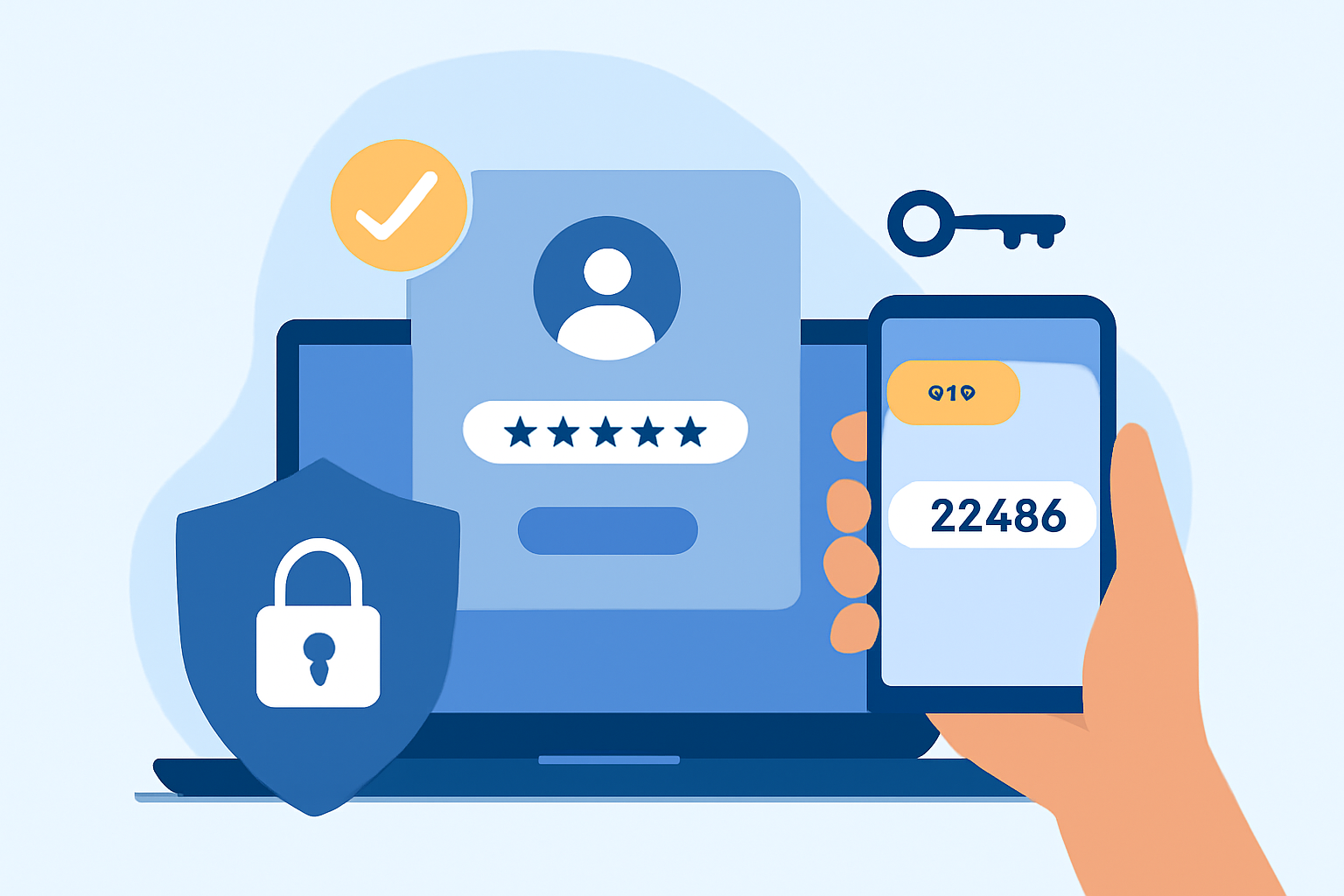
A digital lock surrounded by glowing circuit patterns, a smartphone displaying authentication codes, and a fingerprint scanner, all set against a futuristic backdrop of data streams and security icons, highlighting the concept of multi-factor authentication and enhanced security.
Digital security is now a top concern for both businesses and individuals. Multi-Factor Authentication (MFA) is a key strategy to keep sensitive info safe. It helps organizations protect against data breaches by using strong cybersecurity.
Old ways of protecting passwords are not enough today. MFA adds an extra layer of security by asking for more than one way to prove who you are. This makes it harder for hackers to get in, even if they guess one password.
Cybersecurity experts say MFA is a must-have to fight off digital threats. It’s not just about passwords anymore. It includes things like biometric scans, security tokens, and codes that change every time you log in.
Companies in all kinds of industries are starting to use MFA to keep their digital stuff safe. Banks and tech firms are leading the way. They know that using more than one way to log in is a smart move against cyber attacks.
Based on Managed IT Services Raleigh NC, it can significantly enhance a company’s security by implementing Multi-Factor Authentication (MFA). By utilizing advanced methods to verify logins, businesses can protect their critical data without creating barriers for users, ensuring both security and ease of access.
Understanding Multi-Factor Authentication Basics
Digital security has changed a lot in recent years. Multi-factor authentication (MFA) is now key to fighting cyber threats. It adds layers of protection to digital accounts and sensitive info.
A digital lock surrounded by various multi-factor authentication methods, such as a smartphone displaying a verification code, a fingerprint scanner, and a security token, all set against a futuristic cyber-themed background with glowing circuits and data streams.
Today, we need strong protection strategies. MFA is a smart way to check who you are by using different methods.
Types of Authentication Factors
There are three main types of authentication factors:
- Knowledge factors: Something you know (passwords, security questions)
- Possession factors: Something you have (mobile devices, security tokens)
- Inherence factors: Something you are (biometric authentication)
Benefits of MFA Implementation
Two-factor authentication brings big security wins for both companies and people:
- It cuts down on unauthorized access risks
- It keeps passwords safe from hackers
- It makes accounts more secure
- It helps track who’s accessing what
Common MFA Methods Used Today
Today’s MFA uses many ways to verify you, like SMS codes and apps. It also uses advanced biometrics like fingerprints and facial scans. These steps make it hard for hackers to get in.
Security Risks Addressed by MFA Solutions
Digital security is always changing. Cybercriminals keep finding new ways to use weak passwords. Multi-Factor Authentication (MFA) is a key defense against these threats.
Phishing attacks are a big danger to online security. Hackers use fake emails or websites to get login details. MFA adds a layer of security by asking for more than just a password.
- Prevents unauthorized account takeover attempts
- Reduces risk of data breaches
- Blocks automated password guessing attempts
- Validates user identity through multiple authentication channels
Weak passwords are a big problem for companies. Many people use the same password everywhere. This makes it easy for hackers to get in. MFA helps by adding extra steps to verify who you are.
Studies show MFA works well. Companies that use MFA see fewer cyber attacks and less unauthorized access.
- Authenticator apps provide dynamic verification codes
- Biometric scans offer unique personal identification
- Hardware tokens generate time-sensitive access credentials
Using MFA makes businesses much safer. It helps protect important digital information from hackers.
Setting Up Multi-Factor Authentication for Your Organization
Setting up multi-factor authentication (MFA) is key to making your organization’s security stronger. It needs careful planning and a solid plan to make sure everyone uses it well. This ensures strong security for all.
Choosing the Right MFA Provider
Choosing the right MFA provider is important. Look at these factors:
- Does it work with your current IT setup?
- Can it grow with your company?
- Is it affordable?
- Is it easy for users to use?
- Does it offer top-notch security?
Implementation Steps and Best Practices
To set up MFA right, follow these steps:
- Do a full security check first.
- Make clear rules for logging in.
- Pick the best ways to verify users.
- Set up MFA on your system.
- Make sure it works well by testing it.
Employee Training Requirements
Good training is key for users to get on board with MFA. Create a training that shows why MFA is important. It should also show how easy it is to use and answer any worries users might have.
Interactive sessions and clear guides can help employees get it. This way, your organization can have strong MFA that keeps data safe and is easy for users.
Common Challenges and Troubleshooting MFA
Multi-factor authentication (MFA) can be tricky for organizations to set up. Knowing the common problems helps make security better for everyone. It also makes technical support more effective.
Companies often face big challenges with MFA. They need smart solutions for these issues:
- Device compatibility limitations
- User adoption resistance
- Technical configuration complexities
- Performance interruptions
To make MFA work well, organizations need to plan ahead. Technical support teams should talk clearly and make authentication easy. This way, users face less trouble.
Here are some ways to tackle MFA problems:
- Comprehensive user training programs
- Simplified authentication workflows
- Robust backup authentication methods
- Regular security protocol reviews
Managing MFA well means always watching and changing as needed. It’s important to make authentication easy for users while keeping security tight. Using flexible MFA solutions helps meet both needs.
Technical support teams are key in fixing MFA issues fast. They should have clear steps and help users well. This ensures a smooth MFA experience for everyone, no matter the technology.
Best Practices for MFA Maintenance and Updates
Keeping a strong Multi-Factor Authentication (MFA) system up to date is key. Companies need a solid plan to keep their MFA safe from new threats.
Good MFA care includes several important steps. These steps help keep your system secure and working well.
Regular Security Audits
Security checks are vital to find weak spots in your system. Companies should do thorough reviews to:
- Check current authentication methods
- Spot any security holes
- Test the MFA setup
- Make sure users have the right access
Updating Authentication Protocols
Keeping up with new cyber threats means updating your security often. Important steps include:
- Watching for new security standards
- Using the latest encryption
- Keeping MFA software current
- Looking at how users log in
Emergency Access Procedures
Having good plans for emergencies helps keep your business running. Companies should have clear steps for:
- Quickly fixing authentication issues
- Having backup ways to access
- Handling security incidents
- Managing temporary access
Acting early on MFA care helps protect your digital world. It keeps your security strong in today’s complex tech world.
Conclusion
According to Managed IT Services Raleigh NC Using multi-factor authentication (MFA) is key to better digital security. Companies in the U.S. are quickly seeing how MFA helps keep data safe and stops unauthorized access.
MFA does more than just protect passwords. It adds extra layers of security. This makes it harder for hackers to get in and steal data. It’s vital for all businesses, big or small, to use strong authentication to protect their digital stuff.
Nowadays, MFA is a must-have for keeping your digital world safe. It’s not just about security; it’s about keeping your business running smoothly. It helps protect your data, your reputation, and the trust of your customers.
As technology gets better, so will ways to log in. It’s important for companies to keep up with the latest security steps. MFA is more than a tool; it’s a key part of a strong security plan.
AltaTech Solutions
Raleigh, NC
+1 919-355-6629