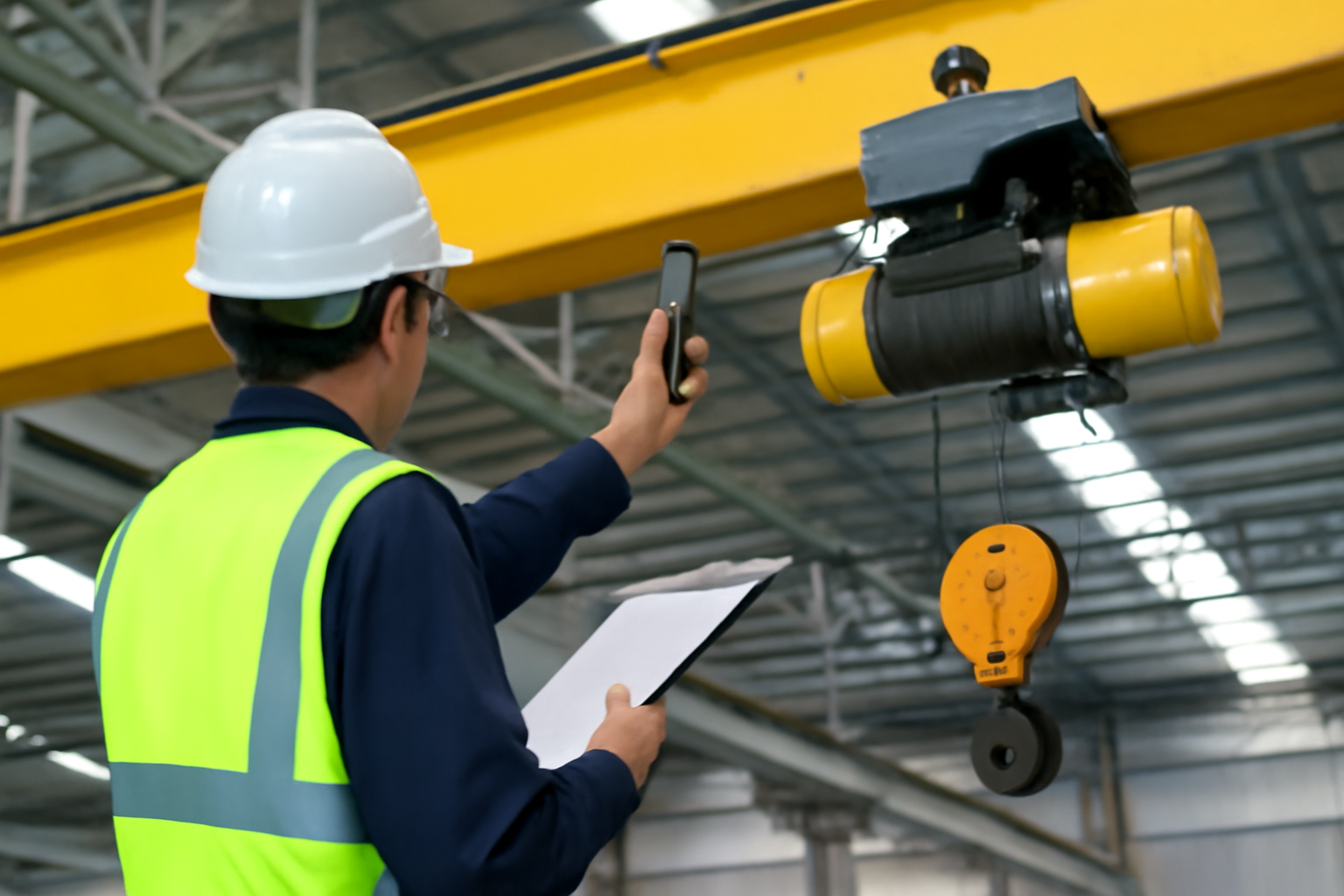
A full crane inspection checks if all parts meet safety standards. This detailed check ensures the crane is safe and follows all rules.
A detailed scene of a crane being inspected, featuring a technician in safety gear examining various parts of the crane, close-up views of gears and cables, tools laid out on the ground, bright safety cones around the work area, and the backdrop of a construction site under a clear blue sky.
OSHA guidelines are the base for these checks. The Crane Inspection & Certification Bureau (CICB) and the American National Standards Institute (ANSI) give more details on how to do these inspections. Knowing what happens in a full crane inspection is key to keeping operations safe and smooth.
Certified Safety Experts offers top Crane Operator Training in North Carolina, providing expert instruction, hands-on experience, and certification to ensure safe, skilled crane operation.
Importance of Regular Crane Inspections
Regular crane inspections are key for keeping your operations safe and efficient. They help follow official standards, reduce risks, and make your equipment last longer. These inspections, done right, can save you money by avoiding unexpected breakdowns and expensive fixes. Let’s look at why regular crane checks are so important.
Ensuring Safety and Compliance
Safety is a top priority in any workplace, and cranes are no different. Following OSHA crane rules through regular checks keeps everyone safe. These inspections spot dangers before they cause accidents, keeping your equipment safe. Staying compliant also helps avoid big fines and keeps your company’s reputation strong.
Minimizing Downtime and Increasing Efficiency
Unexpected downtime can really hurt your business. Regular crane upkeep lets you find and fix small problems early. This stops big failures and makes your operations smoother. With planned inspections, you can manage your workflow better, keeping things running smoothly.
Preventing Costly Repairs
Ignoring crane maintenance can lead to huge repair bills later. Regular checks catch problems before they get worse. This saves money by extending your equipment’s life. By keeping up with inspections, you avoid costly emergency repairs and keep your cranes in great shape for years.
Types of Crane Inspections
Understanding the different types of crane inspections is key to safety. These checks are crucial for both efficiency and safety. Regular inspections help avoid accidents and keep equipment in good shape.
Frequent and Periodic Inspections
ANSI guidelines say frequent checks should happen at the start of each shift. These daily assessments are vital to spot issues early. Periodic checks are more detailed and done monthly or quarterly, based on usage and manufacturer’s advice.
Initial Inspection
The first inspection is done before a crane starts work, or after big changes or repairs. It’s a thorough check to make sure everything meets safety standards. This step sets the stage for future inspections, making them easier to manage.
A detailed and visually appealing crane inspection checklist, featuring an organized layout with sections for safety checks, mechanical assessments, and operational evaluations. Include checkboxes, icons representing different inspection items, and illustrations of essential crane components like hooks, chains, and rigging. The background should suggest a construction site environment, showcasing cranes in action with safety equipment nearby. The overall design should be clean, professional, and easy to understand, emphasizing the importance of thorough inspections.
Functional Load Testing
Functional load testing is a must in the inspection checklist. It checks if the crane can handle its maximum load safely. This is important for new and regular inspections to keep the crane efficient and safe. These tests are part of the annual review to ensure the crane’s performance and safety.
Visual Examination of Crane Components
The visual examination is a key part of crane inspection. It involves a detailed check of crane parts for wear, defects, or oddities. This step is crucial to prevent accidents by spotting structural issues early.
Inspectors look for signs that could harm the crane’s safety and workability. They check several important areas, including:
- Steel Structures: They carefully examine steel parts for corrosion, cracks, and damage.
- Welds: All welds are checked for any cracks or signs of wear.
- Boom Sections: Each boom section is checked for straightness and any damage that could affect stability.
- Bolts and Fasteners: Inspectors make sure all bolts and fasteners are tight and not rusty or stretched.
These checks follow strict rules from OSHA and industry best practices. Regular, thorough inspections help keep cranes in top shape. This protects both the equipment and the people using it.
Inspecting Mechanical Systems
Checking a crane’s mechanical systems is key to smooth operation. It involves looking at moving parts, wire ropes, chains, and hydraulic systems.
Checking Moving Parts
Technicians start by examining moving parts. They make sure everything is well-lubricated to avoid friction. Each part is checked for wear to ensure it’s safe to use.
Examining Wire Ropes and Chains
Wire ropes and chains are checked for corrosion or damage. Finding problems early is important. This helps keep lifting operations safe and efficient.
Monitoring Hydraulic Systems
Hydraulic systems are closely watched for leaks or pressure changes. This is to prevent sudden failures. Keeping these systems reliable is crucial for crane performance.
Electrical System Examination
Checking a crane’s electrical systems is key for safe and efficient use. This check looks at control panels, circuitry, and emergency systems. Each part is crucial for the crane’s safety and meets electrical safety standards.
Inspecting Control Panels
Control panels are vital for a crane’s electrical system. Regular checks ensure they work right and follow safety rules. Inspectors look for wear or damage and check that switches and indicators work.
Testing Circuitry and Connections
Testing the crane’s circuitry is important to avoid electrical failures. It checks wiring, terminals, and connectors for security and damage. This helps find issues that could cause accidents or stop operations.
Evaluating Emergency Systems
Emergency systems, like brakes and shutdowns, need regular checks. They help protect the crane and people in emergencies. Keeping these systems in good shape meets safety standards and improves control panel performance.
Crane Inspection Report
After a detailed crane inspection, it’s key to document the findings. This step is crucial for keeping track of any issues. It helps in maintaining the crane’s health and longevity.
Documenting Findings
When documenting, detailed notes on the crane’s condition are taken. These records are vital for tracking wear and tear. They also guide maintenance efforts to keep the crane running smoothly.
Recommendations for Repairs
Based on the inspection, clear repair recommendations are given. This ensures issues are fixed quickly. It prevents small problems from becoming big ones.
Keeping repair records up to date helps in following safety standards. It makes operations run smoothly and safely.
Compliance Documentation
Compliance documentation shows the crane meets safety and operational standards. It includes detailed records of inspections and maintenance. This ensures the crane follows legal and industry guidelines.
This approach not only keeps things legal but also promotes a safe and reliable crane operation culture.
Conclusion
Thorough crane inspections, following rules, and keeping things running smoothly. By following the best practices for crane use, handlers can lower risks and make equipment last longer. Regular checks also save money and meet legal standards, keeping workers and businesses safe.
www.certifiedsafetyexperts.com/ shows how important both visual and mechanical checks are by carefully looking at parts, moving parts, ropes, chains, and hydraulic systems, problems can be found and fixed fast. It’s also crucial to check electrical systems, like control panels and emergency systems.
Reports and experts agree: regular maintenance is a big plus. These checks help keep cranes working well for a long time. By focusing on detailed and regular inspections, crane operators can keep safety high, cut down on downtime, and boost their work’s efficiency.

