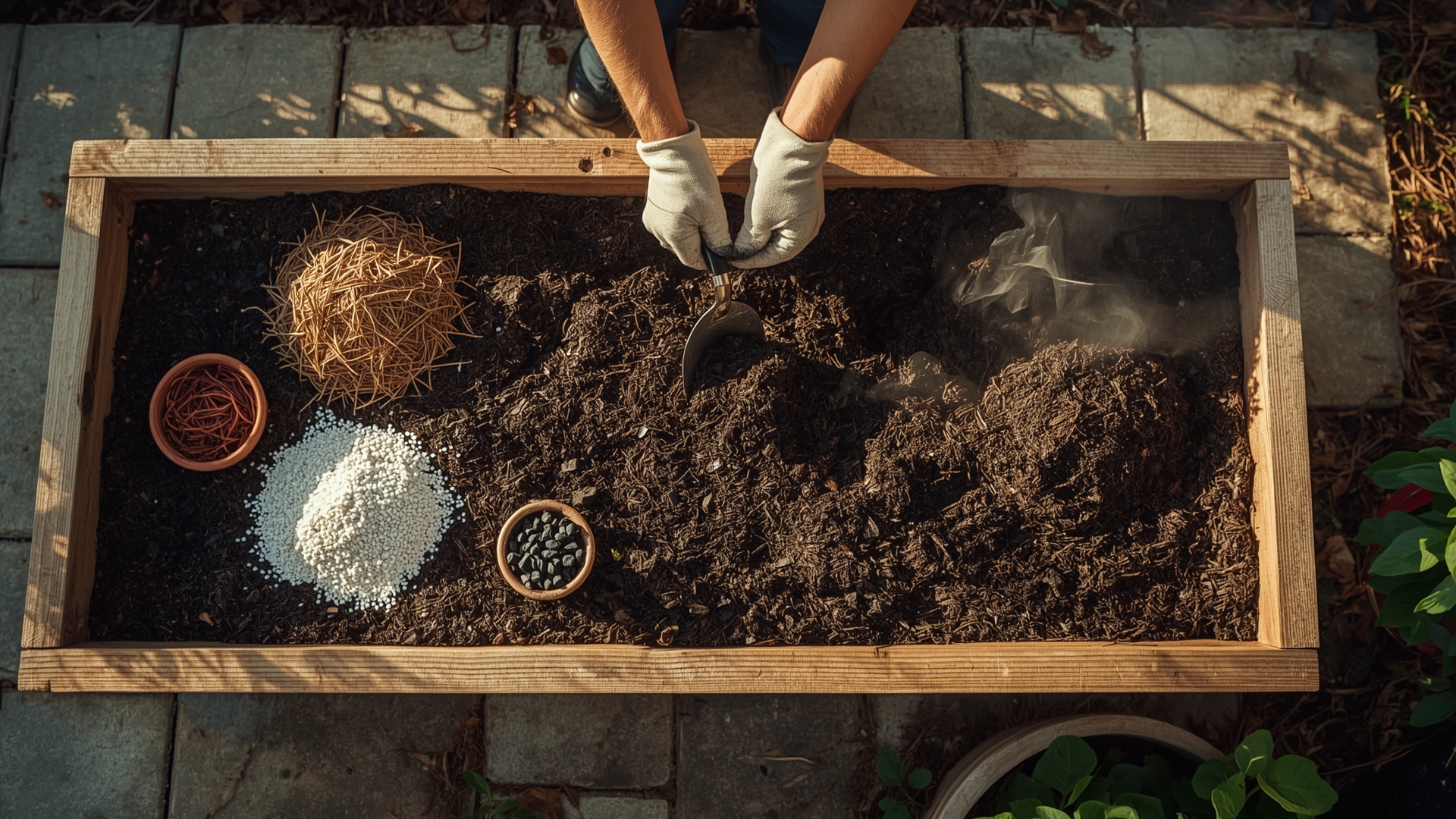
Your raised bed is only as good as the soil inside it. The wrong mix leads to poor drainage, compacted roots, and plants that struggle all season. The right amendments turn even mediocre fill dirt into a productive, living growing medium that feeds your plants from the ground up.
Soil amendments are materials you add to change the physical or biological properties of your soil. Some improve drainage. Some hold moisture. Some feed the microbes that break down nutrients your plants actually use. Most raised beds benefit from a combination of amendments, not just one.
This guide covers the five most effective raised bed amendments — compost, worm castings, perlite, vermiculite, and biochar — with specific application rates, best use cases, and tips for combining them correctly.
Key Takeaways
- Compost is the foundation of every raised bed mix — aim for 30 to 50 percent of total volume.
- Worm castings supercharge biology and deliver slow-release nutrients at just 10 to 20 percent of your mix.
- Perlite improves drainage in dense or clay-heavy mixes — use 10 to 25 percent by volume.
- Vermiculite retains moisture and works best in beds that dry out fast or in sandy base soils.
- Biochar improves long-term soil structure but must be charged (pre-soaked in compost tea or liquid fertilizer) before use.
- Most raised beds need refreshing each season — add 1 to 2 inches of compost on top before replanting.
What Are Soil Amendments and Why Do Raised Beds Need Them?
Quick Answer: Soil amendments are materials mixed into soil to improve its structure, drainage, moisture retention, or nutrient content. Raised beds lose organic matter every season through decomposition, so they need regular amendments to stay productive and support healthy root growth.
Unlike in-ground gardens, raised beds are enclosed growing environments. The soil inside can’t pull minerals or biology from surrounding ground. It depends entirely on what you put in it.
Over one growing season, organic matter breaks down. Beneficial microbes consume it. Plant roots extract nutrients. By the second or third year, a bed that started rich can feel compacted and tired without intervention.
Adding amendments each season rebuilds what’s lost. It keeps the soil loose enough for roots to penetrate, alive enough to cycle nutrients, and structured enough to drain excess water without drying out too fast.
What Happens to Raised Bed Soil Over Time?
Raised bed soil settles and compacts as organic matter breaks down. A bed that was 12 inches deep in spring may measure only 10 inches by fall. That 2-inch drop represents lost organic matter, not just settling.
Soil biology also shifts over time. Without new inputs, beneficial bacteria and fungi populations drop. Nutrient cycling slows. Plants may show deficiencies even when amendments were added in prior years.
This is why annual topdressing with compost and targeted amendments is standard practice, not optional maintenance.
What Is the Best Compost for Raised Bed Gardens?
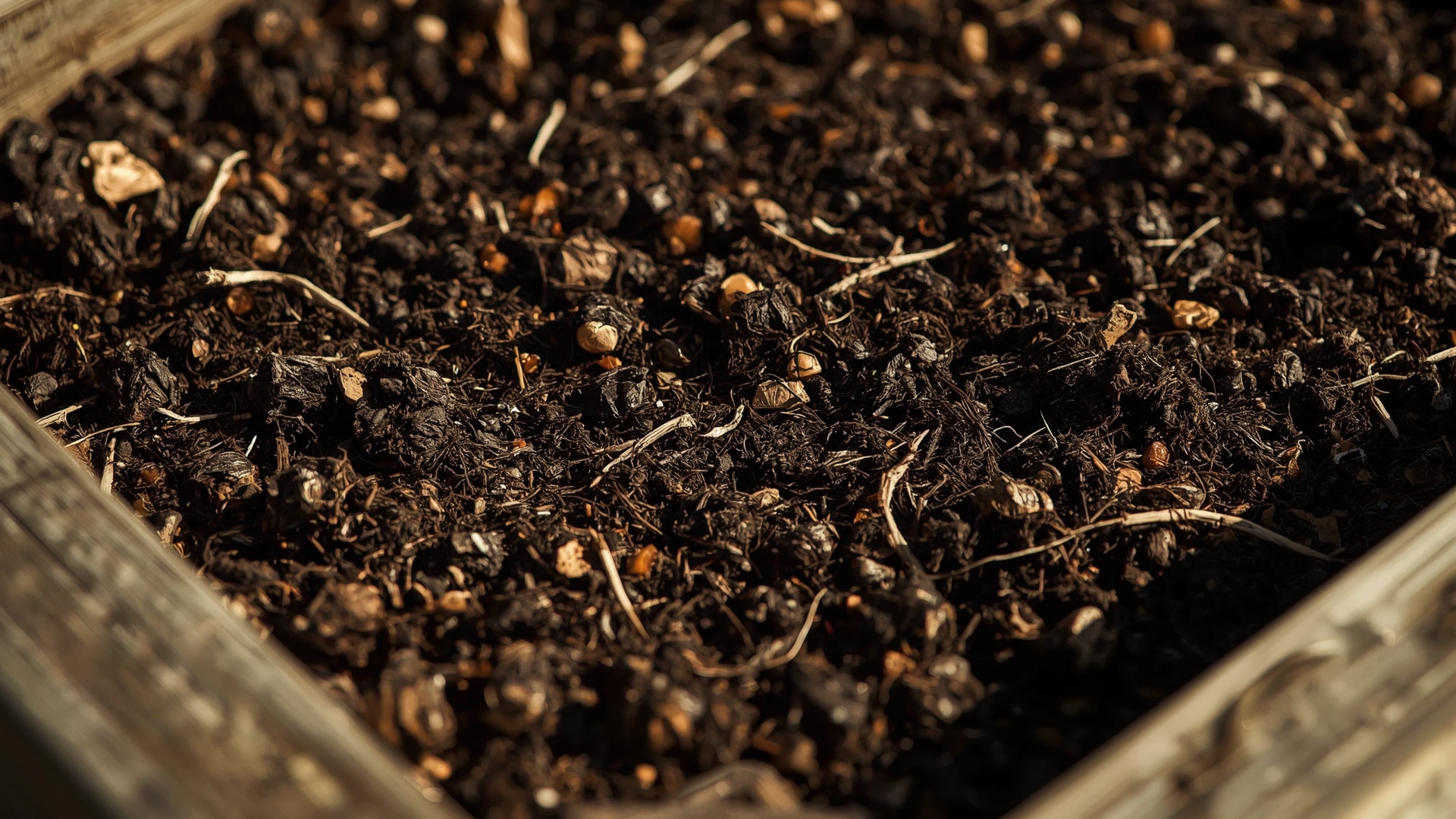
Quick Answer: Aged compost made from mixed materials (food scraps, yard waste, manure) is the best all-around amendment for raised beds. Apply 2 to 4 inches per season. Mushroom compost and aged manure are strong alternatives with specific strengths for different crops.
Types of Compost and Their Use Cases
Not all compost is the same. The source material matters. So does how long it has been composted. Fresh, hot compost can burn plant roots. Aged compost is stable and safe to use directly around seedlings.
| Compost Type | NPK Range | Best For | Application Rate | Notes |
|---|---|---|---|---|
| Aged Yard/Food Compost | 0.5–1.5 / 0.3–0.9 / 0.8–1.5 | General soil building | 2–4 inches per season | Most balanced and widely available |
| Mushroom Compost | 0.7–1.0 / 0.5–0.7 / 1.0–1.5 | Heavy feeders (tomatoes, squash) | 1–2 inches per season | High salt content — limit in drought-prone beds |
| Aged Manure (cow/horse) | 0.6–0.8 / 0.3–0.5 / 0.5–1.0 | Nitrogen-hungry crops | 1–3 inches per season | Must be fully aged — fresh manure burns roots |
| Vermicompost (worm compost) | 1.5–3.0 / 1.0–2.0 / 1.0–2.0 | Transplants, seedlings, all crops | 10–20% of total mix volume | Richest in beneficial microbes and plant-available nutrients |
| Leaf Mold Compost | 0.2–0.5 / 0.1–0.2 / 0.3–0.5 | Moisture retention, soil structure | 2–4 inches per season | Low nutrients — pair with manure or worm castings |
How to Layer Compost in Raised Beds
For new raised beds, mix compost into the full depth of your soil. Aim for 30 to 50 percent compost by volume in the initial fill.
For established beds, topdress rather than dig. Spread 1 to 2 inches of compost on the surface before each planting season. Earthworms and rain pull it down into the root zone naturally.
Avoid working compost deep into established beds during the growing season. Disturbing the soil disrupts root systems and beneficial fungal networks.
How Do Worm Castings Improve Raised Bed Soil?
Quick Answer: Worm castings (vermicompost) are worm digestive output packed with beneficial microbes, plant-available nutrients, and growth-stimulating compounds. Use 10 to 20 percent by volume in your mix. They improve germination rates, root growth, and disease resistance without risk of burning plants.
Worm castings are different from other amendments because they are biologically active. They deliver a living community of bacteria, fungi, and protozoa directly into your soil food web.
The nutrient content is modest but highly available. Unlike synthetic fertilizers, nutrients in worm castings release slowly and in direct response to plant demand. Plants essentially pull what they need as they grow.
When to Use Worm Castings vs. Regular Compost
Use worm castings when you want to boost seedling establishment, recover a struggling bed, or grow crops that are sensitive to nutrient fluctuations — like lettuce, spinach, or herbs.
Regular compost builds overall soil volume and organic matter faster at a lower cost per cubic foot. Worm castings are more expensive, so most growers use them as a targeted addition rather than a full replacement.
A practical approach: use compost as 30 to 40 percent of your base mix, then add 10 to 15 percent worm castings on top of that. The compost feeds the structure, the castings feed the biology.
Worm Casting Application Methods
- Mix into potting soil at 10 to 20 percent by volume for transplant holes.
- Topdress established plants with a half-inch layer around the root zone during the growing season.
- Brew worm casting tea by soaking a cup of castings in a gallon of water for 24 hours. Apply as a soil drench or foliar spray.
- Transplant boost — place a tablespoon of castings directly in the planting hole before inserting a seedling.
What Does Perlite Do for Raised Bed Soil?
Quick Answer: Perlite is a volcanic glass expanded by heat into lightweight white beads. It improves drainage and prevents compaction in raised beds. Use 10 to 25 percent perlite by volume in beds with heavy or clay-based soils. It does not add nutrients but significantly improves root oxygenation.
Think of perlite as tiny sponges full of air pockets. When mixed into soil, those pockets keep water from pooling around roots. Roots need oxygen. Soggy soil drowns them by forcing out air.
Perlite doesn’t break down over time the way organic matter does. One application provides structural benefit for several seasons. It’s also pH neutral, so it won’t shift your soil’s acidity or alkalinity.
Perlite vs. Coarse Sand — Which Is Better for Drainage?
Many growers assume coarse sand does the same job as perlite. It doesn’t. Sand particles pack tightly together over time, which can make drainage worse, not better. This is actually why clay-heavy soils mixed with fine sand can approach concrete-like density.
Perlite stays porous because its irregular shape prevents particles from locking together. It’s lighter, more effective at improving drainage, and easier to work into existing beds without disrupting plant roots.
| Amendment | Primary Function | Water Behavior | Application Rate | Lifespan in Soil | pH Impact |
|---|---|---|---|---|---|
| Perlite | Drainage, aeration | Drains quickly, holds minimal water | 10–25% by volume | Permanent (does not break down) | Neutral (7.0) |
| Vermiculite | Moisture retention, aeration | Holds 3–4x its weight in water | 10–20% by volume | 3–5 years before compressing | Slightly alkaline (7.0–7.5) |
| Coarse Sand | Drainage (limited) | Drains fast, holds nothing | Not recommended in clay soils | Permanent | Neutral (7.0) |
When Should You Use Vermiculite in a Raised Bed?
Quick Answer: Vermiculite is a mineral that expands when heated and holds 3 to 4 times its weight in water. Use it in raised beds with sandy or fast-draining base soils, in hot climates where beds dry out quickly, or in seed-starting mixes where consistent moisture is critical for germination.
Vermiculite is the opposite of perlite in one key way: it holds onto water instead of letting it drain. The tiny accordion-like layers inside each particle trap moisture and release it slowly as the surrounding soil dries out.
This makes vermiculite ideal for beds in hot, dry climates. It can extend the time between waterings, reduce stress on shallow-rooted plants, and improve germination rates in seed-starting areas of a raised bed.
Can You Mix Perlite and Vermiculite Together?
Yes, and many growers do. A common approach is to use both in the same bed at lower percentages to balance drainage and moisture retention simultaneously.
A typical combination: 15 percent perlite plus 10 percent vermiculite in a compost-based mix. The perlite prevents waterlogging. The vermiculite buffers against drying out too fast between waterings.
Avoid going above 20 percent vermiculite in beds with already-heavy or clay-like base soil. Too much moisture retention in a poorly draining bed can lead to root rot.
Vermiculite Application Rates by Use Case
- Sandy or fast-draining beds: 15 to 20 percent by volume
- Seed-starting sections: 25 to 30 percent in the top 2 to 3 inches
- General moisture retention boost: 10 to 15 percent mixed throughout
- Container inserts within raised beds: 20 percent in the container mix
What Is Biochar and Should You Add It to Raised Beds?
Quick Answer: Biochar is charcoal made from organic material burned at high heat with limited oxygen. It improves soil structure, increases water retention, and supports microbial life long-term. Apply at 5 to 10 percent by volume, but always “charge” it first by soaking in compost tea or liquid fertilizer before adding it to a bed.
Biochar has been used in agriculture for centuries. It was first documented in the Amazon basin, where ancient farmers created terra preta (dark earth) by incorporating charcoal into soil. Those soils remain fertile today, thousands of years later.
In modern raised beds, biochar works by providing a highly porous surface that beneficial microbes colonize. Each gram of biochar contains thousands of square meters of internal surface area — a structure that traps nutrients, holds water, and creates habitat for soil biology.
Why You Must Charge Biochar Before Use
Fresh biochar is highly porous and essentially empty. If you add raw biochar to your beds, it will absorb nutrients from the surrounding soil and temporarily starve your plants. This is called a nutrient drawdown period.
Charging solves this problem. To charge biochar, soak it in compost tea, liquid worm castings, or a diluted liquid fertilizer for 24 to 48 hours. This pre-loads the pores with microbes and nutrients so it adds to your soil immediately instead of pulling from it.
Charged biochar can also be mixed into a compost pile and turned for two to four weeks before adding it to your beds. The composting process charges it naturally.
Biochar Application and Expected Outcomes
| Attribute | Value |
|---|---|
| Application rate | 5–10% by volume (approximately 1–2 lbs per cubic foot) |
| Internal surface area | 300–2,000 m² per gram depending on feedstock |
| Moisture retention improvement | 10–15% increase in water-holding capacity at 5% application |
| pH effect | Slightly alkaline — raises pH by 0.3–0.7 units depending on soil type |
| Longevity in soil | 500–1,000+ years (stable carbon) |
| Time to see results | 1–3 growing seasons for full biological benefit |
| Best feedstocks | Hardwood, rice hulls, coconut shell — each produces different porosity |
How Do You Combine Soil Amendments for a Balanced Raised Bed Mix?
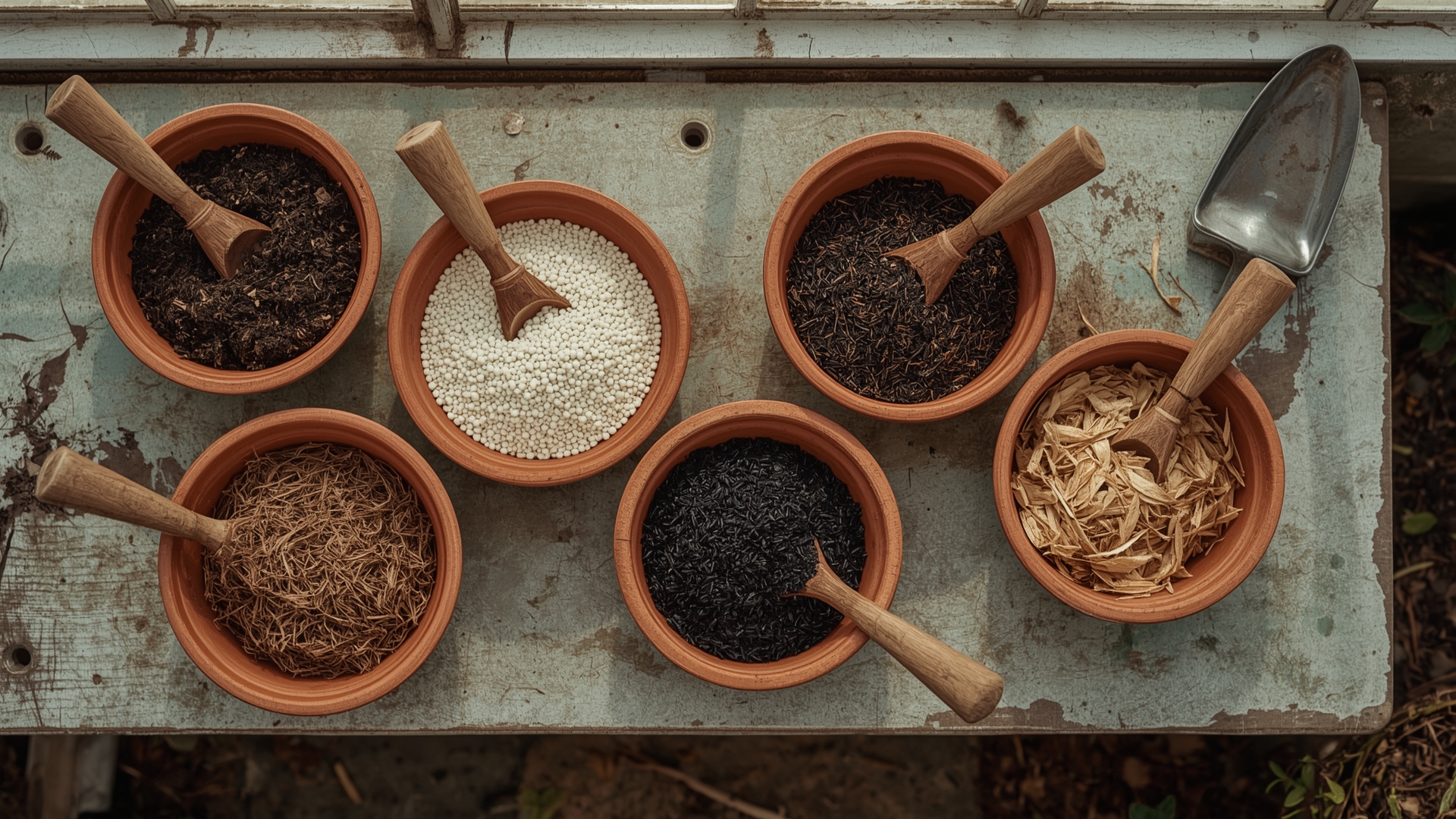
Quick Answer: A balanced raised bed mix typically uses 40 to 50 percent compost, 20 to 30 percent topsoil or base soil, 10 to 20 percent perlite for drainage, 10 percent worm castings for biology, and 5 to 10 percent biochar (charged) for long-term structure. Adjust ratios based on your climate and crops.
No single amendment does everything. The goal is to create a mix where each component fills a specific function — organic matter, drainage, moisture retention, and biology. When all four are covered, your soil becomes a self-sustaining system.
Sample Raised Bed Mix Recipes by Growing Goal
| Growing Goal | Compost | Perlite | Vermiculite | Worm Castings | Biochar | Base Soil |
|---|---|---|---|---|---|---|
| General vegetables | 40% | 15% | 10% | 10% | 5% | 20% |
| Root vegetables (carrots, beets) | 35% | 20% | 5% | 10% | 5% | 25% |
| Herbs and greens | 45% | 10% | 10% | 15% | 0–5% | 20% |
| Hot, dry climate | 40% | 10% | 20% | 10% | 5–10% | 15% |
| Cool, wet climate | 40% | 25% | 5% | 10% | 5% | 15% |
What Order Should You Add Amendments?
Start with your base soil or topsoil in the bed. Add compost next and mix it in thoroughly before adding other amendments. Then add perlite or vermiculite and work those through the mix. Add worm castings last, either mixed in or topdressed.
If you’re adding charged biochar, mix it in before the final worm casting layer. Biochar distributes best when the surrounding soil is already loosened by the other amendments.
How Often Should You Refresh Soil Amendments in Raised Beds?

Quick Answer: Refresh compost and worm castings every season — add 1 to 2 inches of compost each spring before planting. Perlite and biochar don’t need annual reapplication. Check your soil structure each spring. If it compacts easily or drains poorly, that signals a need for amendment renewal.
Organic amendments like compost and worm castings decompose over time. They need to be replaced each season to maintain soil organic matter above the 5 percent threshold that supports healthy microbial populations.
Mineral amendments like perlite don’t break down, but they can shift lower in the bed over time as organic matter decomposes above them. Every two to three years, a light topdress of perlite mixed into the top 4 inches helps restore drainage in the upper root zone.
Signs Your Raised Bed Soil Needs Amending
- Water pools on the surface for more than 30 seconds after watering — drainage amendment needed.
- Soil feels hard or compacted when pressed — add compost and perlite.
- Plants show slow growth despite regular watering — worm castings or compost topdress.
- Beds have dropped more than 2 inches since last season — significant organic matter loss, add compost.
- Yellowing lower leaves on healthy plants — likely nitrogen loss, add worm castings or aged manure compost.
What Soil Amendments Should You Avoid in Raised Beds?
Quick Answer: Avoid fresh (non-aged) manure, fine sand in clay-heavy mixes, peat moss in arid climates due to its slow rehydration, and wood chips deeper than a surface mulch layer. These either harm soil biology, create drainage problems, or tie up nitrogen during decomposition.
Common Amendment Mistakes and Their Effects
| Amendment Error | What Happens | Better Alternative |
|---|---|---|
| Fresh manure added before planting | Ammonia burn, pathogen risk, delayed planting | Aged manure compost (6+ months) |
| Fine sand added to clay soil | Soil density increases, drainage worsens | Perlite or coarse horticultural grit |
| Wood chips mixed into soil | Nitrogen drawdown as chips decompose | Surface mulch only, 2–3 inches deep |
| Uncharged biochar | Temporary nutrient depletion in soil | Charge biochar 24–48 hours before use |
| Too much mushroom compost | Salt buildup, reduced germination rates | Limit to 20% of total mix or less |
Frequently Asked Questions About Raised Bed Soil Amendments
Can I use store-bought potting mix as a raised bed amendment?
Yes, but check the label first. Most bagged potting mixes already contain perlite and peat moss or coir. Use them as a base, then add compost and worm castings on top. Potting mix alone is too light and nutrient-poor for heavy vegetable production over a full season.
Is peat moss a good amendment for raised beds?
Peat moss improves moisture retention and lowers pH, which benefits acid-loving crops like blueberries. However, it is slow to rehydrate once dry and is harvested from non-renewable bog ecosystems. Coconut coir is a more sustainable substitute with similar moisture-holding properties.
How much worm castings do I need for a 4×8 raised bed?
A 4×8 foot bed filled to 12 inches deep has roughly 32 cubic feet of volume. At 10 percent worm castings, you’d need about 3.2 cubic feet or approximately 80 pounds of castings. For a topdress refresh, 0.5 inches across the surface requires about 1.3 cubic feet.
Does biochar work for all vegetable crops?
Biochar benefits most vegetable crops, especially heavy feeders like tomatoes, peppers, and squash. It’s particularly useful in beds that are replanted every season because it improves long-term microbial habitat. Crops sensitive to alkaline conditions — like blueberries or potatoes — may need pH monitoring if you add biochar, since it can raise pH slightly.
Can I make my own compost specifically for raised beds?
Yes. A mix of nitrogen-rich greens (food scraps, fresh grass clippings) and carbon-rich browns (dry leaves, cardboard) in a 1-to-3 ratio produces high-quality compost in 60 to 90 days with regular turning. Age it for at least 30 days after it cools before adding it to your beds. Hot compost that hasn’t fully cured can still burn plant roots.
What is the difference between a soil amendment and a fertilizer?
Amendments change the physical or biological properties of soil — structure, drainage, microbial life. Fertilizers supply specific nutrients (nitrogen, phosphorus, potassium) that plants consume directly. Most organic amendments like compost and worm castings do both, improving soil structure while also releasing nutrients slowly as they break down.