Frost dates are the backbone of every successful vegetable garden. They tell you when your growing season starts, when it ends, and exactly how much time you have in between. Miss your window by a week or two and you risk losing seedlings to a late freeze or watching summer crops die before they produce.
This guide walks you through finding your local frost dates, using them to calculate safe planting windows, and building a complete spring and fall planting schedule — so your garden is always in sync with your climate.
Key Takeaways
- Last spring frost date marks the end of freeze risk — it’s your anchor point for spring planting.
- First fall frost date marks when cold returns — use it to count backward for fall crop timing.
- Frost tolerance varies by crop — some vegetables can handle light frosts; others die at the first touch of cold.
- Frost dates are averages, not guarantees. Always check a 10-day forecast before transplanting outdoors.
- USDA Hardiness Zones and frost dates are different — zones describe winter cold, frost dates describe your active growing window.
- Both spring and fall are full planting seasons with their own timelines and crop lists.
What Are Frost Dates and Why Do They Matter for Vegetable Gardening?
Quick Answer: Frost dates are the average dates when temperatures first drop to 32°F (0°C) in spring and fall. They define your safe planting window and help you time when to start seeds, transplant seedlings, and sow fall crops.
A frost date is a statistical average based on 30 years of weather data collected by the National Oceanic and Atmospheric Administration (NOAA). It’s not a guarantee — it’s a probability.
Most frost date references use a 50% probability threshold. That means there’s a 50% chance frost will occur on or after that date. For tender crops like tomatoes and basil, many gardeners use the 10% threshold — meaning only a 10% chance of frost — to play it safe.
Two frost dates shape your garden calendar:
- Last spring frost date (LFD): The average date of the last freezing temperature in spring. Use this to time when it’s safe to move warm-season crops outdoors.
- First fall frost date (FFD): The average date when freezing temperatures return in autumn. Use this to count backward when scheduling fall plantings.
The window between these two dates is your frost-free growing season. In Minnesota, that window might be 120 days. In Georgia, it can stretch to 250 days or more.
How Do You Find Your Local Frost Dates?
Quick Answer: Use the USDA Plant Hardiness Zone Map, NOAA’s climate data tool, or the Old Farmer’s Almanac frost date calculator. Enter your zip code to get your last spring frost and first fall frost dates for your specific location.
Best Free Tools for Finding Frost Dates
- Old Farmer’s Almanac Frost Date Calculator: Enter your zip code and get both frost dates instantly, with probability ranges.
- NOAA Climate Data Online: Provides raw station data and historical averages. Best for precision.
- The Cooperative Extension Service: Most state universities run extension programs with frost date tables by county. These are often the most locally accurate.
- Seed packets: Many list “days to maturity” and reference “after last frost” or “before first frost” as timing anchors.
Why Zip Code Matters More Than City
Frost dates can vary by several weeks within the same city. A garden in a low-lying valley frosts earlier than one on a hillside. Urban areas run warmer than rural ones due to the heat island effect. Always search by zip code, not city name, for the most accurate data.
What Is the Difference Between Frost Dates and USDA Hardiness Zones?
Quick Answer: USDA Hardiness Zones show how cold winters get on average — they guide perennial plant survival. Frost dates show when freezes start and stop each year — they guide annual vegetable planting timing. These are two different tools for two different purposes.
This is one of the most common points of confusion for new gardeners. You need both, but for different decisions.
Hardiness zones tell you whether a perennial plant can survive your winters. Frost dates tell you when your vegetable growing season begins and ends. A gardener in Zone 7a (Virginia) and one in Zone 7b (North Carolina) both fall in the same zone range but can have meaningfully different frost dates based on elevation and local geography.
How Do You Calculate Planting Dates from Frost Dates?
Quick Answer: Subtract or add the number of weeks specified on your seed packet from your last spring frost or first fall frost date. For example, if tomatoes go out 2 weeks after last frost and your last frost is May 10, transplant on May 24.
The Basic Formula
Most planting guides reference two anchor points:
- Weeks before/after last spring frost (LFD) — for spring crops
- Weeks before first fall frost (FFD) — for fall crops
Example for a gardener with a last spring frost of May 1 and first fall frost of October 15:
| Crop | Timing Reference | Calculation | Target Date |
|---|---|---|---|
| Tomatoes (transplant outdoors) | 2 weeks after LFD | May 1 + 14 days | May 15 |
| Tomatoes (start indoors) | 6-8 weeks before LFD | May 1 minus 7 weeks | March 13 |
| Lettuce (direct sow) | 4-6 weeks before LFD | May 1 minus 5 weeks | March 27 |
| Broccoli (fall transplant) | 6-8 weeks before FFD | Oct 15 minus 7 weeks | August 27 |
| Kale (fall direct sow) | 6-8 weeks before FFD | Oct 15 minus 7 weeks | August 27 |
What “Days to Maturity” Means on a Seed Packet
Days to maturity is the number of days from transplant (or germination for direct-sown crops) until harvest. Use this number to work backward from your first fall frost date to ensure crops finish before cold arrives.
If your first fall frost is October 15 and your beans need 60 days to mature, your last safe direct-sowing date is around August 16. Add a week or two as a buffer for cooler, shorter fall days that slow growth.
Which Vegetables Are Frost-Tolerant and Which Are Frost-Sensitive?
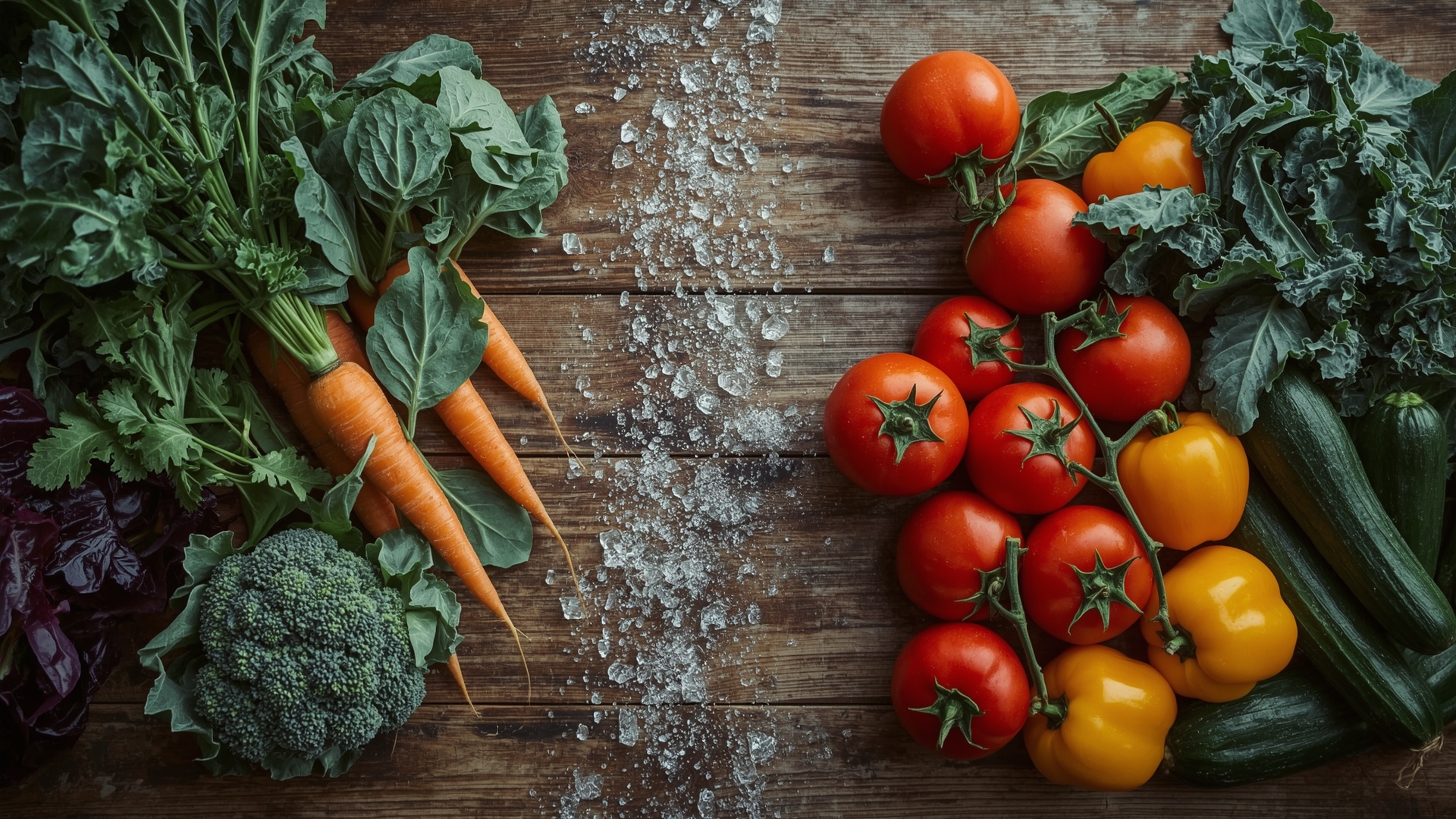
Quick Answer: Cool-season crops like kale, spinach, and carrots tolerate light frosts down to 26°F. Warm-season crops like tomatoes, peppers, and cucumbers are frost-sensitive and die at 32°F. This distinction drives all frost date planting decisions.
Frost Tolerance by Crop — EAV Reference Table
| Vegetable | Season Type | Frost Tolerance | Minimum Soil Temp for Germination | Timing Relative to Last Frost |
|---|---|---|---|---|
| Tomatoes | Warm-season | None — dies at 32°F | 60°F | Transplant 1-2 weeks after LFD |
| Peppers | Warm-season | None — dies at 32°F | 65°F | Transplant 2 weeks after LFD |
| Cucumbers | Warm-season | None — dies at 32°F | 60°F | Direct sow or transplant after LFD |
| Zucchini | Warm-season | None — dies at 32°F | 60°F | Direct sow after LFD |
| Beans (bush) | Warm-season | None — frost kills plants | 60°F | Direct sow after LFD |
| Lettuce | Cool-season | Light frost (28-32°F) | 40°F | 4-6 weeks before LFD |
| Spinach | Cool-season | Hard frost (20-25°F) | 35°F | 6-8 weeks before LFD |
| Kale | Cool-season | Hard frost (10-20°F) | 40°F | 6-8 weeks before LFD or fall |
| Carrots | Cool-season | Light frost (28-32°F) | 45°F | 3-5 weeks before LFD |
| Broccoli | Cool-season | Light to moderate (26-32°F) | 45°F | 3-4 weeks before LFD or fall |
| Peas | Cool-season | Light frost (28-32°F) | 40°F | 4-6 weeks before LFD |
| Basil | Warm-season | None — cold damage below 50°F | 65°F | 2 weeks after LFD minimum |
How Do You Build a Spring Planting Schedule Using Frost Dates?
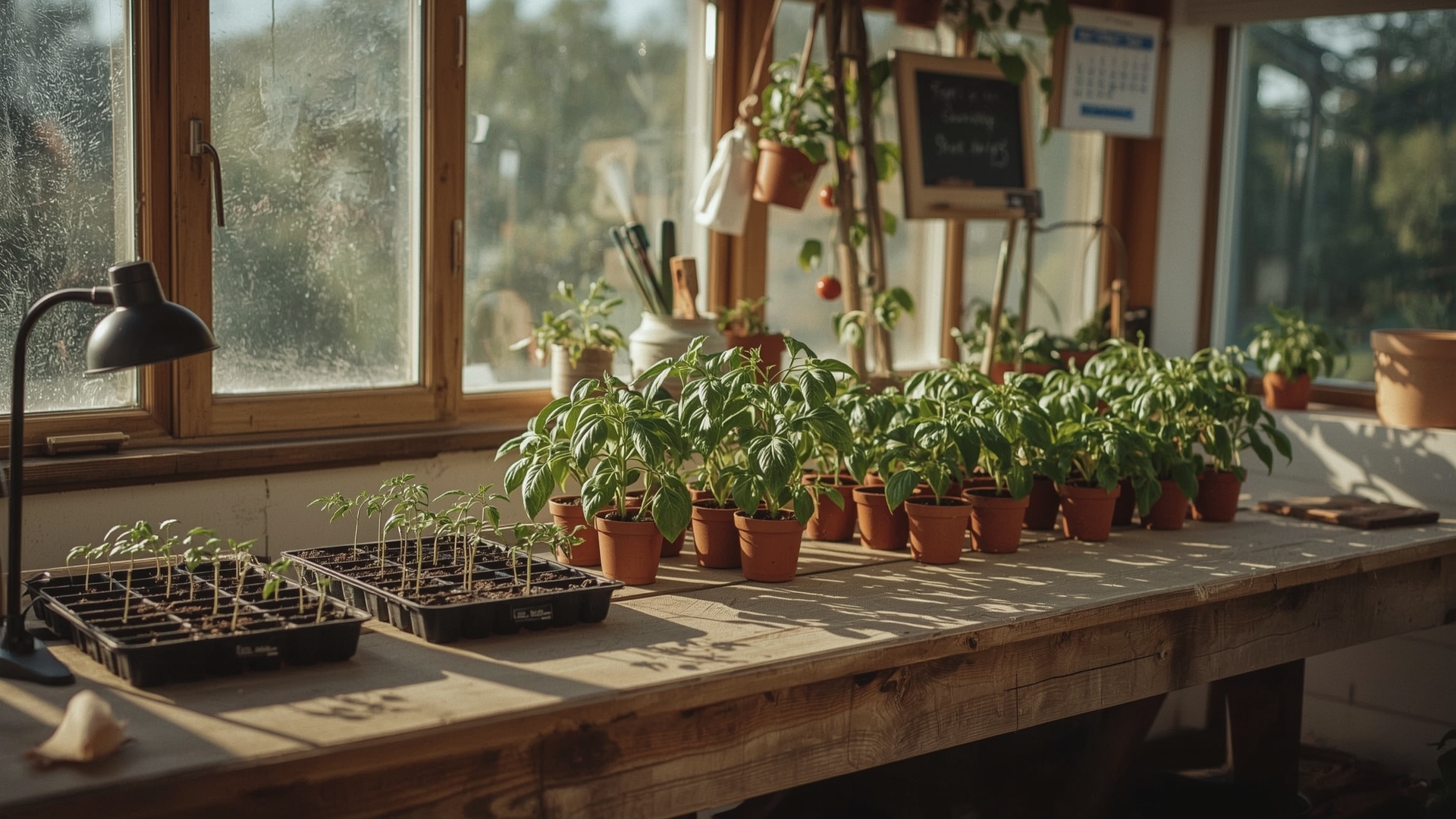
Quick Answer: Start with your last spring frost date. Count backward to find indoor seed-starting dates. Count forward for outdoor transplant dates. Layer cool-season crops first, then warm-season crops after your frost-free window opens.
Spring Schedule Framework — 3 Phases
Phase 1: Pre-Frost (8-10 Weeks Before Last Frost)
Start long-lead crops indoors. Tomatoes, peppers, and eggplant all need 8-10 weeks of indoor growing time before they’re ready to transplant outside. This is also the window to start onions from seed.
Phase 2: Cool-Season Outdoor Planting (4-6 Weeks Before Last Frost)
Direct sow or transplant frost-tolerant crops outdoors. Peas, spinach, lettuce, kale, and carrots can all go out well before your last frost. Soil temperature matters more than air temperature here — wait until soil reaches at least 40°F before sowing.
Phase 3: Warm-Season Planting (At and After Last Frost)
After your last frost passes (and ideally one to two weeks after), move warm-season transplants outside. Start with hardier warm-season crops like squash. Wait an extra week or two for basil and peppers.
Spring Planting Timeline — Example for Last Frost Date of May 1
| Action | Timing | Target Date |
|---|---|---|
| Start tomatoes, peppers, eggplant indoors | 8-10 weeks before LFD | Feb 20 – Mar 6 |
| Start broccoli, cabbage, lettuce indoors | 6-8 weeks before LFD | Mar 6 – Mar 20 |
| Direct sow peas, spinach outdoors | 6 weeks before LFD | Mar 20 |
| Transplant broccoli, cabbage, lettuce outdoors | 3-4 weeks before LFD | Apr 3 – Apr 10 |
| Direct sow carrots, beets outdoors | 3-4 weeks before LFD | Apr 3 – Apr 10 |
| Harden off warm-season transplants | 1-2 weeks before LFD | Apr 17 – Apr 24 |
| Transplant tomatoes, squash outdoors | 1-2 weeks after LFD | May 8 – May 15 |
| Transplant peppers, basil outdoors | 2 weeks after LFD | May 15 |
| Direct sow beans, cucumbers outdoors | After LFD, soil 60°F+ | May 10 – May 20 |
What Is Hardening Off and Why Does It Matter?
Hardening off is the process of gradually exposing indoor seedlings to outdoor conditions before planting them in the ground. Seedlings grown indoors aren’t used to wind, direct sun, or temperature swings. Move them outside for a few hours each day over 7-14 days. Start in shade and gradually increase sun exposure. Skip this step and even frost-safe plants will show stress and slow growth.
How Do You Build a Fall Planting Schedule Using Frost Dates?
Quick Answer: Take your first fall frost date and count backward using each crop’s days to maturity plus a 2-week buffer. This gives you a last safe sowing date. Most fall crops are cool-season vegetables that actually taste better after a light frost.
Why Fall Gardening Is Underused
Most gardeners think of frost dates only in the spring. But fall is a full second planting season. Cooler temperatures reduce pest pressure and improve flavor in many crops. Kale, spinach, and carrots become sweeter after a frost because the plant converts starches to sugars as a cold-weather response.
Fall Planting Timeline — Example for First Fall Frost of October 15
| Crop | Days to Maturity | Buffer | Last Safe Sowing Date |
|---|---|---|---|
| Broccoli (from transplant) | 55-70 days | 14 days | July 27 – Aug 7 |
| Kale (direct sow) | 55-65 days | 14 days | Aug 7 – Aug 17 |
| Spinach (direct sow) | 40-50 days | 14 days | Aug 22 – Sep 1 |
| Lettuce (direct sow) | 45-60 days | 14 days | Aug 12 – Aug 27 |
| Radishes (direct sow) | 22-30 days | 7 days | Sep 15 – Sep 23 |
| Carrots (direct sow) | 70-80 days | 14 days | July 23 – Aug 2 |
| Garlic (fall plant, spring harvest) | Plant 6 weeks before hard freeze | N/A | September – early October |
How Heat Affects Fall Crop Germination
Many fall crops are sown when summer heat is still intense. Lettuce and spinach seeds struggle to germinate in soil above 80°F. To get around this, sow seeds in a shaded spot or pre-sprout them indoors in a cool room, then transplant small seedlings into the garden once temperatures drop in late August or early September.
What Factors Can Shift Your Actual Frost Date Earlier or Later?
Quick Answer: Elevation, urban heat, proximity to water, and local topography all shift your effective frost dates by days to weeks. Low-lying spots frost first. South-facing slopes and urban gardens often stay frost-free longer than regional averages suggest.
Microclimate Factors That Affect Frost Timing
- Elevation: Every 1,000 feet of elevation drops average temperature by about 3.5°F. Higher gardens frost earlier in fall and later in spring.
- Proximity to large bodies of water: Lakes and oceans moderate temperatures, delaying fall frost and extending spring frost risk.
- Urban heat island effect: Cities run 2-5°F warmer than surrounding rural areas. Urban gardeners often have a 1-2 week longer season.
- Low-lying areas and frost pockets: Cold air is heavy and drains into low spots. Gardens in valleys or depressions frost earlier than nearby hillside gardens.
- South-facing slopes: Receive more direct sun, warm faster in spring, and stay warmer in fall. Effective frost dates can run 1-2 weeks later than average.
- Structures and walls: A south-facing brick or stone wall absorbs heat during the day and releases it at night, acting as a frost buffer for nearby plants.
How Do You Protect Plants When Frost Arrives Unexpectedly?
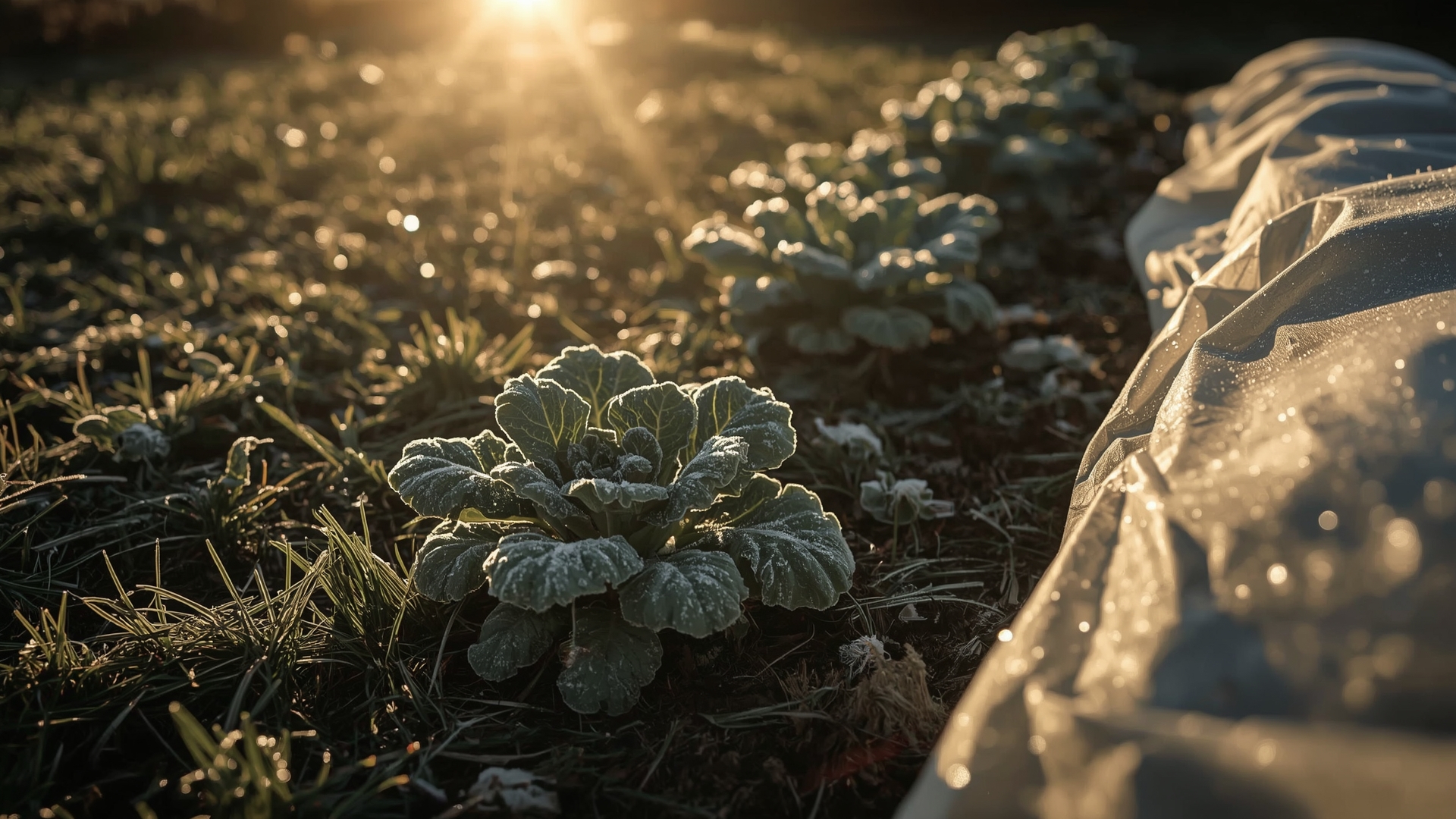
Quick Answer: Cover plants with row cover fabric, old bedsheets, or frost cloth when overnight temperatures are forecast below 35°F. Remove covers in the morning once temperatures rise. This protection can buy 2-4°F of additional warmth.
Frost Protection Methods Compared
| Method | Temperature Protection | Light Transmission | Reusability | Best For |
|---|---|---|---|---|
| Row cover fabric (lightweight) | 2-4°F protection | 85-90% | Multiple seasons | Light spring and fall frosts |
| Row cover fabric (heavyweight) | 4-8°F protection | 50-70% | Multiple seasons | Hard fall and early spring frosts |
| Frost cloth / garden fleece | 4-6°F protection | 70-80% | Multiple seasons | General frost protection |
| Plastic sheeting | 3-5°F protection | Variable | Limited — degrades quickly | Emergency use only |
| Old bedsheets or towels | 2-3°F protection | Low | Limited — retains moisture | One-time emergency coverage |
| Cold frames (wood + glazing) | 10-20°F protection | 80-90% | Permanent structure | Season extension, hardening off |
The 35°F Rule
Frost forms on exposed surfaces when air temperatures drop to 35°F or below, especially on clear, still nights. If your forecast shows overnight lows near 35°F, cover vulnerable plants. Wind keeps air moving and typically prevents frost formation even at lower temperatures than a calm, clear night.
How Do You Extend Your Growing Season Beyond Your Frost Dates?
Quick Answer: Cold frames, row covers, cloches, and high tunnels can extend your growing season by 4-8 weeks on either end. These tools trap heat around plants, protecting them from light to moderate frosts without any additional heating source.
Season Extension Tools by Method
- Cloches: Individual bell-shaped covers placed over single plants. Good for protecting transplants immediately after planting. Effective down to about 25°F with a quality glass or thick plastic cloche.
- Cold frames: Low structures with a transparent lid (old windows work well). Can keep plants productive 4-6 weeks past your first fall frost. Works best for low-growing crops like lettuce and spinach.
- Row covers on hoops: Lightweight fabric draped over wire hoops above a garden row. Easy to remove for watering and pest management. Best for extending cool-season crops in spring and fall.
- High tunnels (unheated greenhouses): Walk-in plastic structures. Extend the season by 6-10 weeks. Used by market gardeners to produce year-round in cold climates.
What Should You Do If You Miss Your Planting Window?
Quick Answer: Buy transplants instead of starting from seed to recover lost weeks. Switch to faster-maturing varieties. Focus on crops that still have time — beans and zucchini mature in 50-60 days and can catch up quickly even after a late start.
Recovery Strategies by Situation
- Missed spring indoor seed-starting date: Buy seedlings from a local nursery. You lose variety selection but gain 6-8 weeks.
- Planted warm-season crops too early after a late frost: Assess damage after 24-48 hours. Frost-damaged tomatoes often recover if only the top growth was affected and the stem is still firm and green.
- Too late for long-season crops: Switch to bush beans, summer squash, and fast-maturing lettuce varieties. These finish in 45-65 days and can still produce before fall frost.
- Missed fall planting window: Use cold frames and row covers to squeeze in spinach, lettuce, and radishes even a few weeks past your normal sowing deadline.
Frequently Asked Questions
What is the difference between a light frost and a hard frost?
A light frost is when temperatures dip between 29°F and 32°F. A hard frost is below 28°F. Most cool-season vegetables survive a light frost. A hard frost will kill many cool-season crops and is almost always fatal to warm-season plants like tomatoes and peppers.
Can frost dates change from year to year?
Yes. Frost dates are 30-year averages, but actual frost events shift with annual weather patterns. El Niño and La Niña cycles can shift frost dates by one to two weeks in either direction. Always watch your local 10-day forecast during the weeks around your frost date window.
What soil temperature should you check before planting seeds outdoors?
Soil temperature determines whether seeds will germinate at all. Cool-season seeds like lettuce and peas need at least 40°F. Warm-season seeds like corn, beans, and squash need 60°F or higher. Use a simple soil thermometer — they cost around $10-15 — and check at a 2-inch depth for direct sowing.
Is the last frost date the same as the date you can start a garden?
Not exactly. Cool-season crops can go outdoors weeks before your last frost date. Only warm-season crops need to wait until after the last frost. Think of the last frost date as the dividing line between cool-season and warm-season outdoor planting, not as a single “garden start” date.
Do frost dates apply to container gardens on patios?
Yes, but containers often experience more extreme temperatures than in-ground beds. Pots heat up faster in spring but also cool faster on cold nights, giving less root insulation. On freezing nights, move containers close to a wall or indoors. Roots in containers can freeze even when air temperatures only briefly dip to 32°F.
What does “days to maturity” mean for fall planting calculations?
Days to maturity counts the days from germination or transplanting until harvest. To find your last safe sowing date in fall, subtract a crop’s days to maturity from your first fall frost date. Add a 10-14 day buffer because shorter daylight and cooler temperatures in fall slow plant growth compared to summer conditions.