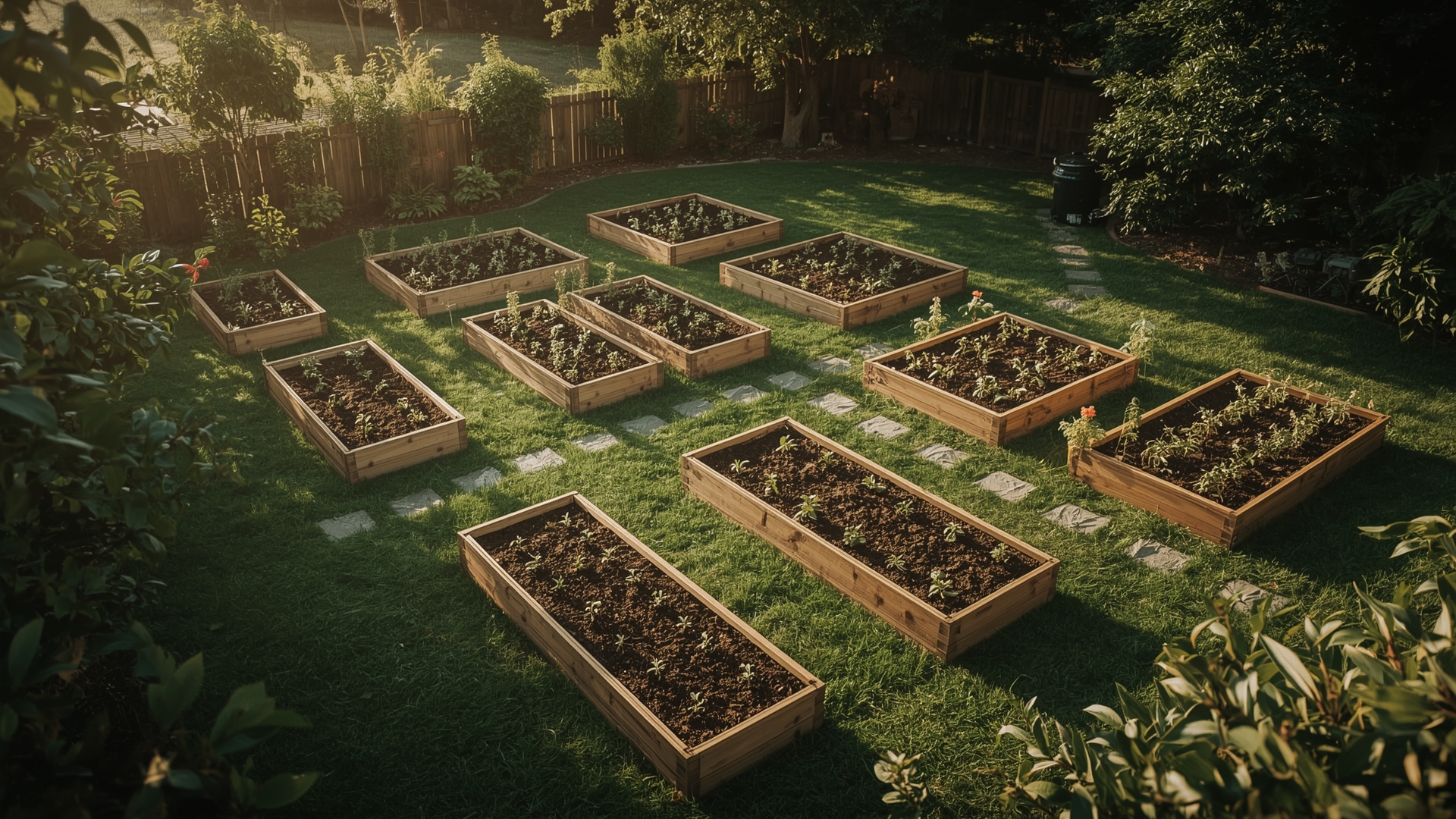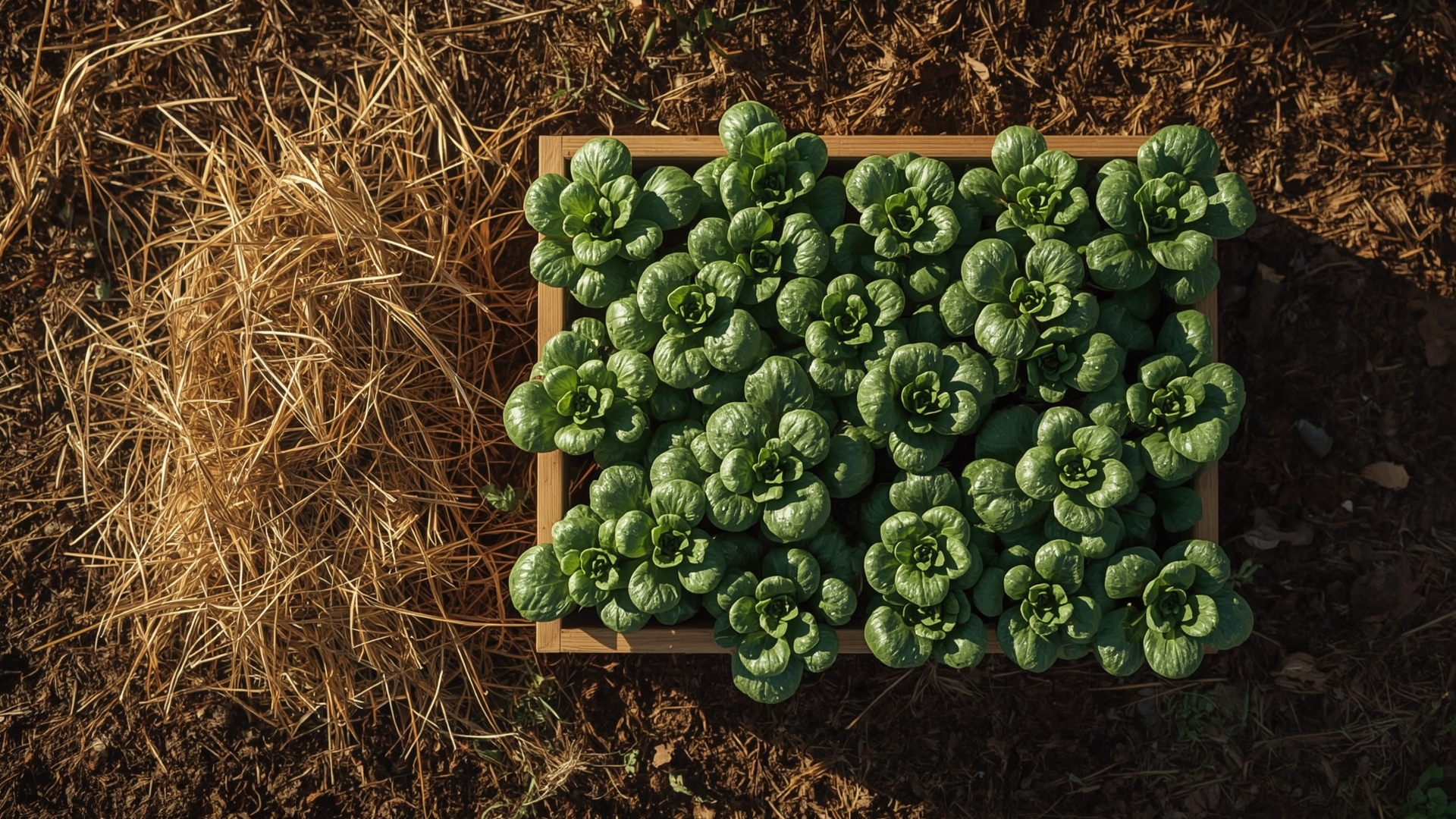
Weeds in a raised bed are more than an eyesore. They steal water, nutrients, and light from your vegetables. The good news is that raised beds give you a real structural advantage over in-ground gardens — you control what goes in, and you can layer multiple weed control methods at once.
This guide covers three core strategies: mulching, weed barrier fabric, and dense planting. Each works differently. Used together, they create overlapping layers of protection that make weeds very hard to establish.
Key Takeaways
- Mulch suppresses weeds by blocking light and adding organic matter over time — 2 to 3 inches is the effective minimum depth.
- Weed barrier fabric works best as a base layer under the bed frame, not on top of soil where plants are growing.
- Dense planting closes the canopy over your soil so weeds can’t get the sunlight they need to germinate.
- Combining all three methods creates layered weed suppression that reduces weeding time by 70 to 90 percent compared to bare soil beds.
- Weed seeds blow in from above — no barrier stops aerial seed deposit, so ongoing management is always part of the plan.
- Starting clean matters most — removing existing weeds before installing any barrier is the single biggest factor in long-term success.
Why Are Raised Beds Still Vulnerable to Weeds?
Quick Answer: Raised beds aren’t weed-proof by default. Weed seeds blow in from wind and birds, and contaminated compost or soil can introduce roots. The frame structure helps, but you still need active suppression methods to keep beds clean.
Many gardeners assume building a raised bed solves the weed problem. It reduces certain pathways — ground-creeping weeds have a harder time migrating up through a frame — but it doesn’t eliminate the problem.
The main weed entry points in a raised bed are wind-dispersed seeds landing on open soil, birds depositing seeds, and contaminated soil or compost mix. Some of the most persistent weeds, like bindweed and thistle, can also push up through gaps if the bed sits directly on infested ground.
Which Weed Types Are Most Common in Raised Beds?
Annuals like chickweed, purslane, and hairy bittercress germinate fast from seeds in the soil mix or from overhead drop. Perennials like dandelion, bindweed, and grass can invade from below if no base barrier exists.
Annual weeds are generally easier to manage — they don’t have deep roots and respond well to mulch. Perennial weeds with deep tap roots or rhizomes (underground stems that spread horizontally) require a more aggressive base-layer strategy.
What Is the Most Effective Mulch for Raised Bed Weed Control?
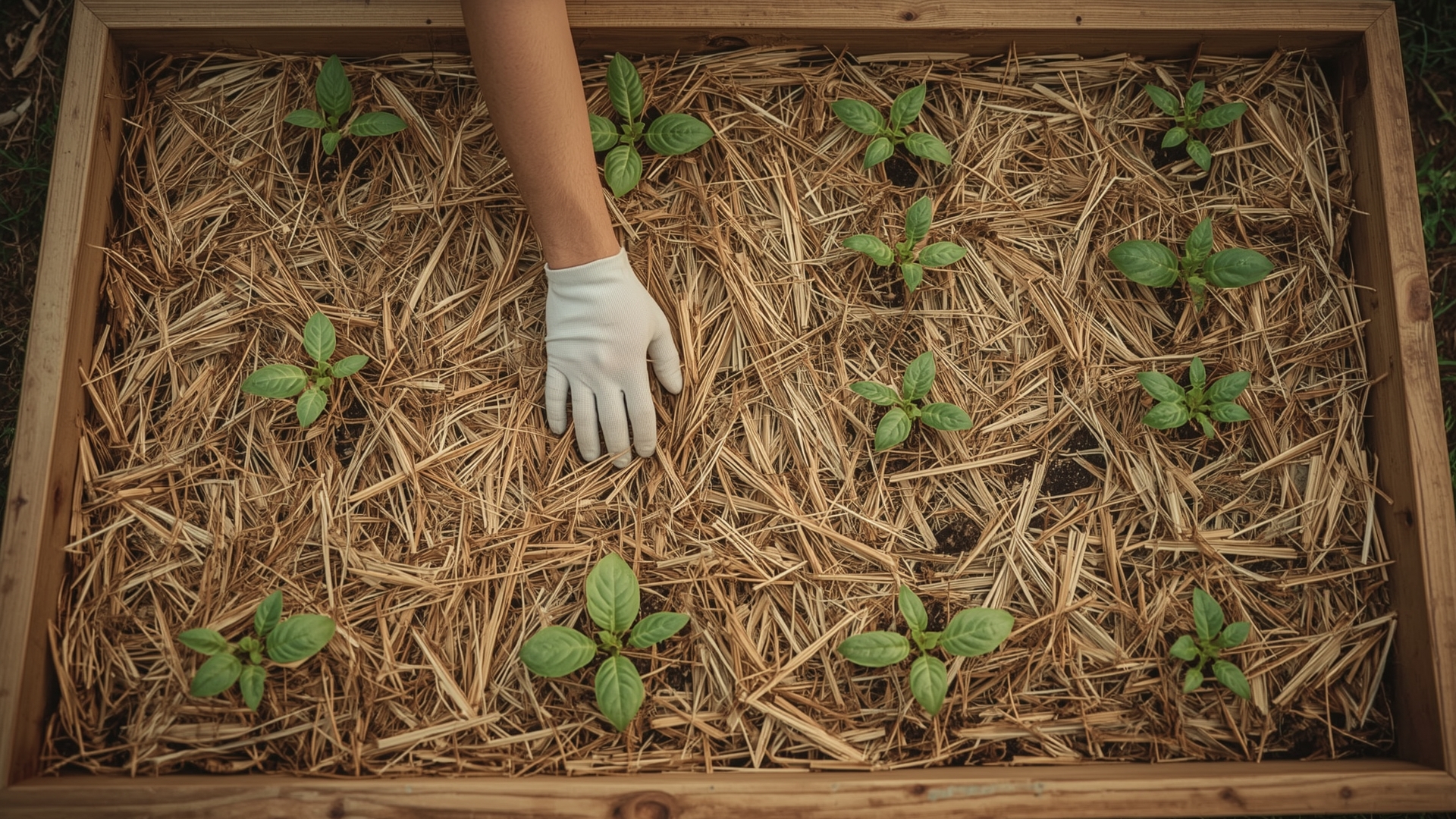
Quick Answer: Straw, wood chips, and shredded leaves are the top mulch types for raised beds. Apply 2 to 3 inches deep around plants. Straw breaks down in one season. Wood chips last 2 to 3 years. Both block light and suppress most annual weeds effectively.
How Does Mulch Actually Stop Weeds?
Mulch works by blocking light from reaching the soil surface. Most weed seeds need light to trigger germination. A solid mulch layer keeps them in the dark — literally. The 2-inch minimum depth is important because thinner layers let too much light filter through.
Mulch also moderates soil temperature and holds moisture. That’s a secondary benefit, but it matters because consistent moisture reduces stress on your vegetables and keeps you from watering as often.
Mulch Types for Raised Beds: EAV Comparison
| Mulch Type | Recommended Depth | Lifespan | Weed Suppression Rating | Effect on Soil | Approx. Cost |
|---|---|---|---|---|---|
| Straw (not hay) | 2–3 inches | 1 season | High for annuals | Adds organic matter | $8–$12 per bale |
| Wood chips (hardwood) | 2–3 inches | 2–3 years | High for annuals and perennials | Feeds soil biology | $25–$50 per cubic yard |
| Shredded leaves | 2–4 inches | 1 season | Moderate | Improves structure, adds nitrogen | Free (collected on-site) |
| Compost (as mulch) | 1–2 inches | 1 season | Low to moderate | High fertility boost | $20–$40 per cubic yard |
| Pine needles | 2–3 inches | 1–2 seasons | Moderate | Slight acidification over time | Free to $15 per bag |
Should You Use Hay or Straw in a Raised Bed?
Always use straw, not hay. Hay is cut grass that still contains mature seed heads. Spreading hay in a raised bed is a good way to plant hundreds of grass seeds. Straw is the stem left after grain harvest — it has far fewer seeds and breaks down cleanly over one growing season.
How Should You Apply Mulch Around Seedlings?
Keep mulch 1 to 2 inches away from plant stems. Direct contact traps moisture against the stem and can cause rot. Pull mulch back slightly when transplanting seedlings, then push it back in once the plant establishes. Reapply mulch mid-season when the layer compresses below 1 inch.
Does Weed Barrier Fabric Work in Raised Beds?
Quick Answer: Weed barrier fabric works well as a base layer installed under the bed frame before filling with soil. It blocks ground-creeping weeds and burrowing pests. It performs poorly when placed on top of growing soil because it restricts root oxygen and is hard to plant through.
Where Should Weed Barrier Fabric Be Installed?
The best placement is underneath the raised bed frame, between the soil and the ground below. This stops perennial weeds and grass from pushing up through the bed from below. It also deters digging pests like gophers and voles.
Fabric placed on top of the growing soil is a different product category. This is often called landscape fabric or weed mat. It works in paths between beds and under decorative gravel. Inside an active planting bed, it creates more problems than it solves over time — roots tangle in the fabric, and the gaps cut for plants become entry points for weeds anyway.
Weed Barrier Fabric Types: EAV Comparison
| Fabric Type | Best Use | Water Permeability | Lifespan | Cost Per 50 Sq Ft | Weed Blocking |
|---|---|---|---|---|---|
| Woven polypropylene (heavy) | Under bed frame | High | 10–20 years | $15–$25 | Excellent for roots and runners |
| Non-woven landscape fabric | Paths between beds | Moderate | 3–5 years | $10–$20 | Moderate — degrades with UV |
| Hardware cloth (1/4 inch) | Under frame (pest-prone areas) | Full | 15–25 years | $20–$40 | Moderate for weeds, high for pests |
| Cardboard (sheet mulching) | Under bed frame (temporary) | Low initially | 1 season | Free | High for first season, then decomposes |
Is Cardboard a Good Alternative to Fabric Under a Raised Bed?
Cardboard is an effective short-term option. Lay it flat under the bed frame, overlapping edges by at least 6 inches so nothing sneaks through the seams. It blocks light, kills grass and weeds underneath, and decomposes within one season to feed soil biology. This is the same principle used in no-dig gardening.
The downside is that after 12 to 18 months, cardboard is gone. Deep-rooted perennial weeds may eventually push back up through the decomposed layer. If your site has aggressive perennial weeds, pair cardboard with a layer of wood chips on the outside perimeter of the bed.
How Does Dense Planting Suppress Weeds in a Raised Bed?

Quick Answer: Dense planting spaces vegetables close enough that their leaves overlap at maturity, creating a living canopy over the soil. This canopy blocks sunlight from reaching the ground, stopping most weed seeds from germinating. It’s a passive suppression method that improves over time.
What Is the “Living Canopy” Principle?
When plant leaves touch or slightly overlap, they shade the bare soil beneath them. Weed seeds need light to germinate. A closed canopy removes that trigger. The goal is to have no bare soil visible from above once plants reach full size.
This principle works best in raised beds because you’re planting in a defined, compact space. You’re not working around row spacing designed for tractor access. Raised beds let you use spacing based on actual plant size at maturity, not equipment clearance.
What Plant Spacing Supports a Closed Canopy?
| Vegetable | Canopy Spacing | Canopy Closes At | Ideal Companion | Canopy Height |
|---|---|---|---|---|
| Lettuce | 6–8 inches | 3–4 weeks after transplant | Radish, carrot | 6–10 inches |
| Basil | 8–10 inches | 4–5 weeks after transplant | Tomato, pepper | 12–18 inches |
| Spinach | 4–6 inches | 2–3 weeks after transplant | Brassicas, onion | 6–8 inches |
| Kale | 12–15 inches | 5–6 weeks after transplant | Dill, nasturtium | 18–24 inches |
| Bush beans | 4–6 inches | 3–4 weeks after transplant | Summer savory, carrot | 12–18 inches |
| Chard | 6–9 inches | 4–5 weeks after transplant | Beet, onion | 12–18 inches |
Does Dense Planting Hurt Vegetable Yield?
Dense planting can reduce individual plant yield slightly, but it increases total yield per square foot. A bed planted to full canopy closure produces more food from the same footprint than one planted at standard row spacing.
The key is not to go too dense. Plants still need airflow. Poor air circulation creates conditions for fungal diseases like powdery mildew. The target is closed canopy from above, not overcrowded stems at ground level.
How Do You Combine Mulch, Fabric, and Dense Planting Together?
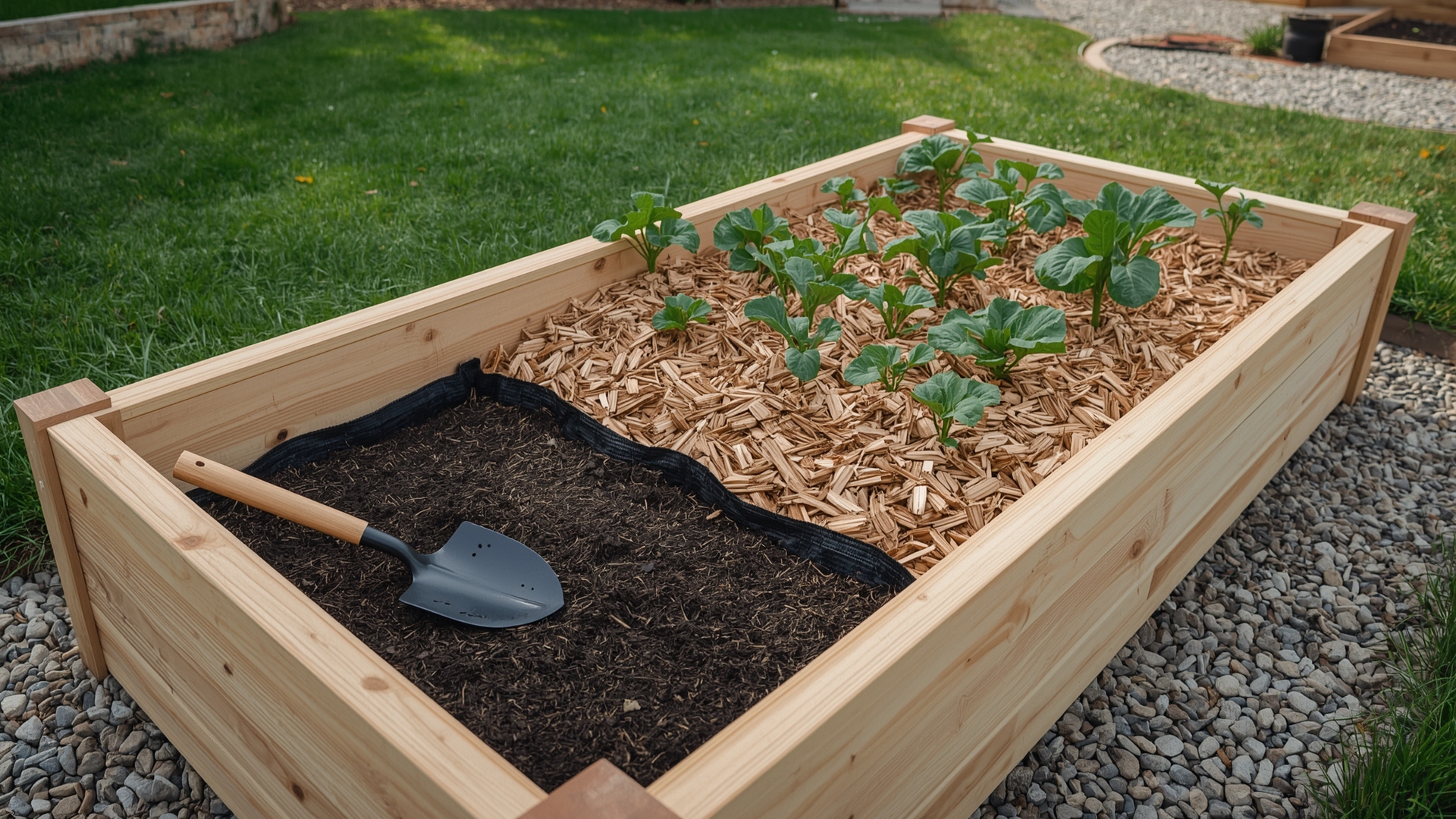
Quick Answer: Layer these methods in sequence. Install weed barrier fabric or cardboard under the bed frame first. Fill with clean soil mix. Plant densely for canopy coverage. Apply 2 inches of straw or wood chip mulch between plants during the gap before canopy closure. This stacks three suppression layers at once.
What Is the Layered Weed Control Setup?
Think of it as three zones working at different levels. The base layer (fabric or cardboard) handles ground-creeping and burrowing weeds from below. The surface layer (mulch) handles airborne seeds landing on open soil. The canopy layer (dense plants) handles the gap before mulch fully settles.
The most vulnerable window is the first two to four weeks after planting, before the canopy closes. Mulch covers this period. Once the canopy closes, the mulch underneath it stays cleaner and lasts longer because seeds that land on mulch under shade are less likely to germinate.
What Are the Best Practices for Starting a New Raised Bed Weed-Free?
- Clear the ground first. Remove all existing vegetation from the site. Don’t just lay fabric over active weeds.
- Install base layer. Lay woven polypropylene fabric or overlapping cardboard under the frame location.
- Fill with clean soil mix. Use a purchased raised bed mix or a screened blend. Don’t use unscreened garden soil — it carries weed seeds.
- Plant at canopy spacing. Follow spacing recommendations for your specific crops.
- Mulch immediately after planting. Apply 2 inches of straw or wood chips around transplants the same day.
- Hand-weed the first two weeks. Pull any early germinants before they root deeply. This is the highest-return maintenance window.
What Are Common Weed Control Mistakes in Raised Beds?
Quick Answer: The most common mistakes are using contaminated soil, planting at wide spacing and leaving bare soil exposed, applying mulch too thinly, and placing landscape fabric inside the active planting zone. Each of these creates entry points for weeds that override other suppression efforts.
Why Does Contaminated Soil Create Long-Term Weed Problems?
Most weed seeds survive in soil for years. Common culprits like purslane can stay viable in soil for up to 40 years. If you fill a raised bed with unscreened garden soil or low-quality compost, you’re seeding the bed with future weed problems before you’ve planted anything.
Use a commercial raised bed mix or make your own with verified-clean components: coarse compost, perlite (a volcanic mineral that improves drainage), and topsoil that has been heat-treated or screened. Check the compost source — compost made from municipal green waste often reaches high enough temperatures to kill weed seeds. Homemade cold-pile compost usually does not.
Why Does Thin Mulch Fail?
A half-inch of mulch looks tidy but doesn’t work. Light penetrates thin layers easily. Weed seeds germinate right through it. The 2-inch minimum is based on light penetration physics — most weed seeds need a photon trigger from direct or near-direct light. Two inches of mulch drops light levels below that threshold for most annual weed species.
Raised Bed Weed Control Method Comparison
| Method | Weed Types Blocked | Setup Time | Maintenance Frequency | Works Above Ground | Works Below Ground |
|---|---|---|---|---|---|
| Mulch (straw/wood chips) | Annual weeds primarily | 30–60 minutes per bed | Reapply 1–2x per season | Yes | No |
| Weed barrier fabric (base) | Perennial runners, burrowing weeds | 1–2 hours at install | None after install | No | Yes |
| Cardboard base layer | Grass, shallow perennials | 30–45 minutes | Replace after 1–2 seasons | No | Yes (short-term) |
| Dense planting | Airborne annual weeds | None (built into planting) | None — self-maintaining | Yes | No |
How Often Should You Weed a Raised Bed After Setup?
Quick Answer: With mulch, fabric base, and dense planting all in place, most raised beds need weeding once every 2 to 3 weeks during the growing season. Without any suppression method, bare-soil raised beds typically need weeding two to three times per week.
What Is the Best Time of Day to Weed a Raised Bed?
Weed after rain or watering when soil is moist. Roots pull out cleanly from wet soil. Pulling weeds from dry, compacted soil often snaps the stem and leaves the root behind. A broken root on a perennial weed like dandelion will regrow.
Morning weeding also reduces the chance of sun-stressed transplants getting disturbed during the hottest part of the day. Pull weeds when they’re small — before they set seed. One purslane plant can produce 52,000 seeds. Remove it before flowering and you eliminate thousands of future problems.
Should You Till a Raised Bed to Control Weeds?
No. Tilling brings buried weed seeds to the surface where they can germinate. This is called the weed seed bank — every raised bed soil has millions of dormant seeds at various depths. Most never germinate because they’re too deep. Tilling reshuffles the deck and brings new seeds to the germination zone.
The no-till approach — adding compost on top, not digging it in — keeps dormant seeds buried and supports healthy soil structure. This is one reason no-dig gardening has gained traction among raised bed growers.
Are There Natural or Organic Weed Control Products That Work in Raised Beds?
Quick Answer: Corn gluten meal works as a pre-emergent — it stops seeds from germinating but won’t kill established weeds. It’s organic and safe for vegetable beds but must be applied before weed seeds germinate. Horticultural vinegar (20% acetic acid) kills emerged weeds on contact but also damages vegetable plants.
What Is a Pre-Emergent Weed Control Product?
A pre-emergent prevents seeds from germinating. It doesn’t kill existing plants. Corn gluten meal is the main organic option approved for food gardens. It’s applied as a granular powder in early spring, before soil reaches 50°F — the temperature at which most annual weed seeds begin germinating.
Corn gluten meal also adds nitrogen to the soil as it breaks down. The trade-off is that it will also inhibit vegetable seeds from germinating. Use it only in beds where you’re transplanting starts, not direct-sowing from seed.
Organic Weed Control Products: EAV Comparison
| Product | Active Mechanism | Application Timing | Safe for Vegetables | Approx. Cost | Effectiveness |
|---|---|---|---|---|---|
| Corn gluten meal | Pre-emergent (inhibits root formation) | Before soil reaches 50°F | Yes (transplants only) | $20–$35 per 20 lbs | 60–90% seed suppression |
| Horticultural vinegar (20%) | Contact (desiccates plant tissue) | After weeds emerge, calm day | No — kills any leaf it touches | $15–$25 per gallon | High on young annuals, low on perennials |
| Flame weeder | Heat (wilts cell walls) | Emerged weeds, away from mulch | Use carefully near plants | $30–$80 one-time tool cost | High on small annuals |
| Boiling water | Heat (kills on contact) | Any time | No — kills anything it touches | Free | Moderate — surface only |
How Do You Maintain Weed Control Through the Full Growing Season?
Quick Answer: Check mulch depth monthly and replenish when it drops below 1 inch. Pull new weeds before they reach 2 inches tall. After harvest, clear crop debris and re-mulch bare areas immediately. Don’t leave soil exposed between seasons — bare soil is an invitation for weed colonization.
What Happens to Weed Pressure After a Crop Is Harvested?
Harvesting a crop opens up the canopy. Bare soil is suddenly exposed to light again. Weed seeds that have been waiting in the soil or dropping from above now have the trigger they need. This is the most commonly missed window for weed control.
The fix is simple: immediately after pulling spent crops, spread 2 inches of mulch on the exposed area. If you’re replanting within a week or two, you can skip the mulch and just transplant the next crop quickly. Speed of canopy recovery is the goal.
Should You Plant a Cover Crop for Winter Weed Control?
Yes. A fast-germinating cover crop like winter rye or crimson clover fills the canopy in fall and protects soil through winter. It outcompetes winter weeds, adds organic matter when turned under in spring, and keeps the soil biology active during the off-season.
The timing matters. Sow cover crops in late summer or early fall — at least 4 to 6 weeks before the first frost to allow germination. Terminate (cut or turn under) the cover crop 2 to 3 weeks before planting spring vegetables.
Frequently Asked Questions
Can you use black plastic as weed control in raised beds?
Black plastic mulch blocks all light and kills weeds effectively. The downside is that it also blocks rainfall and air exchange, which can starve soil biology and cause root stress. It works better for short-season crops in cold climates than for ongoing vegetable production beds.
Does wood chip mulch attract termites or pests?
Wood chip mulch can attract certain moisture-loving insects, but it doesn’t attract termites to a degree that threatens raised bed wood frames in typical use. Keep mulch at least 6 inches away from the wooden sides of the frame as a basic precaution. Elevated cedar or composite frames are the lowest-risk option.
How do you stop grass from growing into the sides of a raised bed?
Install a physical edging barrier around the outside perimeter of the bed. A metal or composite mow strip (a flat strip buried 4 to 6 inches deep) blocks lateral grass rhizomes from migrating under the frame. Pair it with regular edging on the outside edge of the strip.
Is newspaper an acceptable substitute for cardboard as a weed barrier?
Yes. Lay newspaper in layers of 8 to 10 sheets, overlapping edges by 6 inches to close gaps. It breaks down within one season, just like cardboard. Avoid glossy color inserts — they decompose more slowly and some contain pigments not suited for food garden soil.
What is the no-dig method and does it apply to raised beds?
No-dig gardening means building soil fertility by adding compost on the surface rather than tilling it in. This preserves the soil structure, keeps dormant weed seeds buried, and supports earthworms and soil fungi. It applies directly to raised beds — many raised bed growers use a top-dressing of compost each season instead of turning the soil.
How do you handle weeds that grow through landscape fabric over time?
Weeds that grow through fabric are usually rooting in debris that accumulates on top of it, not coming from below. Clean the surface layer regularly and replace heavily degraded fabric every 3 to 5 years. Heavy woven polypropylene fabric resists this better than thin non-woven alternatives.