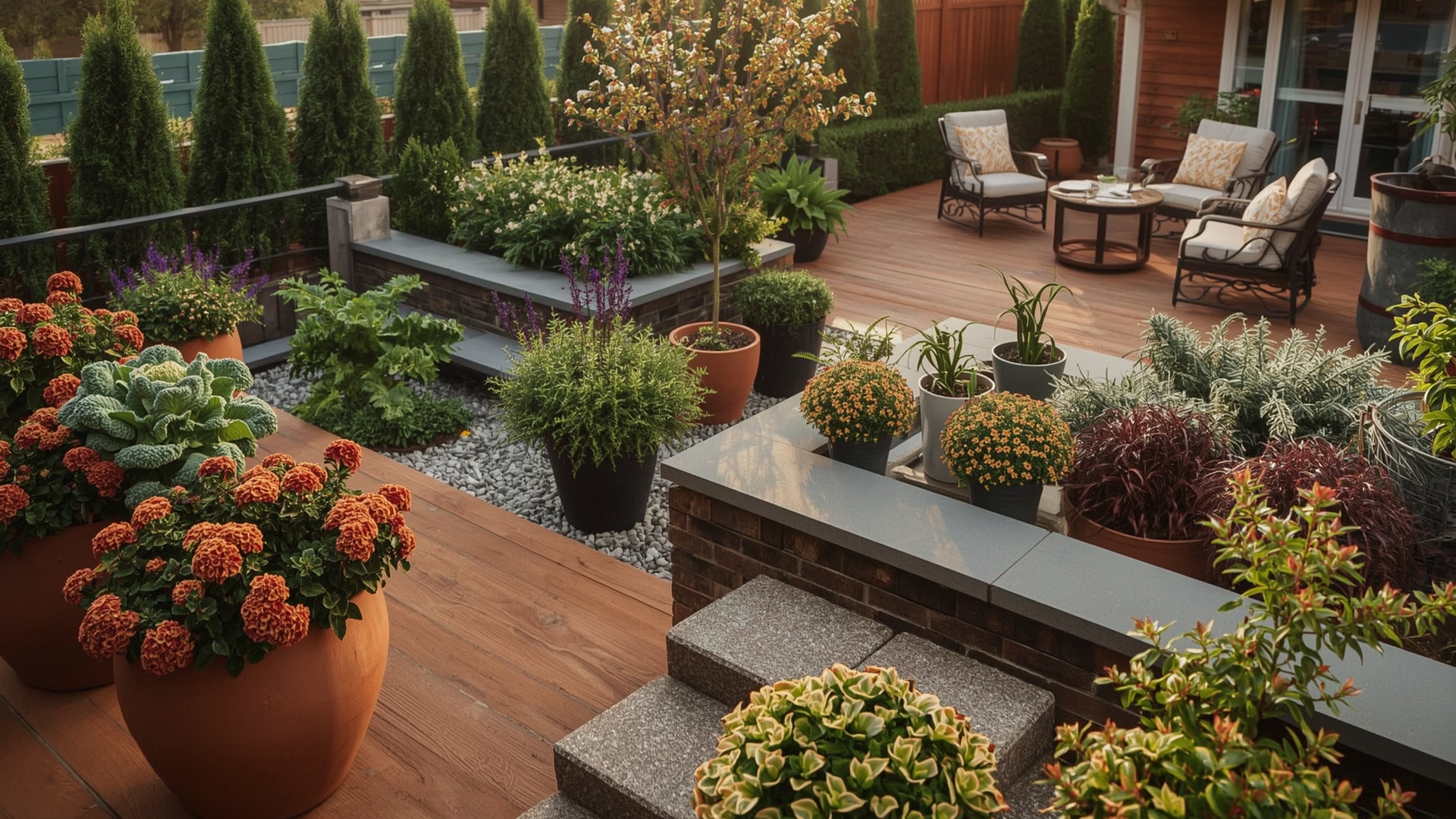
Container gardening doesn’t have to stop when summer ends. With the right plants, the right containers, and a few seasonal adjustments, you can keep your patio, balcony, or porch looking alive and productive in every season — even through frost and snow.
The key is treating containers as a complete growing system. The container, the soil mix, the drainage, the plant selection, and your watering routine all work together. Get each piece right, and year-round outdoor container gardening becomes very manageable.
Key Takeaways
- Hardiness zone determines what survives winter in containers. Plants in containers experience colder temperatures than in-ground plants because roots have no soil insulation buffer.
- Potting mix is not garden soil. A proper container mix drains fast, holds just enough moisture, and doesn’t compact over time.
- Self-watering containers cut maintenance significantly. A reservoir system can reduce watering frequency by up to 50% compared to standard pots.
- Winterizing containers protects both the plant and the pot. Freeze-thaw cycles crack unprotected containers and kill roots that would survive in the ground.
- Seasonal plant swaps keep containers looking fresh. Planning a three-season or four-season rotation prevents the dead-container look that most gardeners dread.
- Container size directly affects plant survival. Larger containers buffer against temperature swings and dry out less quickly in summer heat.
What Makes Container Gardening Different From In-Ground Gardening?
Quick Answer: Container plants lose water faster, get hotter in summer, and get colder in winter than in-ground plants. Roots have no buffering soil, so containers need better drainage, richer potting mix, and more frequent monitoring across all four seasons.
When a plant grows in the ground, it has access to deep soil, consistent moisture, and natural insulation from temperature swings. A container removes all of that. The root zone sits inside a few gallons of potting mix exposed to ambient air on all sides.
This creates three core challenges. First, containers dry out much faster — sometimes in a single hot day. Second, they heat up quickly in direct sun, which can cook roots. Third, in cold climates, the root ball freezes much faster than it would in the ground because there’s no surrounding earth to hold warmth.
Understanding these differences is the foundation of everything else in this guide. Every recommendation below addresses one or more of these three challenges.
How Do You Choose the Right Containers for Year-Round Use?
Quick Answer: Choose containers that are frost-resistant, at least 10 to 14 inches in diameter, and have drainage holes. Fiberglass, thick polyethylene, and sealed hypertufa tolerate freeze-thaw cycles. Terra cotta and thin ceramic crack in freezing temperatures.
Container Material Comparison for Year-Round Durability
| Material | Frost Resistance | Weight | Insulation Rating | Avg. Lifespan | Price Range |
|---|---|---|---|---|---|
| Fiberglass | Excellent (to -30°F) | Light (5–15 lbs) | Moderate | 20+ years | $40–$200 |
| Thick Polyethylene | Good (to -10°F) | Very light (2–8 lbs) | Low-Moderate | 10–15 years | $15–$80 |
| Glazed Ceramic | Fair (depends on glaze thickness) | Heavy (20–60 lbs) | Good | 5–15 years | $30–$150 |
| Unglazed Terra Cotta | Poor (cracks below 32°F) | Heavy (15–40 lbs) | Good (breathable) | 1–3 years outdoors | $10–$60 |
| Hypertufa (sealed) | Good (to -20°F) | Medium (10–30 lbs) | Good | 10–20 years | $25–$100 |
| Wood (cedar/teak) | Good (insulates roots well) | Medium-Heavy | Excellent | 5–15 years | $50–$250 |
What Size Container Do You Actually Need?
Bigger containers aren’t just for bigger plants. They also buffer temperature swings better and hold moisture longer. A 5-gallon container can dry out completely in 24 hours during a hot summer day. A 15-gallon container gives roots far more stable conditions.
For perennials and shrubs you want to keep year-round, use containers with at least a 14-inch diameter and 12-inch depth. For annuals and seasonal displays, you can go smaller — 8 to 12 inches works well for most flowering plants and compact herbs.
Which Plants Survive Year-Round in Outdoor Containers?

Quick Answer: Plants rated two hardiness zones colder than your zone can typically survive winter in containers. In Zone 6, choose plants rated to Zone 4. Evergreen perennials, ornamental grasses, dwarf conifers, and cold-hardy sedums handle year-round container life best.
Understanding the “Two Zone Rule” for Container Plants
The USDA Plant Hardiness Zone system rates plants by the coldest temperatures they survive. But container roots don’t get the same protection as in-ground roots. A plant rated for Zone 6 may not survive winter in a container in Zone 6 because the root zone drops to Zone 4 temperatures or colder.
This is called the “two zone rule.” If you live in Zone 7, choose plants rated for Zone 5 or colder if you want them to reliably survive winter in containers outdoors.
Container Plant Selection by Hardiness Zone
| USDA Zone | Min. Temp (°F) | Recommended Perennials | Recommended Shrubs | Evergreen Options |
|---|---|---|---|---|
| Zone 4 | -30 to -20°F | Sedum ‘Autumn Joy’, Coreopsis | Dwarf Korean Lilac, Spirea | Blue Spruce (dwarf), Mugo Pine |
| Zone 5 | -20 to -10°F | Heuchera, Echinacea, Ornamental Grass | Dwarf Boxwood, Potentilla | Japanese Holly, Dwarf Alberta Spruce |
| Zone 6 | -10 to 0°F | Lavender, Salvia nemorosa, Hellebore | Nandina, Dwarf Juniper | Sky Pencil Holly, Euonymus |
| Zone 7 | 0 to 10°F | Dianthus, Agapanthus, Liriope | Encore Azalea, Loropetalum | Dwarf Camellia, Mondo Grass |
| Zone 8 | 10 to 20°F | Gaura, Society Garlic, Ice Plant | Dwarf Gardenia, Knockout Rose | Japanese Boxwood, Rosemary |
| Zone 9–10 | 20 to 40°F | Agave, Bird of Paradise, Lantana | Bougainvillea, Dwarf Meyer Lemon | Olive tree (dwarf), Podocarpus |
Best Seasonal Annuals for Rotating Container Displays
Annual plants don’t need to survive winter — they just need to thrive in one season. Using annuals as the “color layer” in your containers gives you total flexibility to change the look of your patio every few months.
- Cool-season annuals (spring/fall): Pansies, snapdragons, calibrachoa, stock, ornamental kale
- Warm-season annuals (summer): Petunias, zinnias, impatiens, begonias, vinca, angelonia
- Late-season annuals (fall color): Chrysanthemums, ornamental peppers, dusty miller, flowering cabbage
What Potting Mix Formula Works Best for Container Plants?
Quick Answer: The best container potting mix is lightweight, drains in under 30 seconds, and holds moisture without becoming waterlogged. A reliable all-purpose formula is 60% peat moss or coco coir, 30% perlite, and 10% compost by volume.
Why You Should Never Use Garden Soil in Containers
Garden soil compacts heavily inside a container. This blocks drainage, suffocates roots, and leads to root rot. Even soil that drains fine in a raised bed will turn brick-like in a pot within one season.
Commercial potting mixes are specifically engineered to stay loose and drain well. But not all commercial mixes are equal. Cheap potting mixes often contain mostly peat with little structure — they compact after a few months and need to be refreshed each year.
Potting Mix Formulas by Plant Type
| Plant Type | Peat/Coco Coir | Perlite | Compost | Additional Amendment | Drainage Speed |
|---|---|---|---|---|---|
| General Perennials | 60% | 30% | 10% | None needed | Fast (15–30 sec) |
| Succulents/Cacti | 30% | 50% | 5% | 15% coarse sand | Very fast (under 10 sec) |
| Vegetables/Herbs | 50% | 25% | 20% | 5% slow-release fertilizer | Fast (15–25 sec) |
| Acid-Loving Plants | 70% peat (not coir) | 20% | 5% | 5% sulfur or acidic bark | Moderate (20–35 sec) |
| Tropical Annuals | 55% | 25% | 15% | 5% vermiculite | Fast (15–20 sec) |
When Should You Refresh or Replace Potting Mix?
Potting mix breaks down over time. Peat and coco coir particles compress, perlite floats to the top, and nutrients get depleted. Most container gardeners should refresh the top 2 to 3 inches of mix each spring and fully replace the mix every 2 to 3 years.
Signs that it’s time for a full replacement: water sits on top instead of draining through, roots are visibly circling the container wall, or plant performance has declined despite regular fertilizing.
How Do Self-Watering Container Systems Work?
Quick Answer: A self-watering container has a water reservoir built into the base. Plants draw water upward through wicking action as needed. This reduces watering frequency by 40 to 60%, prevents both underwatering and overwatering, and is ideal for vegetables, herbs, and summer annuals.
Self-Watering Container vs. Standard Container
| Feature | Self-Watering Container | Standard Container |
|---|---|---|
| Watering Frequency (summer) | Every 3–7 days | Every 1–2 days |
| Root Moisture Consistency | High (wicked from reservoir) | Variable (feast or famine) |
| Fertilizer Retention | Better (no leaching) | Leaches with each watering |
| Best For | Tomatoes, herbs, petunias | Succulents, cacti, drought-tolerant plants |
| Winter Use | Drain reservoir before freezing temps | Standard winterizing applies |
| Price Premium vs. Standard | 30–80% higher upfront cost | Baseline |
How to Use Self-Watering Containers in Cold Climates
Self-watering containers have one critical vulnerability in winter: the reservoir holds standing water. When that water freezes, it can crack the reservoir chamber or the entire container from the inside.
Before your first hard freeze (below 28°F), drain the reservoir completely. Remove the fill tube plug or tip the container to empty it. If the plant is staying outside for winter, the potting mix itself holds enough moisture to carry the plant through cold months without the reservoir active.
How Do You Winterize Outdoor Containers and Plants?
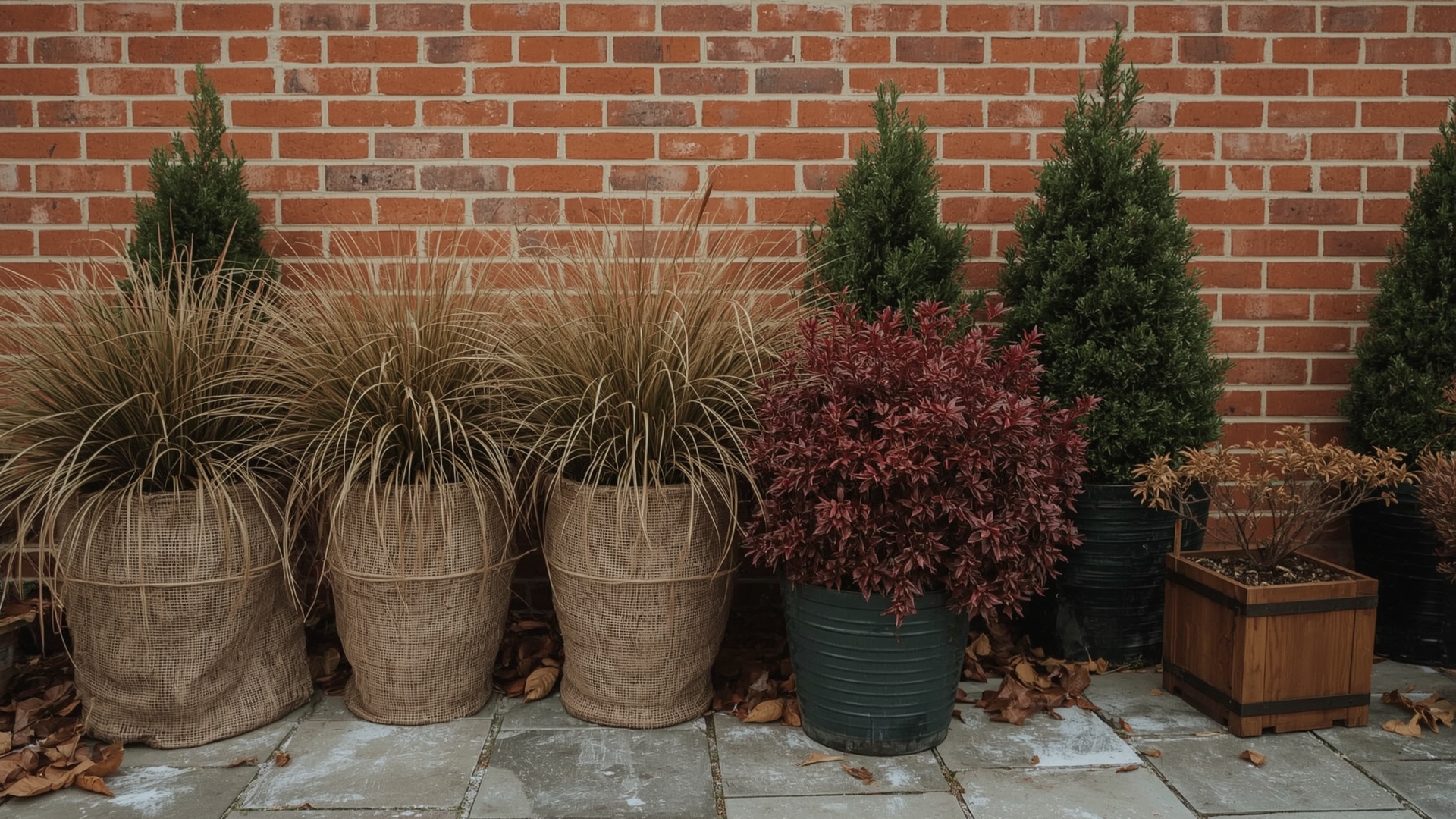
Quick Answer: Winterizing containers means protecting roots from freeze-thaw cycles. Options include moving containers to an unheated garage, wrapping them with horticultural fleece, burying them in the ground, or grouping them against a south-facing wall. The right method depends on your hardiness zone.
Step-by-Step Winterizing Process for Container Plants
- Stop fertilizing 6 to 8 weeks before your average first frost date. Fertilizing late in the season pushes tender new growth that dies in cold temperatures.
- Reduce watering gradually. Cut watering frequency in half in late fall. Overwatered soil combined with freezing temperatures is the fastest way to kill container plants.
- Remove dead annuals and clean the container. Dead plant material holds moisture and can harbor fungal disease through winter.
- Move frost-tender plants indoors or to a sheltered location before the first hard freeze. An unheated garage stays above 20°F in most climates — enough for many dormant perennials and shrubs.
- Wrap exposed containers with horticultural fleece, burlap, or bubble wrap. This insulates the root zone. Secure it loosely so air can still circulate.
- Group containers together. Clustering pots reduces the total exposed surface area and creates a small microclimate that stays 5 to 10°F warmer than isolated pots.
- Drain self-watering reservoir chambers completely before the first hard freeze.
- Check on dormant plants once monthly. Water lightly if the potting mix has dried completely. Most dormant plants need very little water but shouldn’t be left completely dry for months.
Winterizing Strategies by Hardiness Zone
| Zone | Avg. Winter Low | Primary Strategy | Container Wrapping Needed? | Garage Storage Needed? |
|---|---|---|---|---|
| Zone 4–5 | -30 to -10°F | Move to unheated garage or basement | Yes, if staying outside | Strongly recommended |
| Zone 6 | -10 to 0°F | Group containers + wrap + sheltered wall | Yes | For tender plants only |
| Zone 7 | 0 to 10°F | South-facing wall + burlap wrap on coldest nights | During hard freezes | Only for tropicals |
| Zone 8 | 10 to 20°F | Minimal intervention; move tropicals inside | Rarely needed | Tropicals only |
| Zone 9–10 | 20 to 40°F | No winterizing needed for most plants | No | No |
How Do You Design a Patio Garden With Containers for Year-Round Interest?
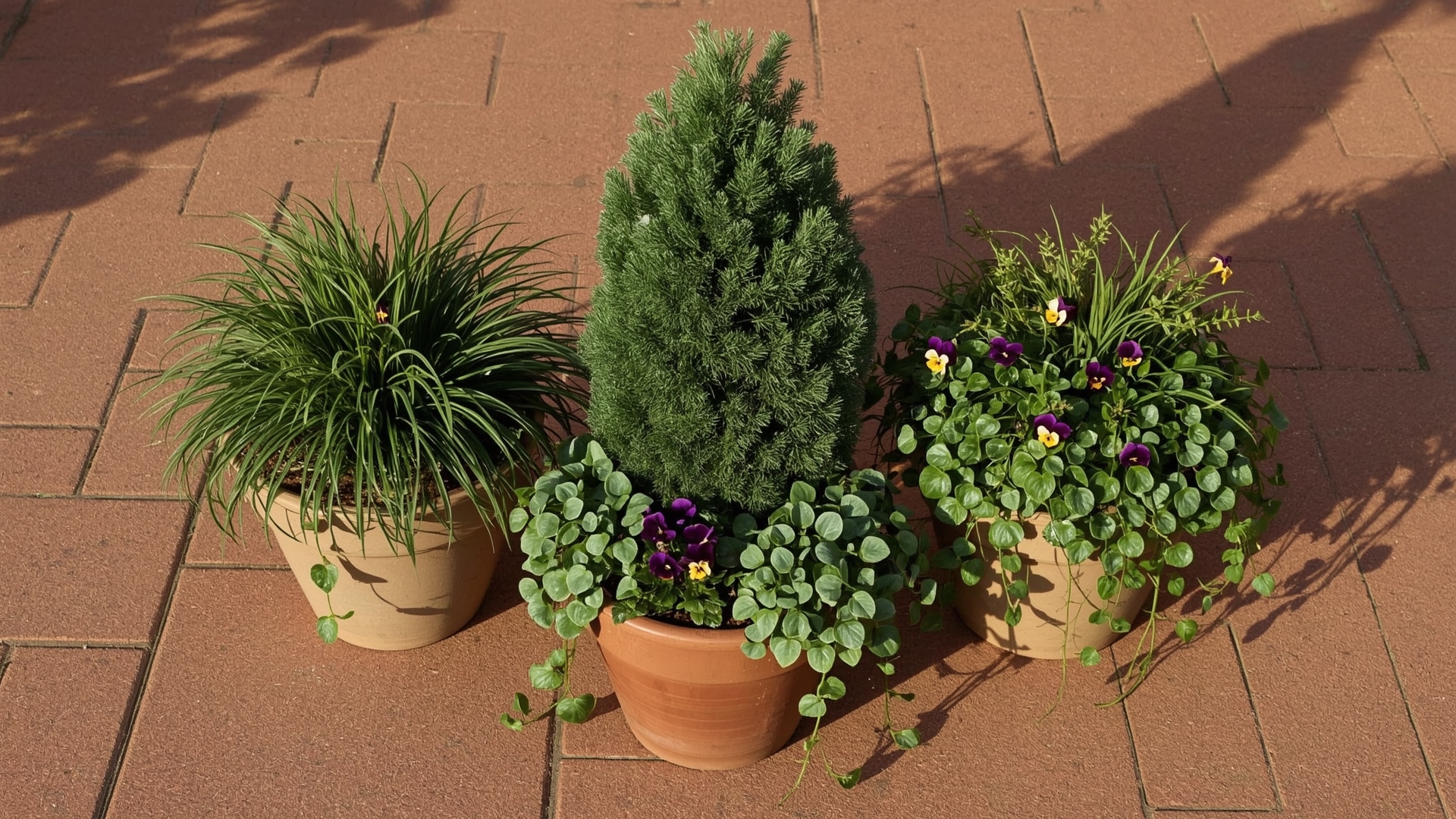
Quick Answer: Design patio container displays using a three-layer structure: a tall “thriller” plant as the focal point, medium “filler” plants for mass and color, and trailing “spiller” plants that cascade over the edges. Swap filler and spiller plants seasonally while keeping permanent thriller plants year-round.
The Thriller-Filler-Spiller Framework for Container Design
This three-layer formula works because it mirrors natural plant layering. The thriller gives the container height and a visual anchor. The filler creates density and seasonal color. The spiller softens the container edge and adds movement.
For year-round containers, choose a thriller that has winter interest — an ornamental grass, dwarf conifer, or evergreen shrub. Swap out the filler and spiller plants every 8 to 12 weeks as seasons change.
Year-Round Seasonal Rotation Plan for Patio Containers
| Season | Thriller (Permanent) | Filler (Swap Seasonally) | Spiller (Swap Seasonally) | Color Palette |
|---|---|---|---|---|
| Spring | Dwarf Alberta Spruce | Pansies, snapdragons | Sweet alyssum, lobularia | Purple, yellow, white |
| Summer | Dwarf Alberta Spruce | Petunias, angelonia, vinca | Sweet potato vine, bacopa | Hot pinks, oranges, lime green |
| Fall | Dwarf Alberta Spruce | Mums, ornamental kale, asters | Creeping jenny, ivy | Burgundy, gold, deep orange |
| Winter | Dwarf Alberta Spruce | Evergreen clippings, holly branches | Ivy, creeping juniper | Deep green, red, silver |
How to Arrange Multiple Containers on a Patio
Odd numbers of containers look more natural than even numbers. Groups of three or five create visual flow. Vary container heights — tall containers on the perimeter or back, low containers in front — to create depth without blocking the view.
For small patios and balconies, vertical space matters. Tall containers, tiered plant stands, and wall-mounted planters can triple your growing space without expanding the footprint of your display.
Patio Microclimate Tips That Make Winter Easier
South and west-facing walls absorb heat during the day and radiate it back at night. Placing containers near these walls can raise the ambient temperature by 5 to 15°F compared to open-air positions. This alone can push a Zone 6 container garden to behave like Zone 7.
Paved surfaces retain heat better than grass or gravel. Containers on concrete or brick patios benefit from this thermal mass, especially through the early weeks of fall when frosts are light and brief.
How Do You Fertilize Container Plants Through the Seasons?
Quick Answer: Container plants need more frequent feeding than in-ground plants because nutrients leach out with every watering. Use a balanced slow-release fertilizer (10-10-10 or 14-14-14) at planting, then supplement with liquid fertilizer every 2 to 4 weeks during the active growing season.
Seasonal Fertilizing Schedule for Outdoor Containers
- Early spring: Mix a slow-release granular fertilizer into the top 2 inches of potting mix. A 14-14-14 formula releases nutrients over 3 to 4 months.
- Late spring through midsummer: Supplement with a liquid balanced fertilizer (such as 20-20-20) every 2 to 3 weeks. This keeps pace with peak growth demand.
- Late summer: Switch to a low-nitrogen, high-phosphorus formula (such as 5-10-10) to encourage flowering and root development over leafy growth.
- Early fall: Stop all fertilizing for plants you want to overwinter. New growth triggered by late fertilizing is the first thing to die in frost.
- Winter: No fertilizing needed for dormant plants. Evergreens in mild climates (Zones 8 and above) can receive a light half-strength feeding in winter if actively growing.
What Are the Most Common Container Gardening Mistakes to Avoid?
Quick Answer: The five most common mistakes are using garden soil in containers, choosing containers too small for the plant, skipping drainage holes, overwatering in fall and winter, and selecting plants that aren’t cold-hardy enough for the container environment.
Overwatering Is the Number One Container Plant Killer
More container plants die from overwatering than any other cause. Roots need both water and oxygen. When potting mix stays saturated, oxygen can’t reach the root zone and roots begin to rot.
The finger test is simple and reliable. Push your finger 2 inches into the potting mix. If it feels moist, don’t water. If it feels dry, water thoroughly until it drains from the bottom. In fall and winter, reduce watering frequency significantly — most container plants need water only once every 10 to 14 days when growth is slow or dormant.
Container Size Mistakes That Shorten Plant Life
Choosing a container that’s too large is almost as problematic as choosing one that’s too small. An oversized container holds more potting mix than the plant’s roots can absorb water from, which leads to consistently soggy conditions even with proper watering habits.
The general rule: container diameter should be roughly 2 inches wider than the plant’s root ball at potting time. For perennials you want to keep for multiple years, size up by 2 inches each time you repot.
Frequently Asked Questions About Outdoor Container Gardening
Can you leave containers outside all winter in cold climates?
Yes, but only if the container is frost-resistant and the plant is rated at least two hardiness zones colder than your zone. Fiberglass and thick polyethylene containers handle freezing temperatures without cracking. Terra cotta and thin ceramic containers will crack in repeated freeze-thaw cycles.
How often should you water outdoor containers in summer?
Most containers need watering every one to two days during hot summer weather. Check moisture with the finger test rather than following a fixed schedule. Small containers and dark-colored containers dry out faster because they absorb more heat from sunlight.
What is the best container for growing herbs year round outdoors?
A self-watering container made of fiberglass or thick polyethylene works best for herbs. Herbs like consistent moisture but hate soggy roots, and self-watering containers deliver both. Use a container at least 10 inches deep to give tap-rooted herbs like parsley and cilantro enough room.
Do container plants need more fertilizer than in-ground plants?
Yes. Every time you water a container, some nutrients leach out through the drainage hole. In-ground plants draw from a much larger soil reservoir. Container plants rely entirely on what’s in the potting mix, so they need regular fertilizing through the growing season to stay healthy and productive.
How do you protect container roots from freezing without moving them indoors?
Wrap the container with burlap, bubble wrap, or horticultural fleece to insulate the root zone. Group containers together against a south-facing wall to benefit from retained heat. For extra protection, mound dry mulch or straw around the outside of the container up to the soil line.
What is coco coir and why is it used in potting mix instead of peat moss?
Coco coir is the shredded fiber from coconut husks. It behaves similarly to peat moss in potting mix — it holds moisture while staying loose enough for drainage. Coco coir is considered more sustainable than peat moss because it’s a byproduct of coconut processing rather than a harvested natural deposit.