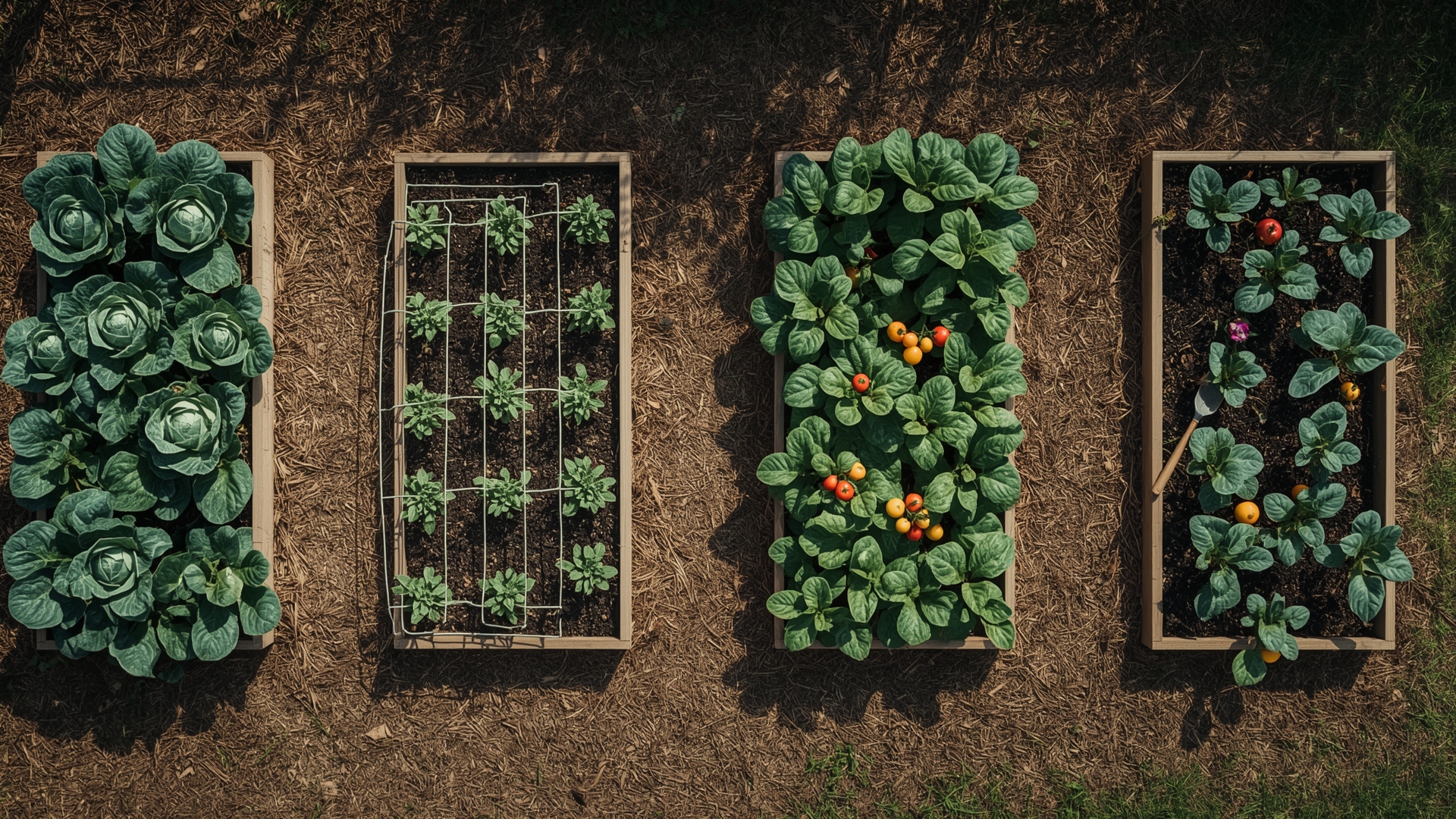
Raised beds drain faster than ground-level gardens. That single fact changes everything about how you water. The same schedule that works for an in-ground tomato plant will leave a raised bed bone dry by mid-afternoon in July.
Most raised bed gardeners either overwater in spring or underwater in summer. The fix isn’t a stricter schedule. It’s understanding the four factors that actually drive watering frequency: season, soil composition, climate zone, and plant growth stage. Get those right, and you’ll water less, waste less, and grow more.
Key Takeaways
- Check soil moisture first, then water. Stick your finger 2 inches deep before every watering session. Water only when the soil feels dry at that depth.
- Raised beds dry out 25–50% faster than in-ground gardens because of their elevated position and improved drainage.
- Watering frequency changes every season. Spring may need every 3–4 days, while peak summer may need daily watering in hot climates.
- Soil mix matters more than most gardeners realize. A high-peat or sandy mix loses moisture twice as fast as a mix with compost and vermiculite.
- Seedlings and transplants need water every 1–2 days. Established mature plants in the same bed may only need water every 2–3 days.
- Mulch cuts watering frequency by 30–50% by slowing surface evaporation between waterings.
How Often Should You Water a Raised Bed Vegetable Garden?
Quick Answer: Most raised bed vegetable gardens need watering every 1–3 days in summer and every 3–7 days in spring and fall. Check soil moisture 2 inches deep before watering. Hot weather, sandy soil, and young seedlings all push frequency toward daily watering.
There is no single universal schedule. A raised bed in Phoenix, Arizona in July is a completely different environment than the same bed in Portland, Oregon in May. What stays consistent is the method for deciding when to water.
The Finger Test: Your Most Reliable Watering Tool
Push your index finger 2 inches into the soil. If it feels dry at that depth, water now. If it still feels damp or cool, wait and check again tomorrow. This test takes five seconds and beats any calendar schedule.
A soil moisture meter gives you the same information more precisely. Most meters read on a 1–10 scale. Water when the reading drops to 3 or below for most vegetables. Tomatoes and peppers prefer readings no lower than 4 before you water.
How Deep Should You Water Each Time?
You want water to reach 6 inches deep into the soil. That’s where most vegetable roots grow actively. A shallow sprinkle only wets the top inch, which encourages roots to stay near the surface where they’re vulnerable to heat and drying.
To check depth after watering, push a wooden skewer or chopstick into the soil 20 minutes after you finish. Pull it out. If it’s wet to the 6-inch mark, you watered correctly. If it’s only wet 2–3 inches down, water longer next time.
How Does Season Affect Raised Bed Watering Frequency?
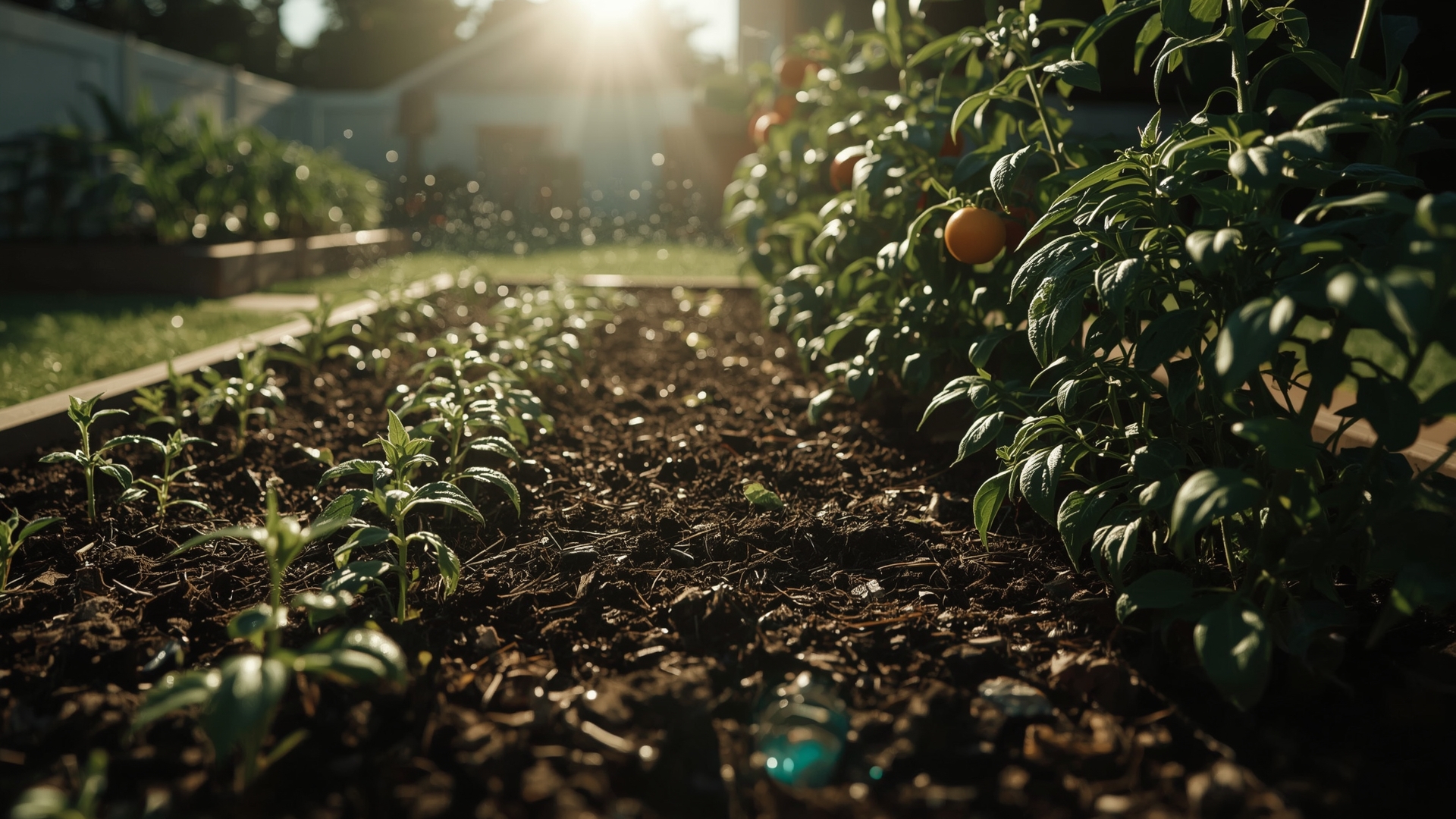
Quick Answer: Spring needs watering every 3–4 days, early summer every 2–3 days, peak summer every 1–2 days, and fall every 4–7 days. Cool temperatures and shorter days reduce evaporation, while summer heat can double your water needs.
Spring Watering Schedule (March–May)
Spring is forgiving. Cooler temperatures slow evaporation, and soil holds moisture longer. Most raised beds need watering every 3–4 days during spring. Newly transplanted seedlings are the exception. They need water every 1–2 days until their roots establish.
Watch for signs of overwatering in spring. Yellowing lower leaves, soggy soil that doesn’t dry out between waterings, and a sour smell from the bed all point to too much water, not too little.
Summer Watering Schedule (June–August)
Summer is where most gardeners lose control of their watering routine. Heat speeds evaporation dramatically. A raised bed that held moisture for three days in May might dry out completely in 18 hours during a heat wave.
In most climates, raised beds need watering every 1–2 days during peak summer. In USDA hardiness zones 9–11, or any region where temperatures exceed 90°F regularly, daily watering is often necessary. Water in the early morning to reduce evaporation loss and lower the risk of fungal disease.
Fall Watering Schedule (September–November)
Fall brings cooler air and often more rainfall. Your watering frequency drops back to every 3–5 days for most crops. Root vegetables like carrots and beets growing through fall actually prefer slightly drier soil conditions, so you can stretch intervals to 5–7 days.
Watch your local rainfall closely in fall. Natural precipitation can cover all or most of your watering needs during wet fall seasons. A simple rain gauge in or near your garden takes the guesswork out of it.
Seasonal Watering Frequency Reference Table
| Season | Typical Air Temp Range | Watering Frequency | Key Risk | Best Watering Time |
|---|---|---|---|---|
| Early Spring | 40–65°F | Every 3–5 days | Overwatering / root rot | Morning |
| Late Spring | 55–75°F | Every 2–4 days | Inconsistent moisture | Morning |
| Early Summer | 70–85°F | Every 1–3 days | Underwatering during heat | Early morning |
| Peak Summer | 85–100°F+ | Daily to every 2 days | Heat stress, blossom drop | Early morning (5–8 AM) |
| Early Fall | 60–80°F | Every 2–4 days | Inconsistent rainfall | Morning or evening |
| Late Fall | 35–60°F | Every 5–10 days | Overwatering / fungal issues | Midday |
How Does Soil Type Change How Often You Need to Water?
Quick Answer: Sandy or peat-heavy soils dry out 2–3 times faster than loam or compost-rich mixes. A bed filled with pure peat moss may need daily watering in summer, while a balanced mix with vermiculite and compost can hold moisture for 2–3 days.
The soil inside your raised bed is entirely within your control. That’s one of the biggest advantages of raised bed growing. But that also means the wrong mix makes your watering work much harder.
How Different Soil Components Affect Water Retention
| Soil Component | Water Retention Ability | Drainage Speed | Moisture Hold Time (70°F day) | Best Use Ratio |
|---|---|---|---|---|
| Peat Moss | High (when wet) | Moderate | 1–2 days | Up to 30% of mix |
| Coconut Coir | High | Moderate | 2–3 days | Up to 30% of mix |
| Compost | Medium-High | Good | 2–3 days | 25–35% of mix |
| Vermiculite | Very High | Slow | 3–4 days | Up to 25% of mix |
| Perlite | Low | Very Fast | Less than 1 day | Up to 15% of mix |
| Sandy Loam | Low | Very Fast | Less than 1 day | Not recommended solo |
| Clay-heavy Garden Soil | Very High | Very Slow | 4–7 days | Avoid in raised beds |
What Happens to Peat Moss When It Dries Out Completely?
Peat moss has an important quirk. Once it dries out completely, it becomes hydrophobic. That means water beads off the surface instead of soaking in. You can water a peat-heavy bed for five minutes and have most of that water run out the sides without ever reaching plant roots.
If you notice water pooling on the surface and running off quickly, your peat has dried out. Fix it by slowly applying water in small amounts over 15–20 minutes, or soak the entire bed by letting a hose trickle on the surface for an extended period. Adding a liquid soil wetting agent (sometimes called a soil surfactant) also helps rehydrate dried peat quickly.
How Does Climate Zone Affect Raised Bed Watering Needs?
Quick Answer: Gardeners in hot-dry zones like USDA zones 9–11 may water daily in summer. Humid zones 6–8 often water every 2–3 days. Cool northern zones 3–5 may only need watering every 3–5 days. Humidity slows evaporation significantly.
Watering Needs by USDA Hardiness Zone
| USDA Zone | Summer Temp Range | Humidity Level | Summer Watering Frequency | Annual Rainfall (Avg) |
|---|---|---|---|---|
| Zones 3–4 (Northern US, Canada) | 60–80°F | Moderate | Every 2–4 days | 20–35 inches/year |
| Zones 5–6 (Midwest, Mid-Atlantic) | 75–90°F | Moderate–High | Every 2–3 days | 30–45 inches/year |
| Zones 7–8 (Pacific NW, Mid-South) | 80–95°F | Varies | Every 1–3 days | 15–50 inches/year |
| Zones 9–10 (CA, TX, Southwest) | 90–110°F | Low–Dry | Daily to every 2 days | 8–25 inches/year |
| Zone 11 (Hawaii, South Florida) | 85–95°F | Very High | Every 1–2 days | 40–60 inches/year |
Wind: The Hidden Factor That Dries Out Raised Beds Fast
Wind accelerates evaporation faster than most gardeners expect. A moderately windy site (winds of 10–15 mph consistently) can dry out a raised bed as much as one full climate zone hotter would. If your raised bed sits in an exposed location with regular afternoon wind, treat it like it’s one zone warmer than your USDA zone.
Physical windbreaks like trellises, fences, or tall companion plants on the windward side reduce evaporation and lower your watering frequency. This is especially helpful in zones 7–9 where summer wind combined with heat creates rapid soil drying.
How Does Plant Growth Stage Affect Watering Frequency?
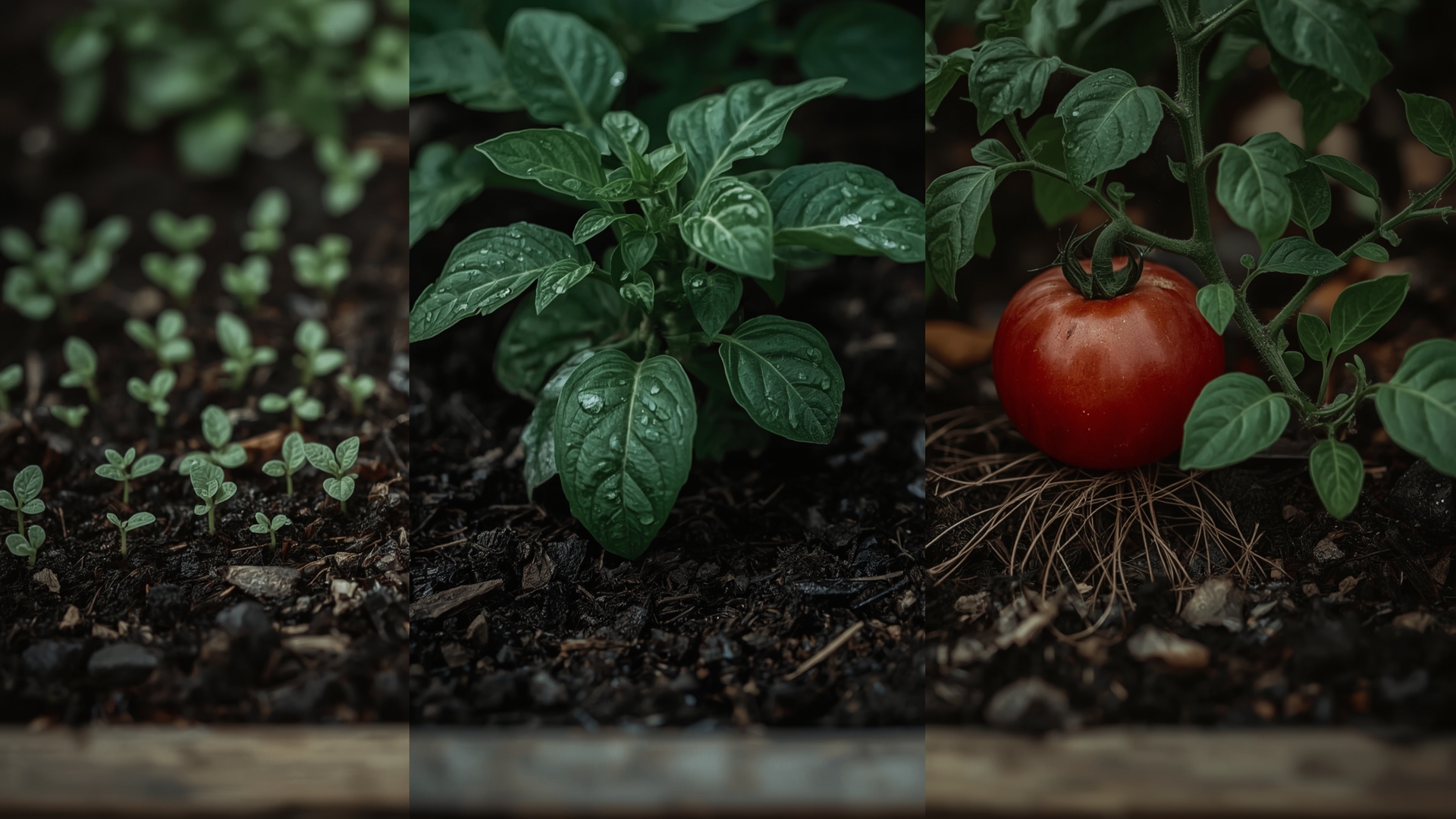
Quick Answer: Seeds and seedlings need the most frequent watering, every 1–2 days. Established vegetative plants need water every 2–3 days. Fruiting plants need deep, consistent moisture every 1–2 days. Harvest-stage crops often benefit from slightly drier conditions for flavor concentration.
Watering Needs from Seed to Harvest
| Growth Stage | Root Depth | Watering Frequency | Water Volume Per Session | Key Risk |
|---|---|---|---|---|
| Germination (seeds in soil) | 0–1 inch | Daily or twice daily | Light mist only | Surface drying kills germination |
| Seedling (0–3 weeks) | 1–3 inches | Every 1–2 days | 0.5–1 gallon per sq ft/week | Damping off from overwatering |
| Transplant establishment (1–2 weeks post-transplant) | 3–6 inches | Every 1–2 days | 1 gallon directly at root zone | Transplant shock from drought stress |
| Vegetative growth | 6–12 inches | Every 2–3 days | 1–1.5 gallons per sq ft/week | Inconsistent moisture stunts growth |
| Flowering and fruit set | 12–18 inches | Every 1–2 days | 1.5–2 gallons per sq ft/week | Blossom drop from moisture swings |
| Fruit development | 12–24 inches | Every 1–2 days consistently | 1.5–2 gallons per sq ft/week | Blossom end rot, cracking, splitting |
| Near harvest | Full root depth | Every 2–4 days | Reduce by 25–30% | Overwatering dilutes flavor |
Why Fruiting Vegetables Need the Most Consistent Watering
Tomatoes, peppers, cucumbers, and squash are highly sensitive to uneven moisture during fruit development. Watering heavily after a dry period causes rapid water uptake. Fruits grow too fast and crack or split. Tomatoes also develop blossom end rot when moisture swings cause a calcium deficiency inside the plant, even when calcium is present in the soil.
The goal during fruiting isn’t just “enough water.” It’s consistent, predictable moisture. Drip irrigation is the best tool for this, because it delivers small amounts regularly at root level rather than big flood-and-dry cycles from hand watering.
Does Raised Bed Depth Change How Often You Water?
Quick Answer: Yes. A 6-inch deep raised bed holds much less water than a 12-inch or 18-inch deep bed and needs watering 50–75% more often. Deeper beds act as a larger reservoir and give roots more room to find moisture between waterings.
Watering Frequency by Raised Bed Depth
Bed depth directly impacts the volume of soil available to store moisture. A shallow 6-inch bed might hold enough water for 12–18 hours in peak summer. An 18-inch bed of the same surface area holds roughly three times that moisture volume.
If you’re working with shallow beds under 8 inches, consider topping up your soil mix to increase depth, using a moisture-retaining mulch layer, and watering more frequently with smaller volumes rather than infrequent heavy soaks that run straight through.
How Does Mulch Reduce Watering Frequency in Raised Beds?
Quick Answer: A 2–3 inch layer of organic mulch reduces surface evaporation by 30–50%, which can cut your watering frequency from daily to every 2–3 days during summer. Straw, wood chips, and shredded leaves all work well in raised beds.
Best Mulch Types for Moisture Retention in Raised Beds
Straw is the most popular raised bed mulch. It’s lightweight, easy to apply around plants, and breaks down slowly enough to last a full growing season. Apply it 2–3 inches deep. Avoid hay, which contains weed seeds.
Shredded leaves work just as well as straw and cost nothing if you have trees. Compost used as a surface mulch serves double duty, retaining moisture and feeding soil biology. Wood chips are effective but break down slowly and can tie up nitrogen in the top layer of soil, so keep them from direct contact with plant stems.
What Are the Signs You’re Watering Too Much or Too Little?
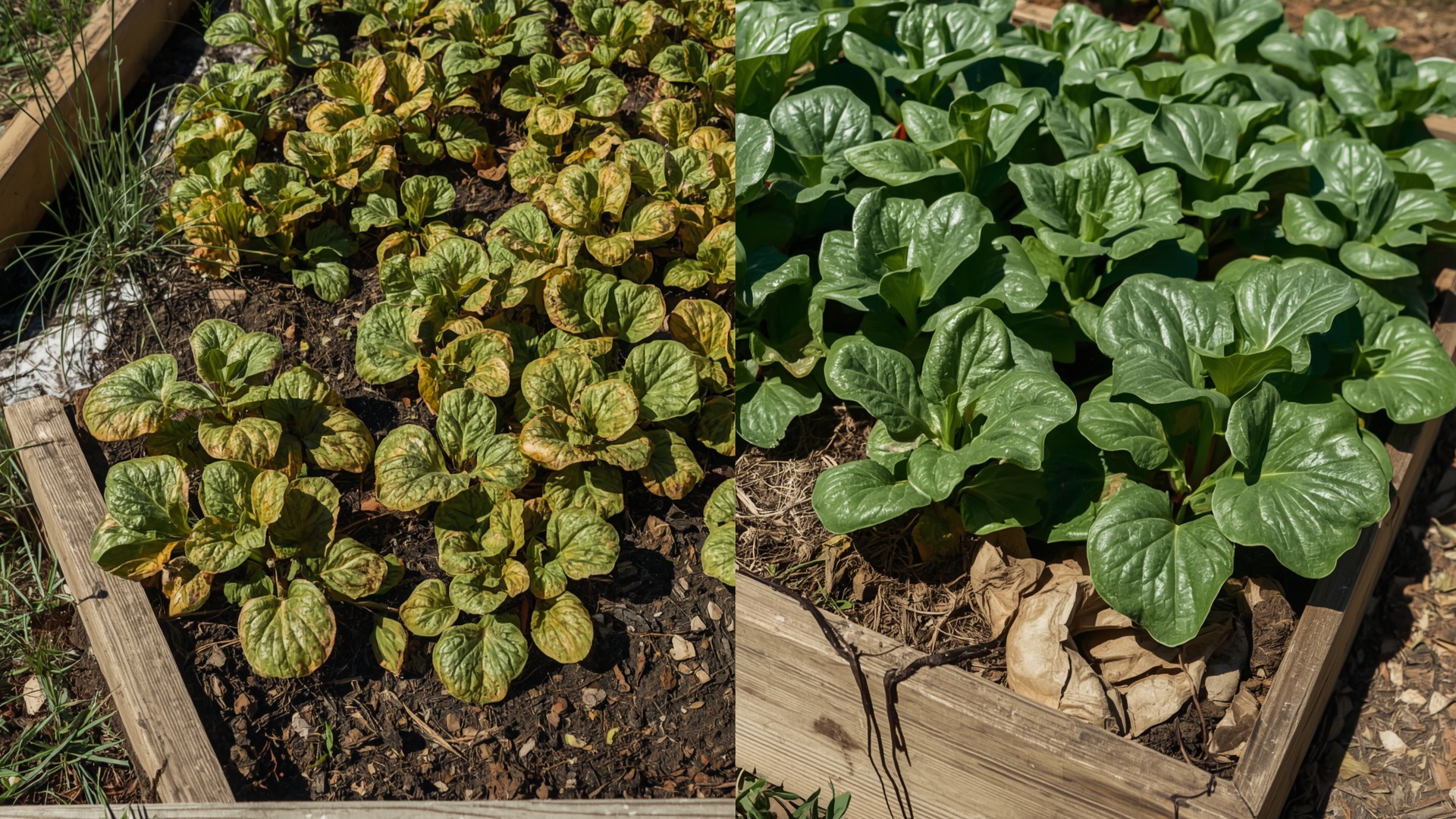
Quick Answer: Overwatered plants show yellowing lower leaves, limp stems despite wet soil, and a musty smell from the bed. Underwatered plants show wilting during the heat of the day, dry and cracked soil surface, and leaves curling inward at the edges.
Visual Indicators of Overwatering
- Yellowing leaves starting at the bottom of the plant (not top, which indicates nutrient issues)
- Soft, mushy stems near the soil line
- Soil stays wet for more than 4 days without rain between waterings
- White mold or algae on the soil surface
- Fungus gnats hovering around the soil (they breed in perpetually moist soil)
Visual Indicators of Underwatering
- Wilting during peak afternoon heat that doesn’t recover by the following morning
- Leaf edges turning brown and crispy
- Soil pulling away from the bed edges as it shrinks when dry
- Blossom drop on tomatoes, peppers, and squash
- Stunted growth with small, tough leaves
One important note: wilting in the middle of a hot afternoon doesn’t always mean underwatering. Some plants, especially squash, naturally wilt during peak heat to reduce water loss. Check the soil at 2 inches before deciding to water. If the soil is still moist, wait until evening and see if the plant recovers on its own.
Should You Use Drip Irrigation or Hand Water a Raised Bed?
Quick Answer: Drip irrigation is more effective for vegetable raised beds. It delivers water directly to root zones, reduces leaf wetness and disease risk, uses 30–50% less water than hand watering, and maintains more consistent moisture levels during fruiting stages.
Comparing Watering Methods for Raised Beds
| Watering Method | Water Efficiency | Root Zone Delivery | Disease Risk | Time Required | Best For |
|---|---|---|---|---|---|
| Hand watering (watering can) | 50–60% | Variable | High (wet foliage) | 10–20 min per bed | Seedlings, spot watering |
| Garden hose with wand | 55–65% | Good if aimed at base | Moderate | 5–15 min per bed | General use, flexible |
| Overhead sprinkler | 40–50% | Poor (surface only) | Very High | Automated | Lawn areas, not ideal for beds |
| Drip irrigation (emitters) | 85–95% | Excellent | Low | Automated, minimal | Most vegetables, fruiting crops |
| Soaker hose | 75–85% | Good | Low | Minimal setup, low cost | Row crops, budget-friendly option |
How Long to Run Drip Irrigation in a Raised Bed
Most drip emitters output 0.5–2 gallons per hour (GPH). Vegetable raised beds typically need 1–2 gallons of water per square foot per week during peak summer. Run your system long enough to deliver that volume, then check soil depth penetration using the skewer test described earlier.
A typical 4×8 foot raised bed (32 square feet) needs 32–64 gallons per week in peak summer. If your drip system delivers 1 GPH per emitter and you have 8 emitters in the bed, that’s 8 GPH total. You’d need to run it for 4–8 hours per week, split across 3–7 sessions depending on your schedule and season.
How Do You Adjust Watering During a Heat Wave?
Quick Answer: During heat waves above 95°F, water raised beds in the early morning (5–8 AM), increase frequency to daily, consider shade cloth to reduce evaporation, and check soil moisture in the afternoon to catch stress before plants show symptoms.
Heat Wave Watering Protocol
When temperatures climb above 95°F for three or more consecutive days, your normal watering schedule becomes inadequate. Evaporation rates double or triple. Even beds watered properly in the morning can be critically dry by 2 PM.
Shade cloth rated at 30–40% light reduction cuts soil surface temperature by 10–15°F. That temperature drop alone can extend moisture hold time by 4–6 hours. Install it temporarily during heat events and remove it once temperatures drop below 90°F to let plants resume full photosynthesis.
If you hand water, add a second light watering in the evening during heat waves. Avoid heavy evening watering that leaves foliage wet overnight, which promotes fungal disease. Instead, water slowly at the base of plants to recharge root-zone moisture without wetting leaves.
Frequently Asked Questions
Is it okay to water raised beds every day?
Yes, in peak summer or during heat waves, daily watering is often necessary and appropriate for raised beds. The key is to check soil moisture first. If the soil at 2 inches is still moist, skip that day even if it’s hot.
How much water does a 4×8 raised bed need per week?
A 4×8 foot raised bed (32 square feet) typically needs 32–64 gallons of water per week during peak summer. That works out to roughly 1–2 gallons per square foot per week. Cooler seasons cut that number roughly in half.
What time of day is best to water a raised bed vegetable garden?
Early morning between 5 and 8 AM is the best time. Water absorbs into the soil before heat evaporates it, and foliage dries quickly as temperatures rise. Evening watering works as a secondary option, but aim water at the soil, not the leaves.
Why does my raised bed soil dry out so fast?
Raised beds lose moisture faster than in-ground gardens for three reasons: elevated position exposes all four sides to air, improved drainage moves water through quickly, and the soil volume is smaller. Adding vermiculite to your mix and applying a 2–3 inch mulch layer are the most effective fixes.
Can I use a self-watering raised bed planter to reduce watering frequency?
Self-watering raised beds include a reservoir at the bottom that wicks moisture up through the soil via capillary action. They can reduce watering frequency to once every 3–7 days even in summer, depending on reservoir size. They work best for smaller beds and containers under 4 feet in length.
Do raised beds need more water than in-ground gardens?
Yes. Raised beds typically need 25–50% more frequent watering than comparable in-ground garden plots. The combination of better drainage, smaller soil volume, and exposure on all sides means moisture exits the system faster. Mulching and deeper bed construction help close that gap.