Planting the same vegetables in the same spot every year seems harmless. But over time, it depletes the soil, invites disease, and gives pests a permanent home. Crop rotation fixes all three problems with a simple change: move each plant family to a new bed every season.
This guide explains how crop rotation works, which plant families matter, and how to build a practical rotation schedule for a home vegetable garden with three or four beds.
Key Takeaways
- Crop rotation means moving plant families to a new garden bed each season to prevent disease, balance soil nutrients, and disrupt pest cycles.
- Most vegetables belong to one of five main families: Nightshades, Brassicas, Legumes, Alliums, and Cucurbits. Rotate by family, not by individual plant.
- A 4-bed rotation is the most effective system for home gardens — each family moves one bed forward every year, completing a full cycle in four years.
- Legumes are natural soil builders. They fix nitrogen, so the bed they leave behind is ready for heavy-feeding crops like tomatoes or squash.
- Soilborne diseases like fusarium wilt and clubroot can persist in soil for 4 to 7 years — consistent rotation is the most reliable prevention method.
- 3-bed rotation works for smaller gardens but requires careful plant family grouping to maintain at least a 2-year gap between same-family plantings.
What Is Crop Rotation and Why Does It Matter for Vegetable Gardens?
Quick Answer: Crop rotation means moving each plant family to a different garden bed each year. It prevents soilborne disease buildup, stops pest populations from establishing, and keeps soil nutrients balanced across beds over a 3 to 4 year cycle.
Plants feed from the soil. Different plants pull different nutrients. A tomato plant feeds heavily on nitrogen and calcium. A bean plant actually adds nitrogen back. If you grow tomatoes in the same bed year after year, the soil becomes depleted of exactly what tomatoes need most.
Disease is the bigger threat. Soilborne pathogens — fungi, bacteria, and nematodes that live in the dirt — build up when their host plant keeps returning. Fusarium wilt, which attacks tomatoes, can survive in soil for up to 7 years. Moving the tomatoes gives the pathogen no host to feed on, and the population slowly dies off.
Pests follow the same pattern. Onion root maggots, cabbage root flies, and carrot flies overwinter in the soil beneath their host plants. If the host is gone next spring, the emerging larvae starve.
What Problems Does Crop Rotation Prevent?
Rotation addresses three overlapping problems that compound over time when you grow the same crops in the same spots.
- Nutrient depletion: Heavy feeders drain specific minerals year after year. Rotation spreads the demand across beds.
- Disease buildup: Soilborne pathogens multiply when their host plant is always present. Rotation starves them out.
- Pest cycles: Many soil pests overwinter and emerge in spring ready to attack whatever grew there last year. Rotation breaks the cycle.
Which Plant Families Should You Rotate in a Vegetable Garden?
Quick Answer: Rotate five main families: Nightshades (tomatoes, peppers, eggplant), Brassicas (cabbage, kale, broccoli), Legumes (beans, peas), Alliums (onions, garlic, leeks), and Cucurbits (cucumbers, squash, melons). Always rotate by family, not by individual plant species.
The key rule of crop rotation is to group plants by botanical family. Plants in the same family share similar diseases, pests, and nutrient needs. Moving them together as one unit is what makes rotation effective.
Individual plants within a family are not interchangeable. Broccoli and cabbage are both Brassicas. If you grow broccoli in Bed 1 this year and cabbage in Bed 1 next year, you have not rotated. The same pathogens that attack broccoli will attack cabbage just as easily.
The Five Main Vegetable Families and Their Members
| Plant Family | Common Vegetables | Main Soil Role | Key Disease Risk | Recommended Bed Position |
|---|---|---|---|---|
| Nightshades (Solanaceae) | Tomatoes, peppers, eggplant, potatoes | Heavy nitrogen consumer | Fusarium wilt, late blight, verticillium wilt | After Legumes (nitrogen-rich bed) |
| Brassicas (Brassicaceae) | Cabbage, broccoli, kale, cauliflower, radish, turnip | Heavy potassium and calcium consumer | Clubroot, black rot, downy mildew | After Nightshades |
| Legumes (Fabaceae) | Beans, peas, lentils | Nitrogen fixer (adds 30–80 lbs N per acre) | Root rot, bean mosaic virus | After Brassicas or Alliums |
| Alliums (Amaryllidaceae) | Onions, garlic, leeks, chives, shallots | Moderate feeder, natural pest deterrent | White rot, onion maggot, downy mildew | After Cucurbits |
| Cucurbits (Cucurbitaceae) | Cucumbers, zucchini, squash, pumpkins, melons | Heavy feeder, large root spread | Powdery mildew, cucumber mosaic virus, squash vine borer | After Alliums |
What About Root Vegetables and Leafy Greens?
Root vegetables like carrots, parsnips, and beets belong to separate families (Apiaceae and Chenopodiaceae). Leafy greens like lettuce and spinach are also from distinct families. In a small home garden, these are often treated as “filler crops” that fit between the five main families. They have fewer aggressive disease risks and can be slotted into any available space without strict rotation requirements, though moving them around is still a good practice.
How Does a 4-Bed Crop Rotation System Work?
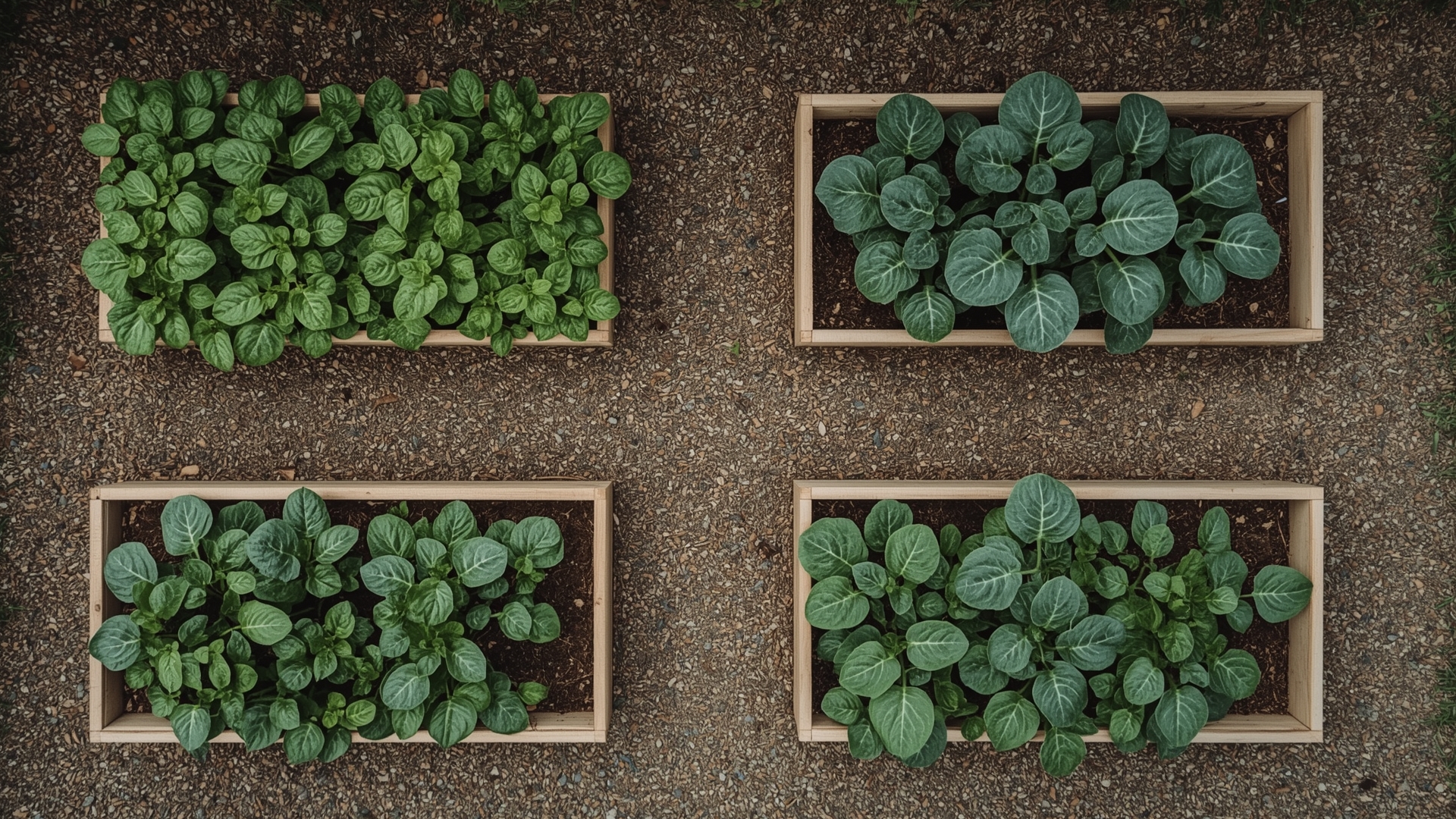
Quick Answer: In a 4-bed rotation, assign one plant family per bed. Each year, every family shifts one bed forward in a set sequence. After four years, each family returns to its starting bed, completing one full rotation cycle with a minimum 3-year gap between same-family plantings.
A 4-bed system is the gold standard for home vegetable gardens. It gives each plant family a 3-year break from any given bed, which is long enough to suppress most soilborne pathogens and break pest cycles effectively.
4-Bed Rotation Schedule by Year
| Bed | Year 1 | Year 2 | Year 3 | Year 4 |
|---|---|---|---|---|
| Bed 1 | Nightshades | Brassicas | Legumes | Cucurbits/Alliums |
| Bed 2 | Brassicas | Legumes | Cucurbits/Alliums | Nightshades |
| Bed 3 | Legumes | Cucurbits/Alliums | Nightshades | Brassicas |
| Bed 4 | Cucurbits/Alliums | Nightshades | Brassicas | Legumes |
The sequence matters. Legumes go before Nightshades because they leave behind nitrogen-rich soil — exactly what heavy-feeding tomatoes and peppers need. Brassicas follow Nightshades because the bed has had one season of heavy feeding and benefits from a crop that can handle moderate soil conditions.
How Should You Set Up Beds for a 4-Year Rotation?
Each bed should be physically separate — either a raised bed, a clearly marked in-ground plot, or a bordered section. Label them permanently so you always know what grew where. A simple stake with a weatherproof tag works well. A garden journal or app backup ensures you do not lose track across multiple seasons.
Bed size does not affect the rotation logic. A 4×4 foot raised bed and a 10×12 foot ground plot follow the same rules. What matters is that each bed consistently holds one family group per season.
How Does a 3-Bed Crop Rotation Work for Smaller Gardens?
Quick Answer: A 3-bed rotation groups five plant families into three categories: heavy feeders (Nightshades, Cucurbits), nitrogen fixers (Legumes), and Brassicas or Alliums. Each group rotates through three beds over three years, though the gap between same-family plantings is shorter than in a 4-bed system.
Not every gardener has space for four separate beds. A 3-bed rotation compresses the system by combining some plant families into one group. The tradeoff is a shorter gap between same-family plantings — 2 years instead of 3.
For most home gardeners, a 2-year gap is still significantly better than no rotation at all. The main risk is that diseases with long soil persistence, like clubroot, may not fully decline in just 2 years.
3-Bed Rotation Schedule by Year
| Bed | Year 1 | Year 2 | Year 3 |
|---|---|---|---|
| Bed A | Heavy Feeders (Nightshades + Cucurbits) | Brassicas + Alliums | Legumes |
| Bed B | Brassicas + Alliums | Legumes | Heavy Feeders (Nightshades + Cucurbits) |
| Bed C | Legumes | Heavy Feeders (Nightshades + Cucurbits) | Brassicas + Alliums |
Can You Mix Plant Families in One Bed?
Mixing families within a single bed is sometimes unavoidable in small gardens. The key is to keep the dominant crop from the same family and treat the bed as belonging to that family. For example, if Bed A is mostly tomatoes with a few onion plants tucked in, classify it as a Nightshade bed for rotation purposes. Onions in that position do not invalidate the rotation — they just go along for the ride.
How Does Crop Rotation Prevent Soil Disease in Vegetable Gardens?

Quick Answer: Soilborne pathogens survive by feeding on specific host plant roots. When you remove the host for 2 to 4 years, pathogen populations drop dramatically without a food source. Fusarium wilt, clubroot, and verticillium wilt all decline significantly with consistent rotation and a multi-year break.
Soilborne pathogens are specialized. A pathogen that causes late blight in tomatoes does not infect cabbage. It starves when tomatoes are absent. This specificity is exactly what makes rotation work as a disease prevention tool.
Soilborne Diseases Controlled by Crop Rotation
| Disease | Affected Family | Pathogen Type | Soil Persistence | Recommended Break |
|---|---|---|---|---|
| Fusarium wilt | Nightshades | Fungal (Fusarium oxysporum) | Up to 7 years | Minimum 4 years |
| Clubroot | Brassicas | Protist (Plasmodiophora brassicae) | Up to 20 years | Minimum 5–7 years |
| Verticillium wilt | Nightshades, Cucurbits | Fungal (Verticillium dahliae) | 4–6 years | Minimum 4 years |
| White rot | Alliums | Fungal (Sclerotium cepivorum) | Up to 20 years | Minimum 8 years |
| Black rot | Brassicas | Bacterial (Xanthomonas campestris) | 1–2 years | Minimum 2 years |
Some diseases, like white rot in Alliums, have such long soil persistence that a standard 4-bed home rotation cannot fully eliminate them. If you have had a severe white rot outbreak, consider removing Alliums from that bed for an extended period and focusing on soil drainage improvement, which limits spore germination.
Does Crop Rotation Work Against Garden Pests?
Rotation disrupts pest cycles for insects and nematodes that overwinter in the soil near their host plants. The cabbage root fly lays eggs in soil beside Brassica plants. When Brassicas move to a new bed, the emerging larvae find no food and die. The Colorado potato beetle, onion maggot, and carrot rust fly all follow similar patterns.
Flying pests that travel long distances are not controlled by rotation — aphids, for example, will find your plants regardless of where they are. Rotation targets soil-dwelling pests specifically.
How Do You Plan a Crop Rotation Schedule for a Home Vegetable Garden?
Quick Answer: Start by listing every vegetable you grow and sorting them by plant family. Assign one family group per bed. Choose a rotation direction (clockwise by bed number works well), then move each group one position forward every spring before planting. Record each year in a garden journal.
Step 1: Inventory Your Vegetables by Family
Write down every crop you grew last year. Beside each one, write its plant family. Group them. This gives you a clear picture of how many family groups you are actually managing. Most home gardens center on three or four families — a manageable number for any rotation system.
Step 2: Assign Family Groups to Beds
Assign each family group a starting bed based on what currently needs the most improvement. If a bed has had tomatoes for three years, start that bed on Legumes to rebuild nitrogen. If a bed has never had disease problems, it is a good spot for a new Nightshade rotation start.
Step 3: Map the Rotation Sequence
Write your rotation sequence on paper. A simple diagram with four boxes labeled Bed 1 through Bed 4, with arrows showing the clockwise movement of each family, is all you need. Update it every spring before planting begins.
Step 4: Keep a Garden Journal
Record what you planted in each bed every season. Note any disease symptoms, pest problems, or yield changes. This data becomes essential after two or three years. It tells you whether the rotation is working and where you might need to adjust.
What Are the Rules for Crop Rotation Exceptions and Edge Cases?
Quick Answer: Perennial crops like asparagus and rhubarb cannot be rotated — give them a permanent dedicated bed outside your rotation. Garlic planted in fall counts as the following spring’s Allium crop. Potatoes are Nightshades and must rotate with tomatoes, not separately.
How Do Perennial Vegetables Fit Into Rotation?
Perennials stay in the ground for many years. Asparagus, artichokes, rhubarb, and perennial herbs cannot be moved annually. The solution is simple: give them a dedicated permanent bed that sits completely outside your rotation system. Do not count that bed as part of your rotating group.
What About Garlic and Fall-Planted Crops?
Garlic is planted in fall and harvested the following summer. For rotation purposes, assign it to the Allium group and treat it as the Allium bed for the growing season in which it is harvested. This keeps your record-keeping consistent across the full calendar year.
Do Potatoes Rotate With Tomatoes?
Yes. Potatoes are Nightshades, not root vegetables. This is one of the most common crop rotation mistakes home gardeners make. Potatoes share the same diseases as tomatoes — including late blight, which caused the Irish Potato Famine. Always group potatoes with tomatoes, peppers, and eggplant in the Nightshade rotation bed.
How Does Crop Rotation Affect Soil Nutrients Over Time?
Quick Answer: Each plant family affects soil nutrients differently. Legumes add 30 to 80 lbs of nitrogen per acre through root bacteria. Brassicas and Nightshades are heavy feeders that deplete nitrogen, phosphorus, and potassium. Rotating families balances nutrient demand across all beds over time.
Think of each bed as a nutrient bank account. Heavy feeders make large withdrawals. Legumes make deposits. Rotation ensures no single bed is perpetually overdrawn.
Nutrient Impact by Plant Family
| Plant Family | Primary Nutrient Demand | Soil Effect After Season | Amendment Recommendation |
|---|---|---|---|
| Nightshades | High nitrogen, calcium, potassium | Depletes nitrogen, may lower pH slightly | Add compost or balanced fertilizer before planting |
| Brassicas | High calcium, boron, sulfur | Depletes calcium and potassium | Lime if pH is below 6.5 to deter clubroot |
| Legumes | Low; self-sufficient via nitrogen fixation | Increases available nitrogen by 30–80 lbs/acre | Minimal; inoculant (Rhizobium bacteria) helps if new bed |
| Alliums | Moderate nitrogen, sulfur | Neutral to slight depletion | Light compost topdress is sufficient |
| Cucurbits | High nitrogen, potassium, phosphorus | Heavy depletion, large root zone impact | Add aged manure or compost before planting |
Rotation works best when paired with annual compost additions. Even a nitrogen-fixing Legume bed benefits from 1 to 2 inches of compost worked into the top 6 inches of soil each spring. Rotation manages the direction of nutrient flow. Compost maintains the overall nutrient level in every bed.
What Are the Most Common Crop Rotation Mistakes Home Gardeners Make?
Quick Answer: The most common mistakes are rotating individual plants instead of whole families, forgetting that potatoes are Nightshades, keeping perennials inside the rotation system, and failing to keep records. Any of these errors can make rotation ineffective or create unintended disease pressure.
Rotating Single Plants Instead of Families
Moving just your tomatoes while leaving peppers in the same bed does not help. Both are Nightshades. The pathogens that attack tomatoes will attack peppers with equal enthusiasm. Move the entire family group together, every time.
Not Keeping Records
After two or three seasons, it is genuinely difficult to remember what grew where. Without records, you may accidentally repeat a family in the same bed with no idea it happened. A simple notebook with a bed diagram updated every spring takes less than five minutes and prevents years of wasted rotation effort.
Putting Perennials Inside the Rotation
If you plant asparagus in Bed 2 because that is where the Legume group starts, you have locked Bed 2 out of your rotation for the next decade. Always give perennials their own permanent space before setting up your rotation system.
Expecting Rotation Alone to Solve Severe Disease Problems
Rotation is a prevention strategy, not a cure. If your soil has a heavy clubroot infestation, rotation will slow its spread but will not eliminate it in 3 to 4 years. In severe cases, combine rotation with pH adjustment (raising soil pH above 7.0 limits clubroot activity), resistant varieties, and improved drainage.
Frequently Asked Questions About Crop Rotation in Vegetable Gardens
Can you do crop rotation in raised beds?
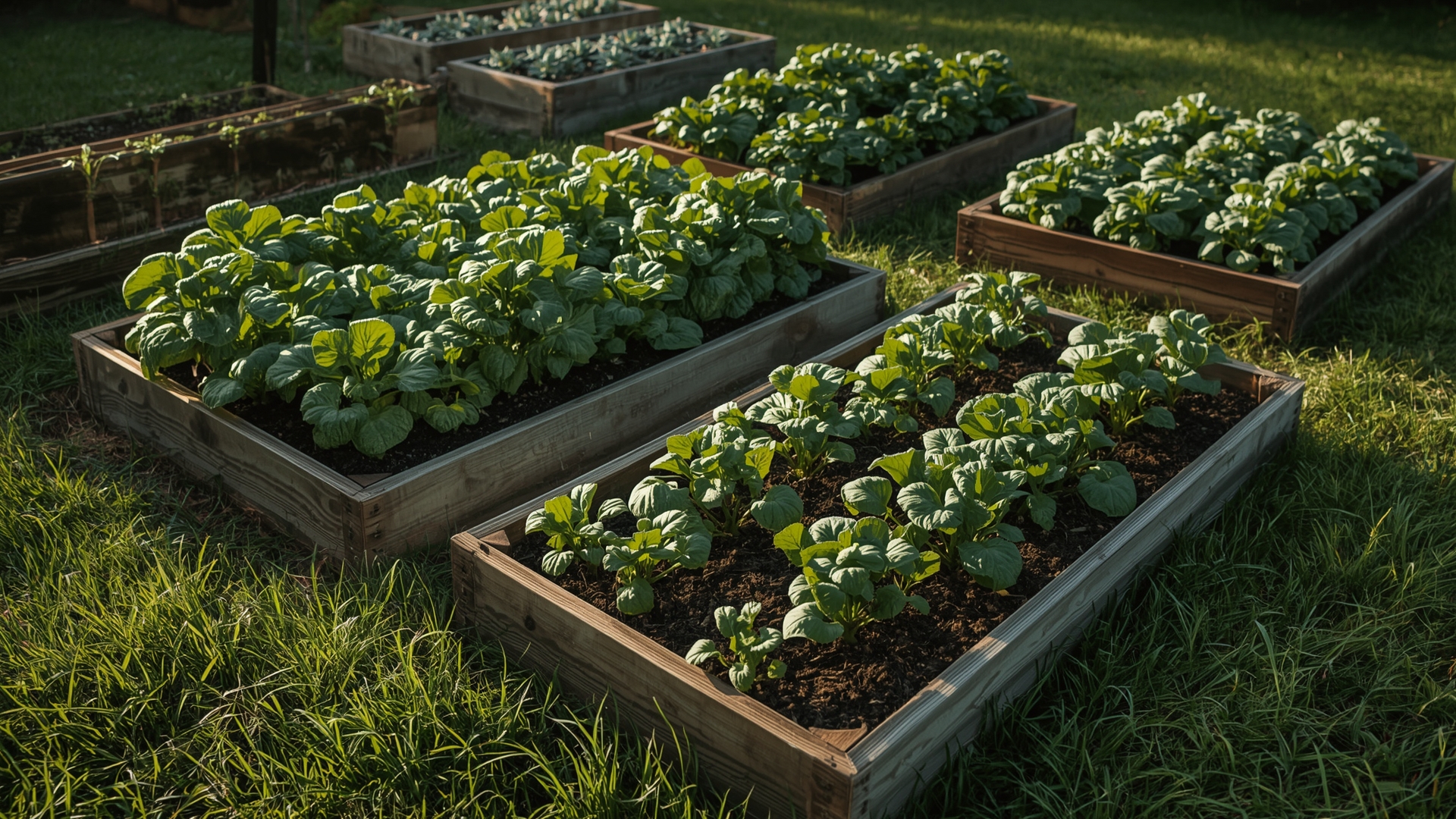
Yes. Raised beds are ideal for rotation because each bed is already physically separate. Assign one plant family group per raised bed and follow the same rotation schedule you would use for in-ground plots. The contained soil also makes it easier to track amendments and disease history per bed.
How many years do you have to wait before replanting the same crop?
A minimum of 2 years for most vegetable families. Three to four years is better for disease-prone families like Nightshades and Brassicas. Some diseases, like clubroot, persist for up to 20 years — in those cases, a standard home rotation cannot fully clear the pathogen, but it will slow its spread significantly.
What is a cover crop and how does it fit into crop rotation?
A cover crop is a plant grown between main crop seasons to improve soil health rather than for harvest. Common cover crops include clover, winter rye, and buckwheat. They prevent erosion, add organic matter, and some, like clover, fix nitrogen. They are typically grown in a bed during its “off” season and tilled in before the next food crop goes in.
Does crop rotation work for container gardens?
Container gardens can follow a simplified rotation by switching the plant family you grow in each container each year. The bigger advantage with containers is that you can replace the potting mix entirely, which eliminates soilborne disease risk. Replacing or refreshing potting mix is more practical in containers than rotation alone.
Should you rotate herbs along with vegetables?
Annual herbs like basil, dill, and cilantro can be moved around as part of your filler crops without strict rotation rules. Perennial herbs like rosemary, thyme, and oregano should be given a permanent bed outside the rotation system, just like perennial vegetables. Basil is worth keeping near Nightshades as a companion planting choice regardless of rotation position.
What is green manure and how does it improve crop rotation?
Green manure refers to a crop that is grown specifically to be dug back into the soil while still green. It adds organic matter and nutrients directly. Legume green manures like field beans or clover are especially valuable because they fix nitrogen before being turned in. Using green manure in your Legume rotation slot increases the nitrogen benefit the following Nightshade crop will receive.