Picking the right mulch for your raised bed vegetable garden can mean the difference between thriving plants and constant watering battles. Mulch does more than look tidy — it suppresses weeds, holds moisture in the soil, and slowly feeds your plants as it breaks down. But not every mulch type works the same way in a raised bed.
Raised beds drain faster than in-ground plots. They also heat up quicker in spring and lose moisture rapidly during summer. That means the mulch you choose needs to balance water retention, airflow, and decomposition rate — all at once.
Key Takeaways
- Straw mulch is the most popular choice for vegetable beds — it’s lightweight, weed-free, and retains moisture well at a 2–3 inch application depth.
- Wood chips work best around perennial vegetables and fruit crops, not annual beds, because they tie up nitrogen as they decompose.
- Shredded leaves are the most cost-effective option and break down into rich organic matter within one growing season.
- Application depth matters — too thin and weeds push through; too thick and water can’t penetrate evenly.
- Organic mulches outperform inorganic options in vegetable gardens because they improve soil biology over time.
- Mulch placement around plant stems should always leave a 1–2 inch gap to prevent rot and pest harborage.
What Makes a Mulch Good for Raised Bed Vegetable Gardens?
Quick Answer: The best mulch for raised bed vegetable gardens retains moisture, suppresses weeds, and breaks down into organic matter without blocking airflow or robbing nitrogen from vegetable crops. It should be easy to apply at 2–3 inches deep.
Raised beds have unique conditions that shape what mulch works. The walls create a confined root zone. Water drains through quickly — sometimes too quickly in summer. Soil temperature swings are more extreme than in-ground beds.
A good vegetable bed mulch checks these boxes:
- Allows water to pass through to soil roots
- Reduces evaporation from the soil surface
- Breaks down slowly enough to last a season but fast enough to feed soil biology
- Does not compact into a hard crust that sheds water
- Doesn’t introduce weed seeds or plant pathogens
Organic mulches — those made from plant material — do all of this and improve your soil over time. Inorganic mulches like gravel or landscape fabric block the soil improvement benefits your raised bed depends on.
How Do Straw, Wood Chips, and Shredded Leaves Compare?
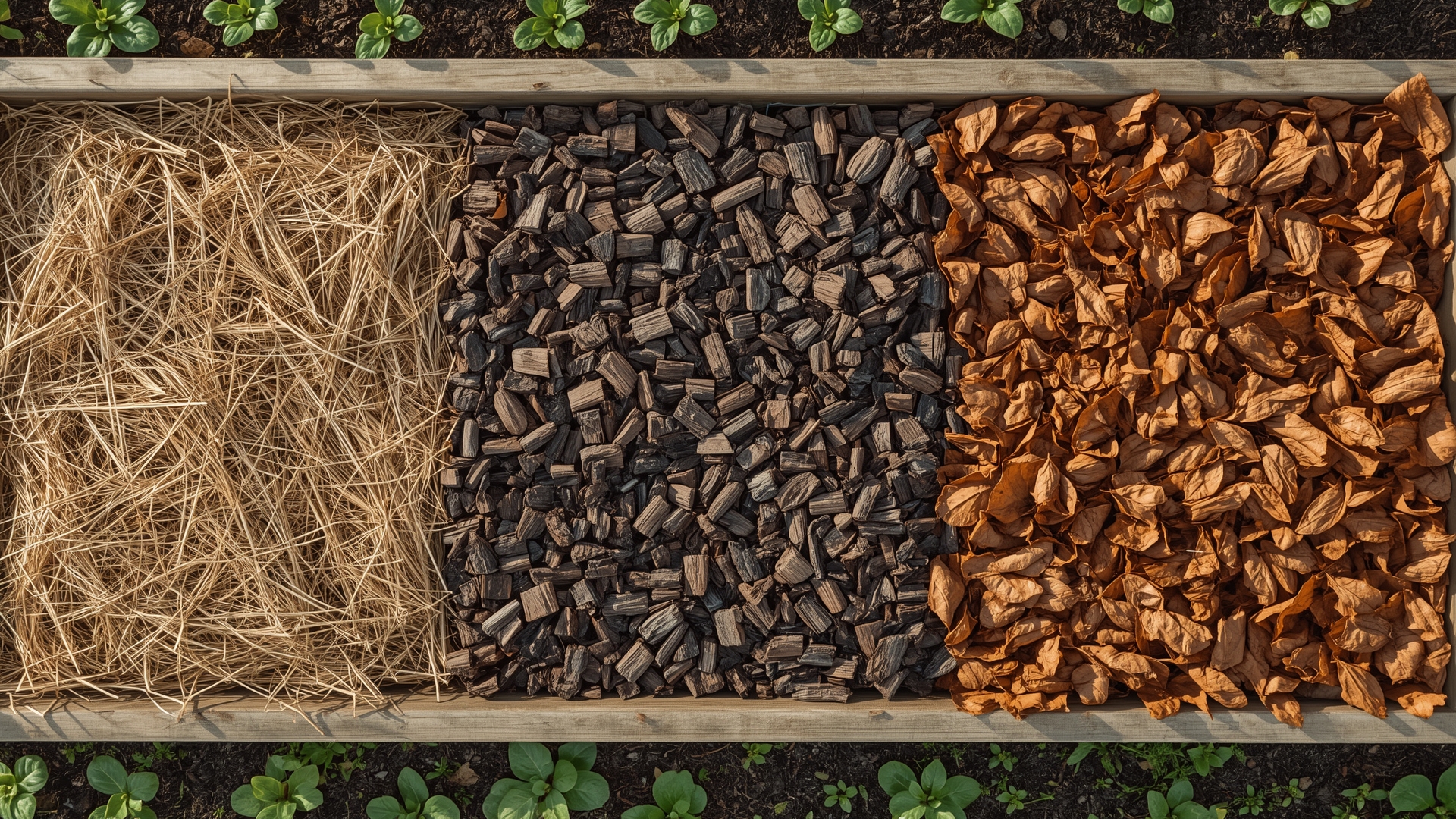
Quick Answer: Straw is best for annual vegetables, wood chips suit perennial crops and pathways, and shredded leaves break down fastest into compost-like material. Each differs in water retention, cost, nitrogen impact, and decomposition rate.
Straw Mulch: The Go-To Choice for Vegetable Beds
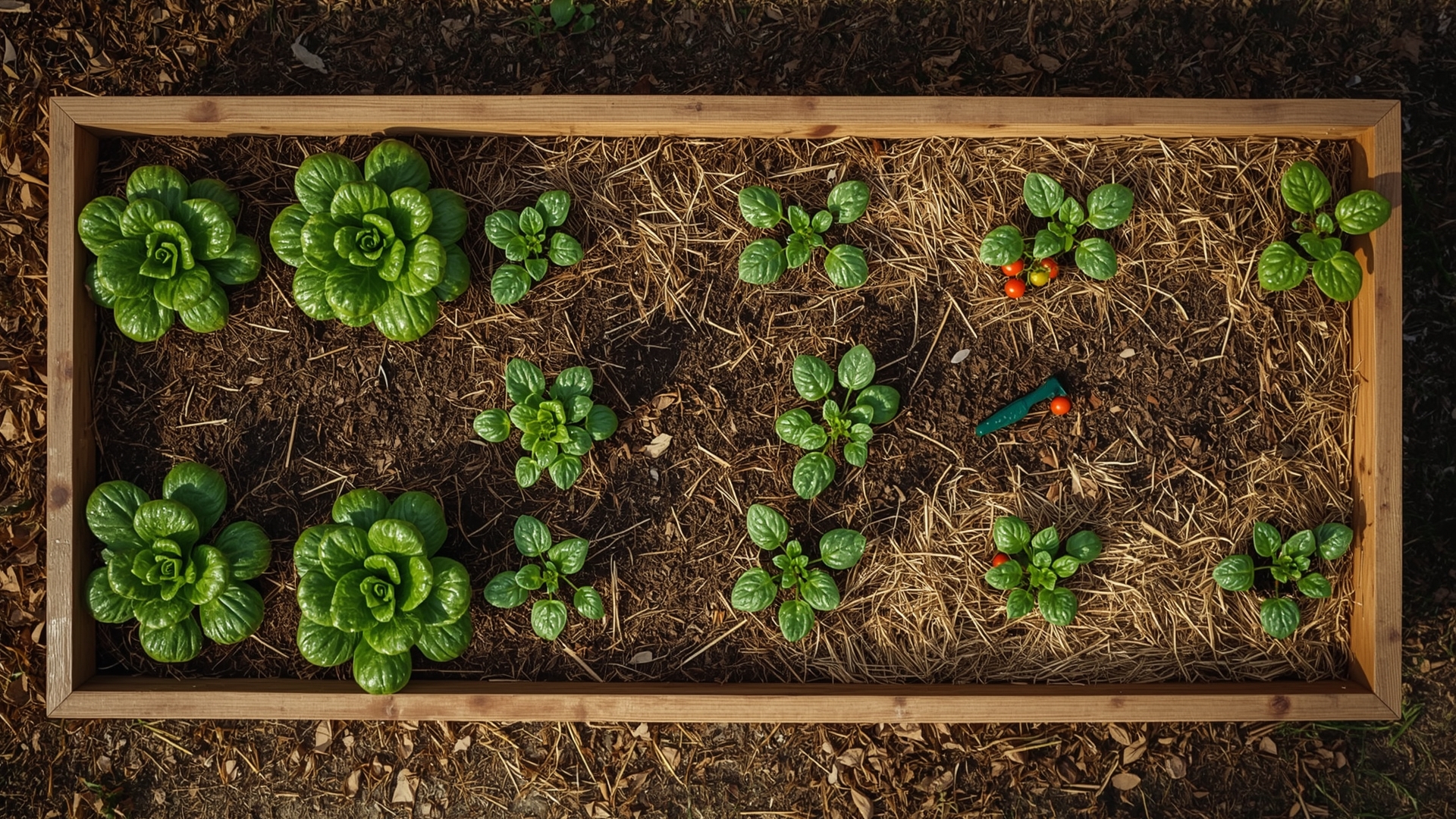
Straw — not hay — is the top choice for most raised bed growers. Straw is the hollow stem left after grain harvest. Hay, by contrast, contains seed heads that will sprout in your bed. Always confirm you’re buying seed-free straw.
Straw lays loosely, so it lets water through easily. It doesn’t compact heavily in one season. And it breaks down into organic matter by fall, improving your soil’s structure for the next planting year.
One bale of wheat straw typically covers 40–50 square feet at a 3-inch depth. For a standard 4×8 raised bed (32 square feet), one bale is enough with some left over.
Wood Chips: Powerful But Misunderstood
Wood chips are excellent mulch — but not for annual vegetable beds. Fresh wood chips tie up nitrogen in the soil as they break down. This process, called nitrogen immobilization, can starve fast-growing crops like lettuce, tomatoes, and beans.
Wood chips work well in raised beds growing perennial crops: asparagus, artichokes, or herbs like rosemary and thyme. They also work perfectly for the pathways between raised beds, where you want long-lasting weed suppression without soil impact.
If you want to use wood chips in an annual vegetable bed, let them age for 6–12 months before applying. Partially composted wood chips lose much of their nitrogen-robbing effect.
Shredded Leaves: The Underrated Free Option
Shredded leaves — also called leaf mold when partially decomposed — are one of the most effective and affordable mulch options available. You can shred them with a lawn mower and apply them immediately.
Whole leaves can mat together and shed water, so shredding is essential. Shredded leaves break down within one season, adding organic matter and improving moisture retention in the process.
They’re particularly good for cool-season vegetables like broccoli, carrots, and kale. Their fine texture also makes them easy to plant through — you can move them aside, drop in a transplant, and tuck them back around the stem.
What Is the Right Mulch Depth for a Raised Bed?
Quick Answer: Apply 2–3 inches of mulch for most raised bed vegetables. Coarser materials like wood chips need 3–4 inches. Finer materials like shredded leaves can be effective at 2 inches. Always leave a 1–2 inch gap around plant stems.
Why Depth Matters More Than Most Gardeners Realize
Too thin — under 1.5 inches — and weed seeds germinate through the gaps. Too thick — over 4 inches — and water may run off the surface rather than soaking through. The goal is a uniform layer that forms a moisture barrier without becoming a water barrier.
In raised beds, which tend to be shallower than in-ground gardens (typically 6–12 inches of soil), even an inch of extra mulch depth makes a bigger difference. Aim for the lower end of the recommended range for fine-textured mulches and the higher end for loose, chunky materials.
Application Depth by Mulch Type
| Mulch Type | Recommended Depth | Reapplication Frequency | Stem Gap Required |
|---|---|---|---|
| Straw | 2–3 inches | Once per season | 1–2 inches |
| Shredded Leaves | 2–3 inches | Midseason top-up may be needed | 1 inch |
| Wood Chips (aged) | 3–4 inches | Every 1–2 years | 2 inches |
| Compost | 1–2 inches | Each planting season | 1 inch |
| Straw + Compost Layer | 1 inch compost + 2 inches straw | Once per season | 1–2 inches |
Which Mulch Holds Water Best in a Raised Bed?
Quick Answer: Shredded leaves and straw hold soil moisture most effectively in raised beds. Studies show mulched beds lose 25–50% less water to evaporation than bare soil. Shredded leaves retain slightly more moisture than straw due to their denser texture.
Water Retention Performance by Mulch Type
Water loss from a raised bed depends on temperature, wind, humidity, and soil type. Mulch creates a physical barrier that slows evaporation — the process by which moisture escapes from the soil surface into the air.
Research from university cooperative extension programs consistently shows that 2–3 inches of organic mulch reduces soil moisture evaporation by 25–50% compared to bare, unmulched soil. That translates directly to fewer waterings per week.
| Mulch Type | Evaporation Reduction | Soil Temp Regulation | Moisture Consistency | Best Season |
|---|---|---|---|---|
| Straw | 30–45% | Moderate cooling effect | High | Spring through fall |
| Shredded Leaves | 35–50% | Moderate cooling effect | High | Spring through fall |
| Wood Chips (aged) | 25–40% | Strong insulating effect | Moderate | Year-round for perennials |
| Compost (thin layer) | 15–25% | Minimal effect | Low | Early season only |
| Bare Soil (no mulch) | 0% | No regulation | Low | Not recommended |
How Mulch Affects Soil Temperature
Mulch insulates your raised bed. In summer, it keeps the soil 5–10°F cooler than bare soil. In spring, removing mulch temporarily lets soil warm up faster for cold-sensitive crops like tomatoes and peppers.
This temperature regulation matters because vegetable roots are most active in a specific temperature range. Most vegetables prefer soil temperatures between 60°F and 80°F. Mulch helps you stay in that range longer during heat spikes.
Does Mulch Affect Soil Nutrients in a Raised Bed?
Quick Answer: Organic mulches slowly add nutrients as they decompose. Straw adds minimal nutrients but improves soil structure. Shredded leaves add calcium, magnesium, and carbon. Wood chips can temporarily reduce nitrogen availability — especially when fresh.
Nutrient Impact Comparison
| Mulch Type | Nitrogen Effect | Phosphorus Effect | Carbon-to-Nitrogen Ratio | Organic Matter Added |
|---|---|---|---|---|
| Straw | Neutral to slight tie-up | Minimal | 80:1 | Moderate after decomposition |
| Shredded Leaves (hardwood) | Slight positive as they decompose | Slight positive | 40–60:1 | High |
| Wood Chips (fresh) | Temporary significant tie-up | Minimal | 400:1 | High (long term) |
| Wood Chips (aged 12 months) | Neutral to slight positive | Slight positive | 100–150:1 | High |
| Compost (as mulch) | Positive, slow-release | Positive | 15–20:1 | Very high |
The Carbon-to-Nitrogen Ratio Explained
Every organic material has a carbon-to-nitrogen (C:N) ratio — the balance between carbon-rich material and nitrogen-rich material. When the ratio is very high (like fresh wood chips at 400:1), soil microbes consume available nitrogen to process all that carbon. That nitrogen gets locked away from your plants temporarily.
When the C:N ratio is closer to 25–30:1, decomposition happens faster and nutrients become available to plants more quickly. This is why compost — with a low C:N ratio — feeds your plants while also acting as mulch.
What Are the Best Mulch Options for Specific Vegetables?
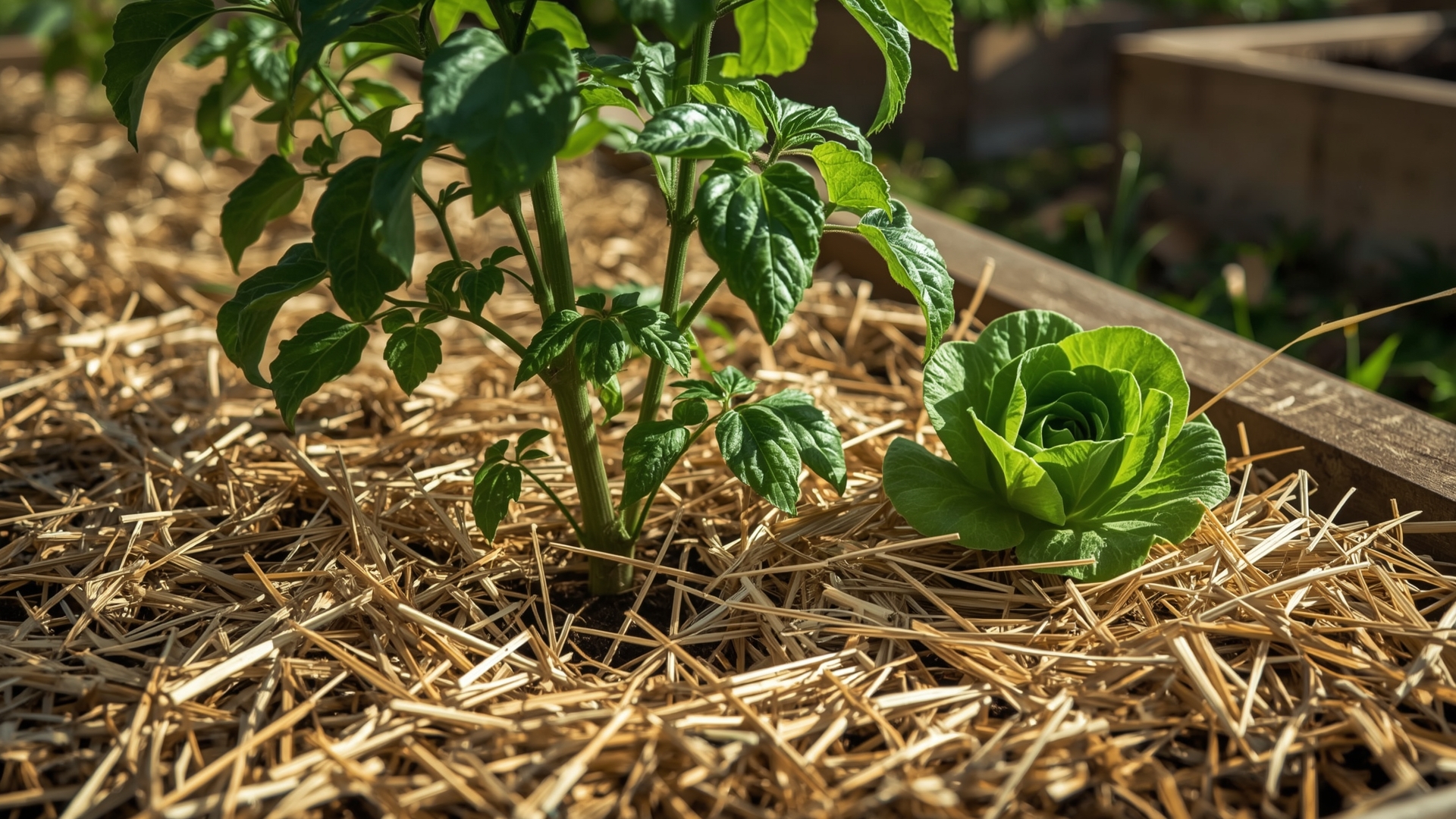
Quick Answer: Straw works best for tomatoes, peppers, and squash. Shredded leaves suit cool-season crops like lettuce and carrots. Avoid fresh wood chips on all annual vegetable beds. Compost as mulch benefits heavy feeders like corn and brassicas most.
Matching Mulch to Crop Type
Different vegetables have different needs. Heavy feeders like tomatoes and corn benefit most from nutrient-releasing mulches. Shallow-rooted crops like lettuce prefer lighter mulches that don’t compact. Root vegetables like carrots and beets need mulch that won’t crust over seed germination zones.
| Vegetable | Best Mulch | Avoid | Special Consideration |
|---|---|---|---|
| Tomatoes | Straw, shredded leaves | Fresh wood chips | Apply after soil reaches 60°F |
| Peppers | Straw | Heavy leaf mulch | Peppers like warm soil — delay mulching in spring |
| Squash / Zucchini | Straw, aged wood chips | Wet, dense mulch | Keep mulch away from crown to prevent crown rot |
| Lettuce / Salad Greens | Shredded leaves | Coarse wood chips | Shredded leaves keep roots cool in heat |
| Carrots / Beets | Light straw layer (1 inch) before germination | Anything thick or dense | Remove or thin mulch after germination |
| Beans / Peas | Straw, shredded leaves | Fresh wood chips | These nitrogen-fixers don’t need nitrogen-robbing mulch |
| Brassicas (cabbage, broccoli, kale) | Shredded leaves, compost layer | Straw in wet climates (slugs) | Compost mulch feeds their high nitrogen demand |
Can You Use Cardboard Under Mulch in a Raised Bed?
Quick Answer: Yes. A single layer of plain cardboard under 2–3 inches of straw or shredded leaves creates an effective weed barrier. It breaks down in 2–4 months, adding carbon to your soil. Remove tape and staples before laying cardboard.
How Cardboard Layering Works
Cardboard acts as a temporary weed barrier that smothers existing weed seedlings while the mulch above prevents new ones from germinating. Unlike landscape fabric, cardboard decomposes fully — feeding soil organisms as it breaks down.
This method works especially well when setting up a new raised bed on top of grass or weedy ground. Lay overlapping sheets of cardboard (overlap edges by at least 6 inches), then add your mulch on top. The combination gives you 2–4 months of near-total weed suppression.
Avoid cardboard with wax coating, colored printing, or heavy adhesive. Plain brown corrugated cardboard — like what comes from appliance or moving boxes — is the safest option.
How Often Should You Replace Mulch in a Raised Bed?
Quick Answer: Replace or top up mulch once per growing season for most organic types. Straw and shredded leaves decompose within one season. Wood chips last 1–2 years. Check depth mid-season — if it’s dropped below 1.5 inches, add a fresh layer.
Signs Your Mulch Needs Replacing
Mulch breaks down over time, which is a feature — not a bug. But once it thins below the effective depth, it stops working. Look for these signs that it’s time to replenish:
- Weed seedlings are pushing through easily
- Soil dries out faster than usual between waterings
- The mulch layer has compacted or decomposed to under 1.5 inches
- Soil surface is crusting between watering sessions
End-of-Season Mulch Management
At the end of the growing season, you have two options. You can till the decomposed mulch into your raised bed soil, adding organic matter before winter. Or you can leave it in place to protect soil biology through the cold months and rake it aside in spring.
Leaving mulch on over winter is the better option for most gardeners. It protects beneficial soil organisms, reduces soil compaction from rain and snow, and means less work in spring. Just rake it back before planting and push it back around transplants a few weeks later.
What Are the Cost and Availability Differences Between Mulch Types?
Quick Answer: Shredded leaves cost nothing if you have trees. Straw bales run $8–$15 each. Bagged wood chips cost $5–$8 per 2-cubic-foot bag. Bulk wood chips from tree services are often free. Compost-as-mulch costs $25–$45 per cubic yard in bulk.
Cost Per Raised Bed by Mulch Type
| Mulch Type | Approximate Cost | Coverage per Unit | Cost per 4×8 Bed (3″ depth) | Annual Cost |
|---|---|---|---|---|
| Straw (bale) | $8–$15 per bale | 40–50 sq ft at 3″ | $8–$15 | $8–$15 (annual reapplication) |
| Shredded Leaves | Free to low-cost | As many as you have | $0 | $0 |
| Wood Chips (bulk) | Free–$30 per cubic yard | 80–100 sq ft at 3″ | $0–$10 | Low (lasts 1–2 years) |
| Compost (bulk) | $25–$45 per cubic yard | 160 sq ft at 2″ | $5–$9 | $5–$9 (annual reapplication) |
| Bagged Wood Chips | $5–$8 per 2 cu ft bag | 8 sq ft at 3″ | $20–$32 | Lower (lasts 1–2 years) |
If cost is your primary concern, shredded leaves are unbeatable. Many municipalities also offer free wood chips through tree trimming programs. Check with your local parks department or utility company — many give away chips to residents at no charge.
Should You Use Plastic Mulch in a Raised Bed Vegetable Garden?
Quick Answer: Black plastic mulch raises soil temperature and suppresses weeds effectively, but it blocks water and prevents organic matter from entering the soil. It’s best for warming soil in early spring for heat-loving crops, not for season-long use in organic raised beds.
When Plastic Mulch Makes Sense
Black plastic film raises soil temperature by 5–10°F in spring. This can give heat-loving crops like tomatoes, melons, and peppers a 2–3 week head start in colder climates. Some market gardeners use black plastic for this reason alone.
But plastic film creates problems over time. It blocks rainfall from reaching soil. It prevents organic matter from breaking down into the bed. And it creates microplastic contamination over multiple seasons as UV exposure breaks down the film. For most home gardeners growing organically, plastic mulch is a short-term tool — not a season-long solution.
Alternatives That Warm Soil Without Plastic
If you want the soil-warming effect without the drawbacks, consider these alternatives:
- Red plastic mulch: Reflects specific light spectra that may increase tomato yields — but carries the same environmental concerns as black plastic
- Clear plastic: Warms soil faster than black plastic but allows weed germination underneath
- Dark compost topdressing: A 1-inch compost layer absorbs heat and warms soil moderately while feeding your bed
What Common Mistakes Do Gardeners Make with Raised Bed Mulch?
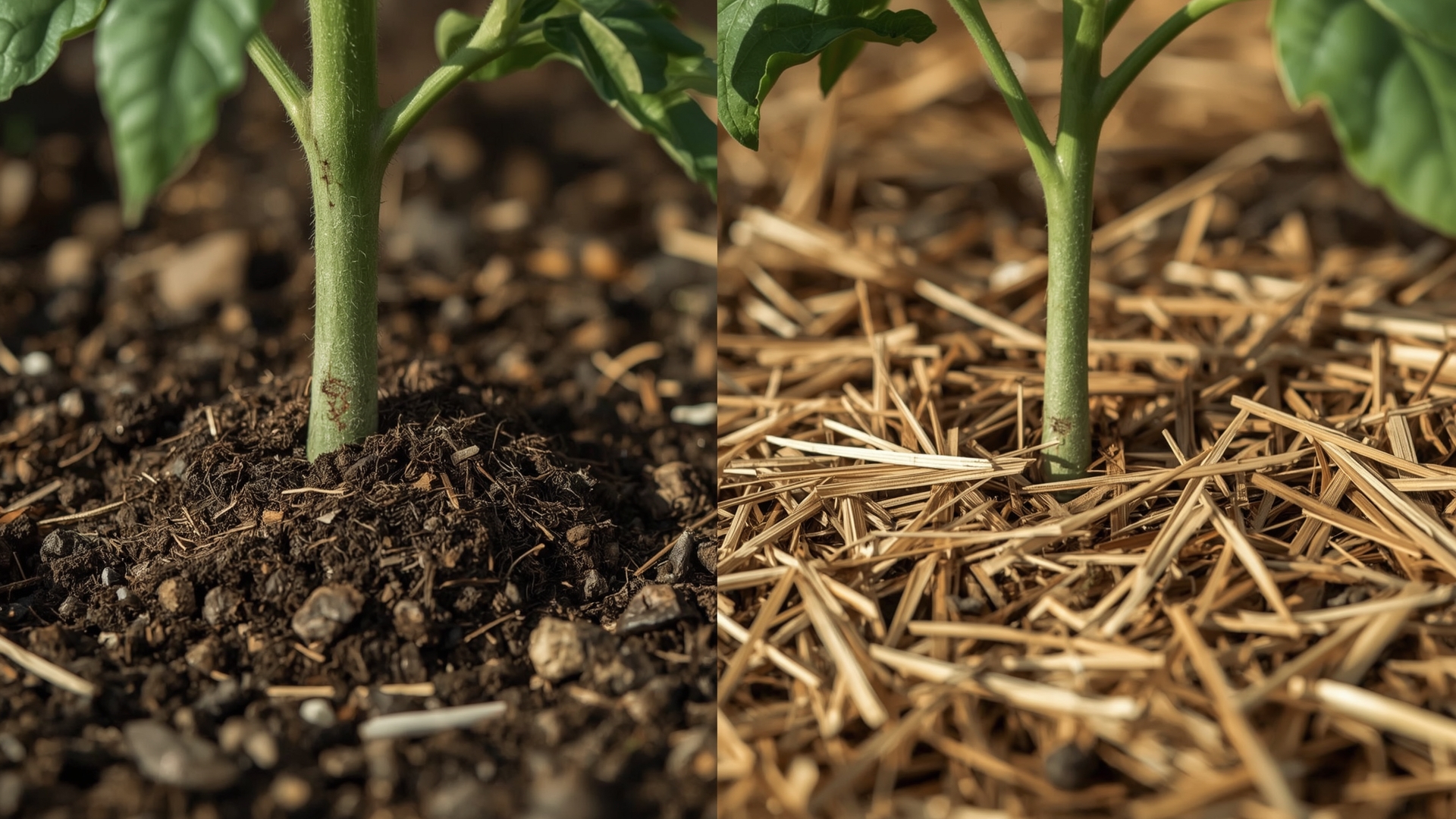
Quick Answer: The most common raised bed mulch mistakes are applying mulch too thin (under 2 inches), using hay instead of straw, piling mulch against plant stems, applying fresh wood chips to annual beds, and mulching too early in spring before soil has warmed.
The “Volcano Mulch” Problem
Piling mulch in a cone shape against plant stems is called “volcano mulching.” It’s one of the most damaging habits in gardening. Moist mulch pressed against a stem creates the perfect environment for crown rot, fungal disease, and rodent damage.
Always maintain a 1–2 inch gap between mulch and plant stems. Think of it like keeping your collar dry — stem tissue needs airflow and dryness at the base to stay healthy.
Hay vs. Straw: The Most Expensive Mistake
Hay is dried grass or legumes cut for animal feed. It contains seed heads. Those seeds will germinate in your raised bed within days of mulching, creating a carpet of grass or clover seedlings you then have to remove. Always buy straw — the hollow grain stem left after the seed head is harvested.
Ask your supplier directly: “Is this seed-free straw?” Some straw bales still contain residual seed, especially from wheat volunteers. The safest option is certified weed-free straw, available at most garden centers and farm supply stores.
Frequently Asked Questions
Can I use grass clippings as mulch in my raised bed vegetable garden?
Yes, but with caution. Fresh grass clippings can mat together and block water penetration. Let them dry for 1–2 days first, or mix them with straw or shredded leaves. Avoid clippings from lawns treated with herbicides — those chemicals can damage vegetable plants.
Is cocoa hull mulch safe to use around vegetable gardens?
Cocoa hull mulch is safe for vegetables but is toxic to dogs. If you have pets, avoid it entirely. It has a pleasant smell and a fine texture, but it can mat when wet and is typically more expensive than straw or shredded leaves.
Does mulch attract slugs and other pests to raised beds?
Mulch can provide shelter for slugs, pill bugs, and earwigs — especially when it’s thick and stays moist. Keeping mulch away from plant stems and choosing looser materials like straw over dense leaf piles reduces this risk. Copper tape around the raised bed frame is an effective slug barrier.
Can I use pine needle mulch in a vegetable garden?
Pine needle mulch, also called pine straw, is slightly acidic — with a pH around 3.5–4.5 when fresh. It breaks down slowly and can lower soil pH over time. It works well for acid-loving crops like blueberries, but most common vegetables prefer a neutral pH of 6.0–7.0. Use pine needles with caution in vegetable beds.
Should I remove old mulch before adding new mulch to a raised bed?
You don’t need to remove decomposed mulch. Rake it aside before planting, then push it back around transplants. If the old mulch is fully broken down and mixed with soil, till it in as organic matter. Only remove mulch if it shows signs of fungal disease or mold growth.
How does mulch interact with drip irrigation in a raised bed?
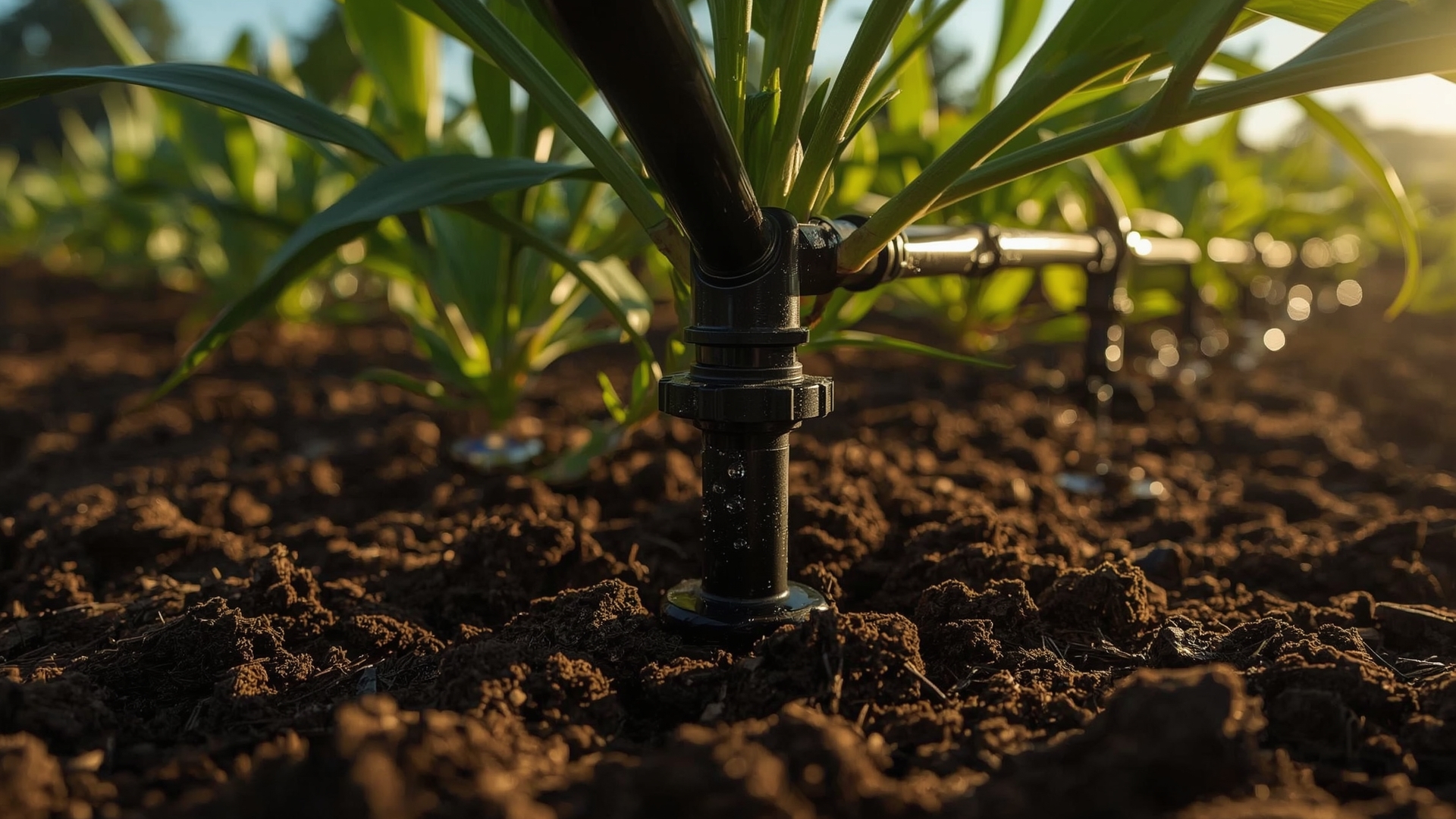
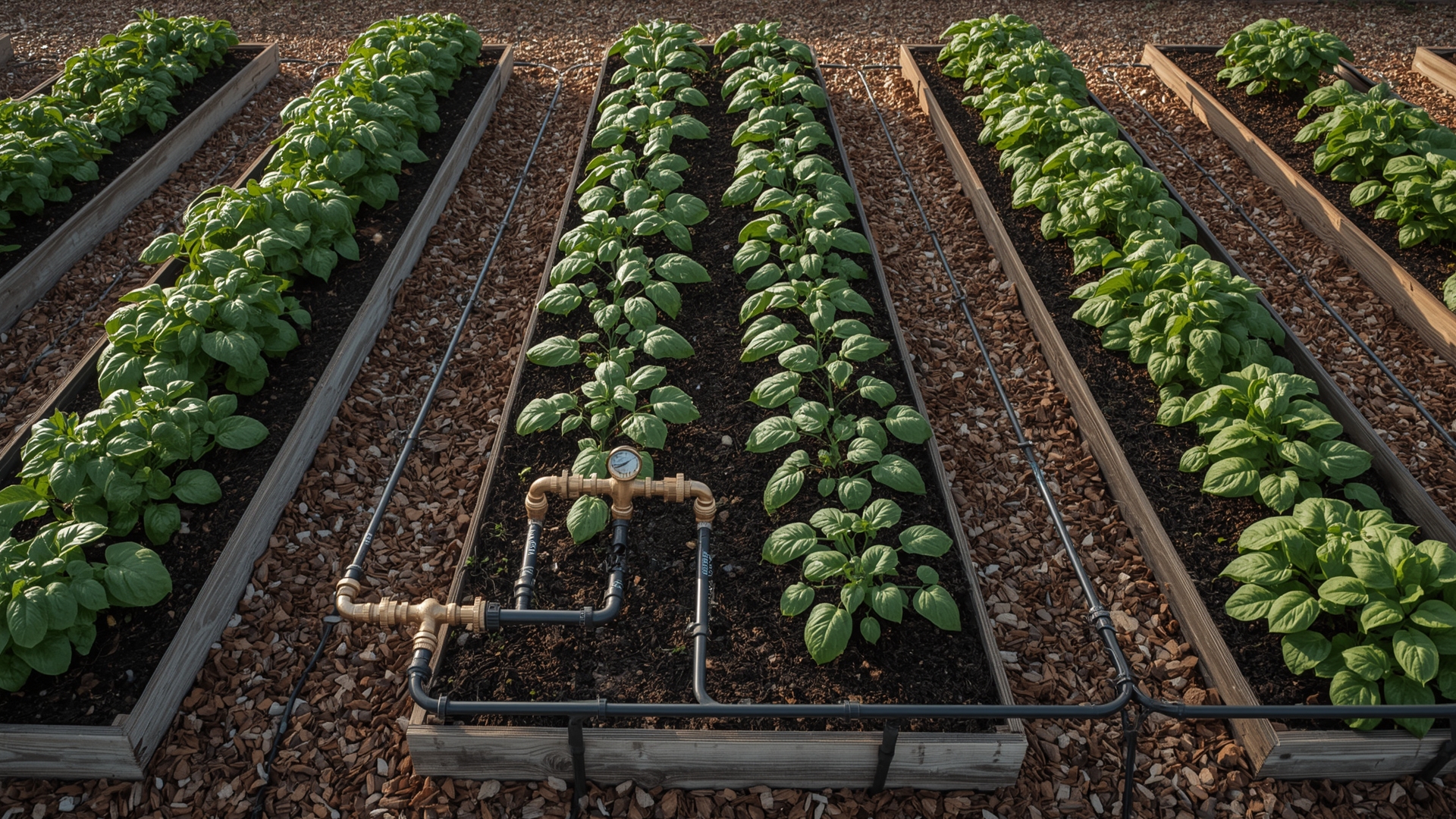
Mulch and drip irrigation work very well together. Place drip lines under the mulch layer for maximum efficiency — the mulch slows evaporation from the emitter zone, and water delivers directly to the root zone. Place emitters before applying mulch, or lift the mulch to install them. Avoid burying emitters too deep under thick mulch, as you won’t be able to inspect them easily.