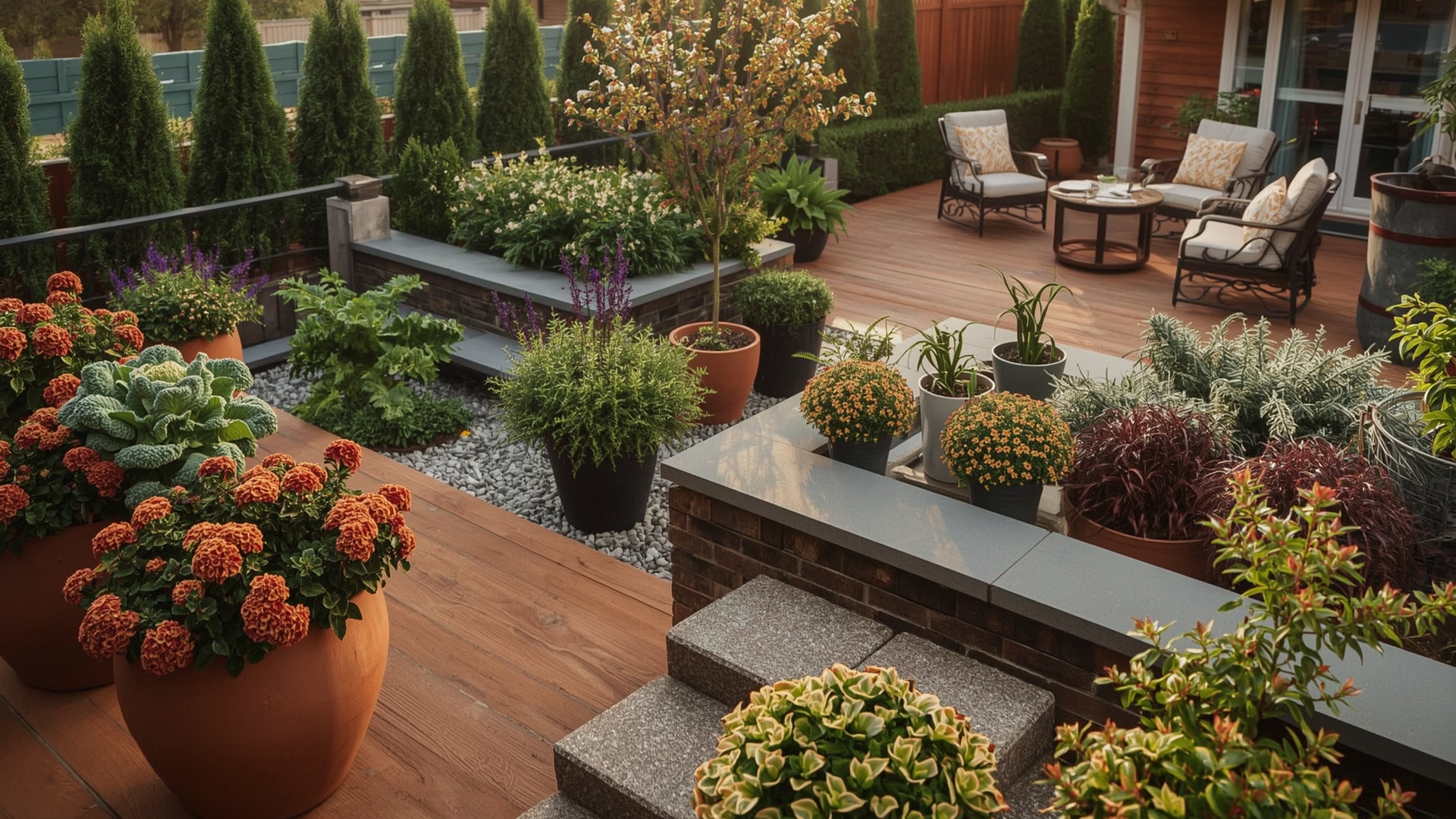
Starting a backyard garden feels overwhelming at first. You look at your yard and wonder where to begin, what to plant, and how to make it look intentional. The good news is that a well-designed garden doesn’t require years of experience. It requires a clear plan and the right starting point.
This guide walks you through every major decision in backyard garden design, from choosing your layout to picking plants that won’t give up on you. Whether you have a wide-open yard or a small patch of grass, there’s a workable design waiting for you.
Key Takeaways
- Start with a simple layout. Rectangular beds and straight paths are easiest for beginners to build and maintain.
- Soil quality matters more than almost anything else. Poor soil produces poor plants, no matter how good your seeds are.
- Raised beds reduce weeding and back strain. They’re the most beginner-friendly garden structure available.
- Match plants to your sunlight. Checking sun exposure before planting saves you from most beginner mistakes.
- Drip irrigation cuts watering time by 50% or more and reduces disease risk from wet foliage.
- Small spaces can still be productive. Vertical growing and container gardening unlock space you didn’t know you had.
What Should Beginner Gardeners Plan Before Touching the Soil?
Quick Answer: Before digging, assess your yard’s sunlight, drainage, and soil type. Sketch a simple layout, decide between raised beds or in-ground planting, set a budget, and choose 3 to 5 easy plants. Planning prevents the most common beginner mistakes.
Most gardening problems start before the first seed goes in. Beginners often skip the planning phase and jump straight to buying plants. Then they wonder why things die or look chaotic by midsummer.
The planning phase has four parts: site assessment, layout design, plant selection, and budget. Each one builds on the last.
How Do You Assess Your Yard Before Designing a Garden?
Walk your yard at three different times of day, morning, noon, and late afternoon. Note where sunlight falls and for how long. A spot that looks bright in the morning may be fully shaded by noon because of a fence or tree.
Also watch how water moves after rain. Puddles that linger for more than an hour signal poor drainage. Plants sitting in waterlogged soil will rot at the roots, no matter how drought-tolerant they claim to be.
Write down your observations. A simple sketch with compass directions, shade areas, and drainage notes is more useful than any design app.
What Is a Realistic Budget for a Beginner Backyard Garden?
Costs vary based on garden type, size, and materials. Here’s what beginner setups typically cost:
| Garden Element | Entry-Level Cost | Mid-Range Cost | What You Get |
|---|---|---|---|
| Single Raised Bed (4×8 ft) | $40–$80 | $100–$200 | Cedar or pine lumber, basic hardware |
| Soil + Compost Fill (4×8 ft) | $50–$90 | $100–$150 | Topsoil blend + bagged compost |
| Drip Irrigation Starter Kit | $30–$60 | $80–$150 | Timer, tubing, emitters for one bed |
| Transplant Seedlings (6-pack) | $4–$8 | $10–$18 | Tomatoes, peppers, herbs |
| Basic Tool Set | $30–$50 | $80–$120 | Trowel, cultivator, gloves, watering can |
A solid beginner setup with one raised bed, filled soil, basic tools, and drip irrigation runs between $150 and $400 total. That’s a realistic starting point before buying any plants.
What Are the Best Layout Options for a Beginner Backyard Garden?
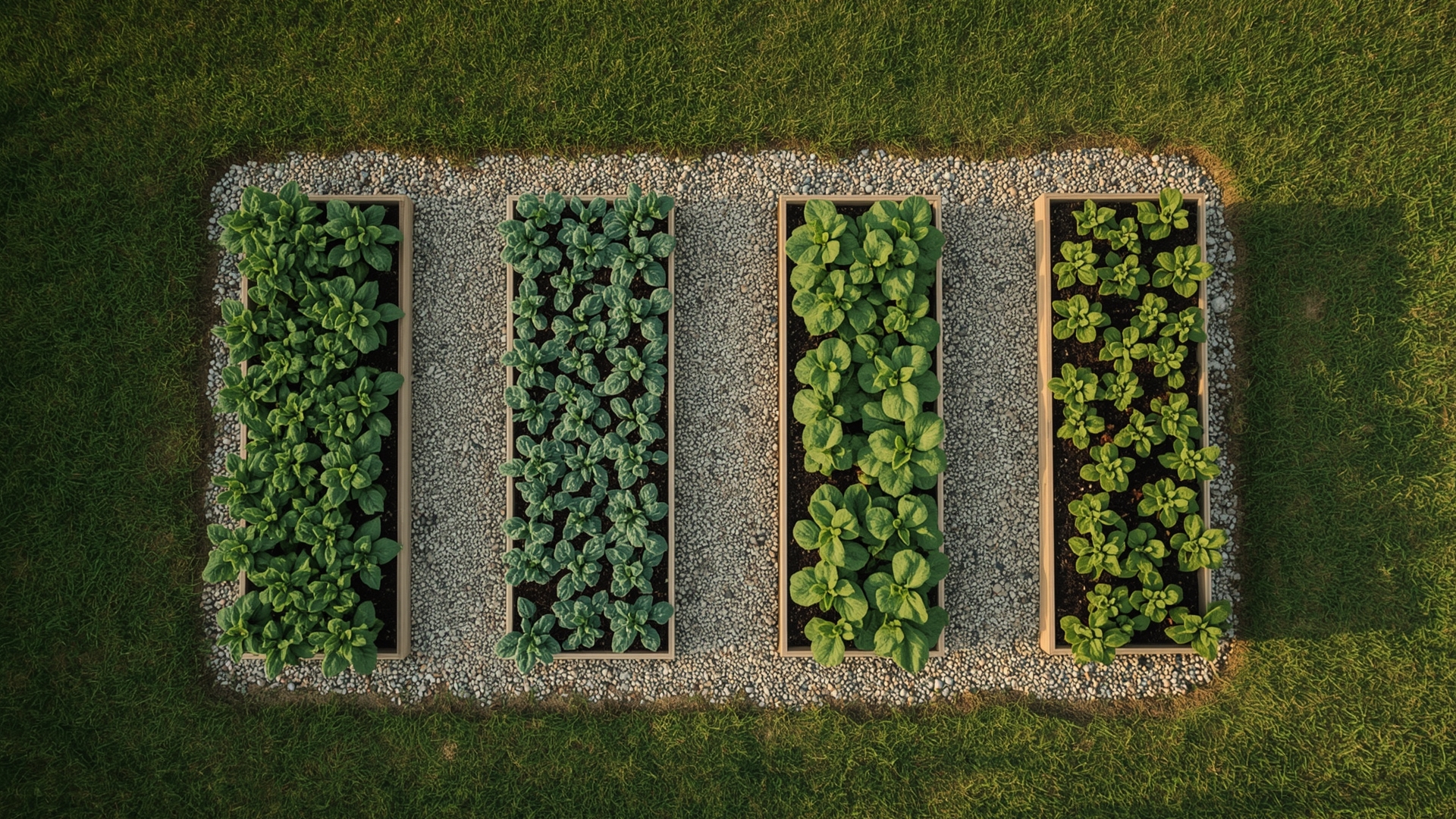
Quick Answer: The three most beginner-friendly layouts are the single rectangular bed, the three-bed parallel layout, and the keyhole garden. Rectangular beds are easiest to build and manage. Keyhole designs maximize planting space in small yards.
Garden layout determines how easy your garden is to maintain, not just how it looks. A beautiful layout you can’t reach into or weed easily will frustrate you by week three.
Rectangular Bed Layout
A single 4×8-foot bed is the standard beginner starting point for a reason. You can reach every inch from the sides without stepping on the soil. That keeps the ground loose and roots healthy.
Keep beds no wider than 4 feet if you plan to access them from both sides. If a bed sits against a wall or fence, keep it 2 feet wide maximum. Arms can only reach so far.
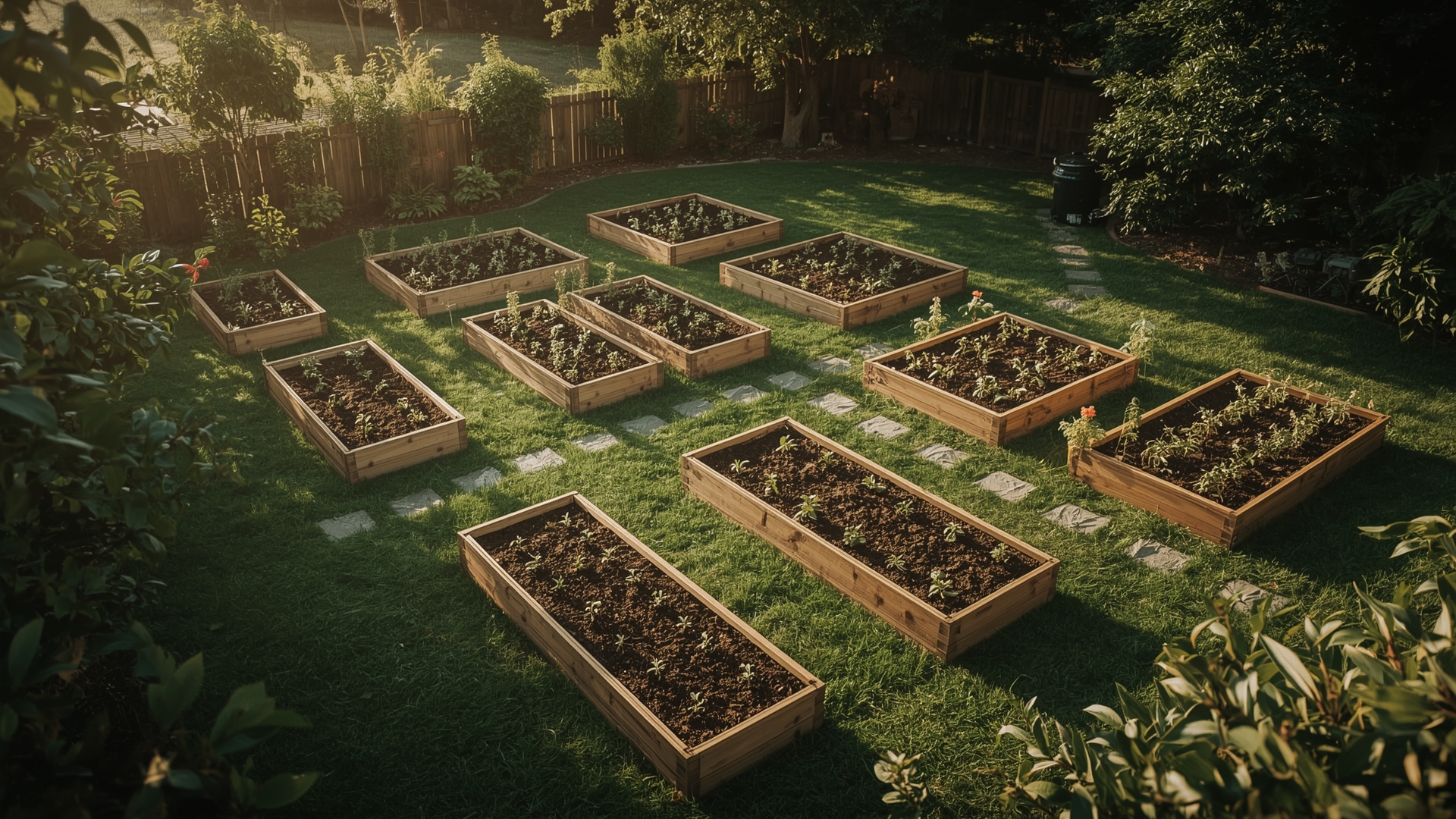
Three-Bed Parallel Layout
Three beds in a row, each 4×8 feet, with 2-foot paths between them, gives you enough space to practice crop rotation. Crop rotation means moving plant families to different beds each year to prevent soil disease buildup.
Paths between beds should be wide enough to kneel or set down a trug (a shallow garden bucket). Two feet works for most people. Three feet is ideal if you plan to use a wheelbarrow.
Keyhole Garden Design
A keyhole garden is a circular bed with a narrow path cut into the center, like the shape of an old-fashioned keyhole. You stand in the center path and can reach all points of the circle without moving. This design is excellent for small yards because it fits more planting area into a tighter footprint.
Typical keyhole diameter: 6 feet. Center path width: 18 to 24 inches. Total plantable area per keyhole garden: roughly 24 to 30 square feet.
Should Beginners Choose Raised Beds or In-Ground Planting?
Quick Answer: Raised beds are better for most beginners. They give you full control over soil quality, drain faster, warm up earlier in spring, and produce fewer weeds. In-ground planting costs less upfront but requires more soil preparation and ongoing weed management.
| Factor | Raised Bed | In-Ground |
|---|---|---|
| Startup Cost | $100–$250 per 4×8 bed | $20–$60 per 4×8 area |
| Soil Control | Full control, fill from scratch | Work with existing soil |
| Weed Pressure | Low (clean fill soil) | High (existing weed seed bank) |
| Drainage | Excellent | Depends on native soil |
| Spring Warmup | 2–4 weeks earlier than ground | Standard seasonal timing |
| Back Strain | Low (less bending) | Higher (ground level) |
| Best For | Most beginners, poor native soil | Large plots, lower budgets |
If your native soil is clay-heavy or full of rocks, raised beds aren’t just convenient. They’re necessary. Trying to grow vegetables in compacted clay without amending it leads to disappointment.
How Should Beginners Prepare Garden Soil for the First Time?
Quick Answer: For raised beds, mix 60% topsoil, 30% compost, and 10% perlite or coarse sand. For in-ground beds, remove grass, loosen soil 12 inches deep, and mix in 3 to 4 inches of compost. Test pH before planting. Most vegetables need a pH of 6.0 to 7.0.
Soil is the foundation of everything in your garden. Healthy soil holds moisture without staying soggy, allows roots to grow deep, and feeds plants through microbial activity.
What Is the Ideal Soil Mix for a Raised Garden Bed?
The classic beginner mix is sometimes called “Mel’s Mix,” named after square-foot gardening pioneer Mel Bartholomew. It’s one-third compost, one-third peat moss or coconut coir, and one-third coarse vermiculite. This combination drains well, holds nutrients, and stays loose season after season.
A simpler and less expensive version uses 60% topsoil, 30% compost, and 10% perlite. For most backyard vegetables, this works just as well at a lower cost.
Why Does Soil pH Matter for Beginner Gardens?
Soil pH measures how acidic or alkaline your soil is on a scale from 0 to 14. Seven is neutral. Most vegetables grow best between 6.0 and 7.0. Outside that range, plants can’t absorb nutrients properly, even if those nutrients are present in the soil.
An inexpensive soil pH test kit costs $8 to $15 at any garden center. If your pH reads below 6.0, add garden lime to raise it. If it reads above 7.5, add elemental sulfur to lower it. Retest after 4 to 6 weeks.
| Soil Ingredient | Role | Typical Cost (per cubic foot) | Best For |
|---|---|---|---|
| Topsoil | Bulk structure | $0.50–$1.50 | Base layer in raised beds |
| Compost | Nutrients + microbial life | $1.50–$3.00 | All garden types |
| Perlite | Drainage + aeration | $3.00–$6.00 | Containers, raised beds |
| Vermiculite | Moisture retention | $4.00–$7.00 | Seedling mixes, dry climates |
| Coconut Coir | Moisture retention, sustainable | $2.00–$4.00 | Alternative to peat moss |
Which Plants Are Best for a Beginner Backyard Garden?
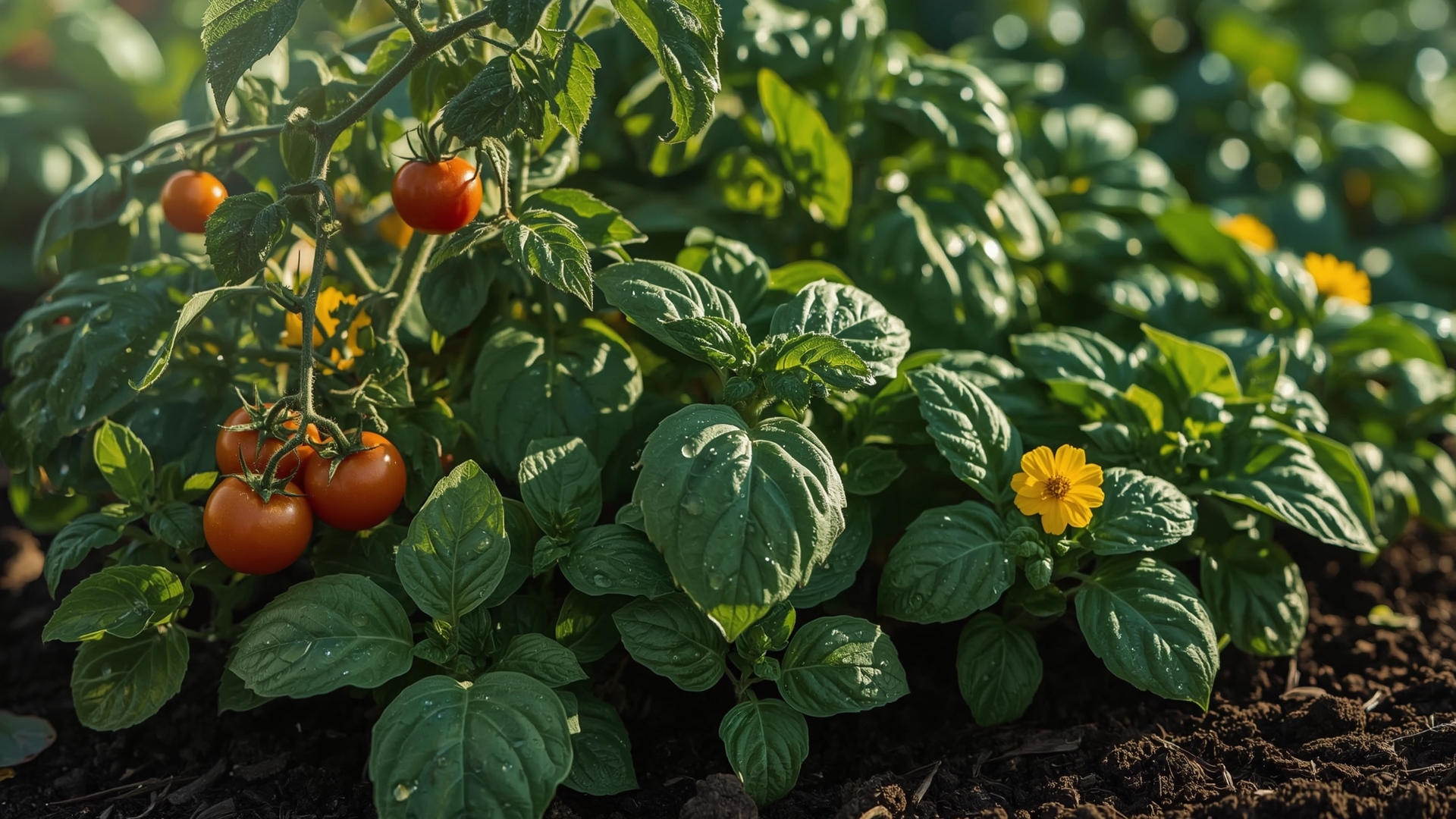
Quick Answer: The easiest beginner plants are zucchini, bush beans, kale, cherry tomatoes, basil, radishes, and marigolds. These grow quickly, tolerate minor watering mistakes, and produce visible results within 30 to 60 days, which keeps new gardeners motivated.
Plant selection is where beginners most often go wrong. They pick plants they want to eat without checking whether those plants suit their climate, sun exposure, or available space.
How Do You Match Plants to Your Garden’s Sunlight?
Most vegetables need full sun, defined as 6 or more hours of direct sunlight per day. If your garden gets 3 to 6 hours, you’re in partial shade territory. Fewer than 3 hours is deep shade, and almost no edible vegetables will thrive there.
Here’s a quick reference by sunlight requirement:
- Full Sun (6+ hours): Tomatoes, peppers, cucumbers, squash, eggplant, basil
- Partial Sun (3–6 hours): Lettuce, spinach, kale, cilantro, parsley, peas
- Light Shade (2–4 hours): Mint, chives, arugula, sorrel
What Is Companion Planting and Should Beginners Use It?
Companion planting means growing certain plants next to each other because they benefit one another. The most famous example is the Three Sisters: corn, beans, and squash. Corn provides a structure for beans to climb. Beans fix nitrogen into the soil. Squash shades the ground, keeping moisture in and weeds out.
For beginners, two companion planting rules are worth knowing. First, plant marigolds around your vegetable beds. They repel aphids and whiteflies naturally. Second, keep fennel away from everything else. Fennel releases compounds that stunt the growth of most neighboring plants.
| Plant | Days to Harvest | Space Needed | Sun Requirement | Difficulty |
|---|---|---|---|---|
| Radish | 22–30 days | 2 inches apart | Full sun | Very easy |
| Bush Beans | 50–60 days | 4 inches apart | Full sun | Easy |
| Cherry Tomatoes | 60–70 days | 18–24 inches apart | Full sun (8+ hrs) | Easy |
| Kale | 55–75 days | 12 inches apart | Partial to full sun | Easy |
| Zucchini | 45–55 days | 24–36 inches apart | Full sun | Easy |
| Basil | 30–40 days to first harvest | 6–8 inches apart | Full sun | Very easy |
What Watering System Works Best for a Beginner Garden?
Quick Answer: Drip irrigation is the best beginner watering system. It delivers water directly to the root zone, uses 30 to 50 percent less water than overhead watering, and reduces leaf disease. A basic drip kit with a timer costs $50 to $120 and takes about two hours to install.
Inconsistent watering is one of the top reasons beginner gardens fail. Plants need moisture at the root level, not soaking wet leaves. Overhead watering from a hose or sprinkler wets foliage and creates conditions for fungal disease.
How Does Drip Irrigation Work in a Garden Bed?
A drip system runs a main supply line along your bed, with smaller emitter lines branching off to each plant. Water drips slowly at the base of each plant, right where roots absorb it. You connect the main line to a faucet and add a programmable timer to automate the schedule.
For a standard 4×8-foot bed, you’ll use about 10 to 15 emitters spaced 8 to 12 inches apart. Set the timer to run for 20 to 30 minutes in the early morning. Early morning watering reduces evaporation and gives leaves time to dry before night, which cuts down on fungal problems.
What Watering Schedule Do Beginner Gardens Need?
Most vegetable gardens need 1 to 1.5 inches of water per week. In hot, dry weather, increase to 2 inches. A rain gauge (costs $8 to $12) tells you exactly how much rain your garden received so you can adjust your irrigation accordingly.
The finger test is the simplest check: push your finger 2 inches into the soil. If it’s dry at that depth, water. If it’s still moist, skip that day. Overwatering kills more beginner gardens than drought does.
How Can Beginners Design a Garden in a Small Backyard?
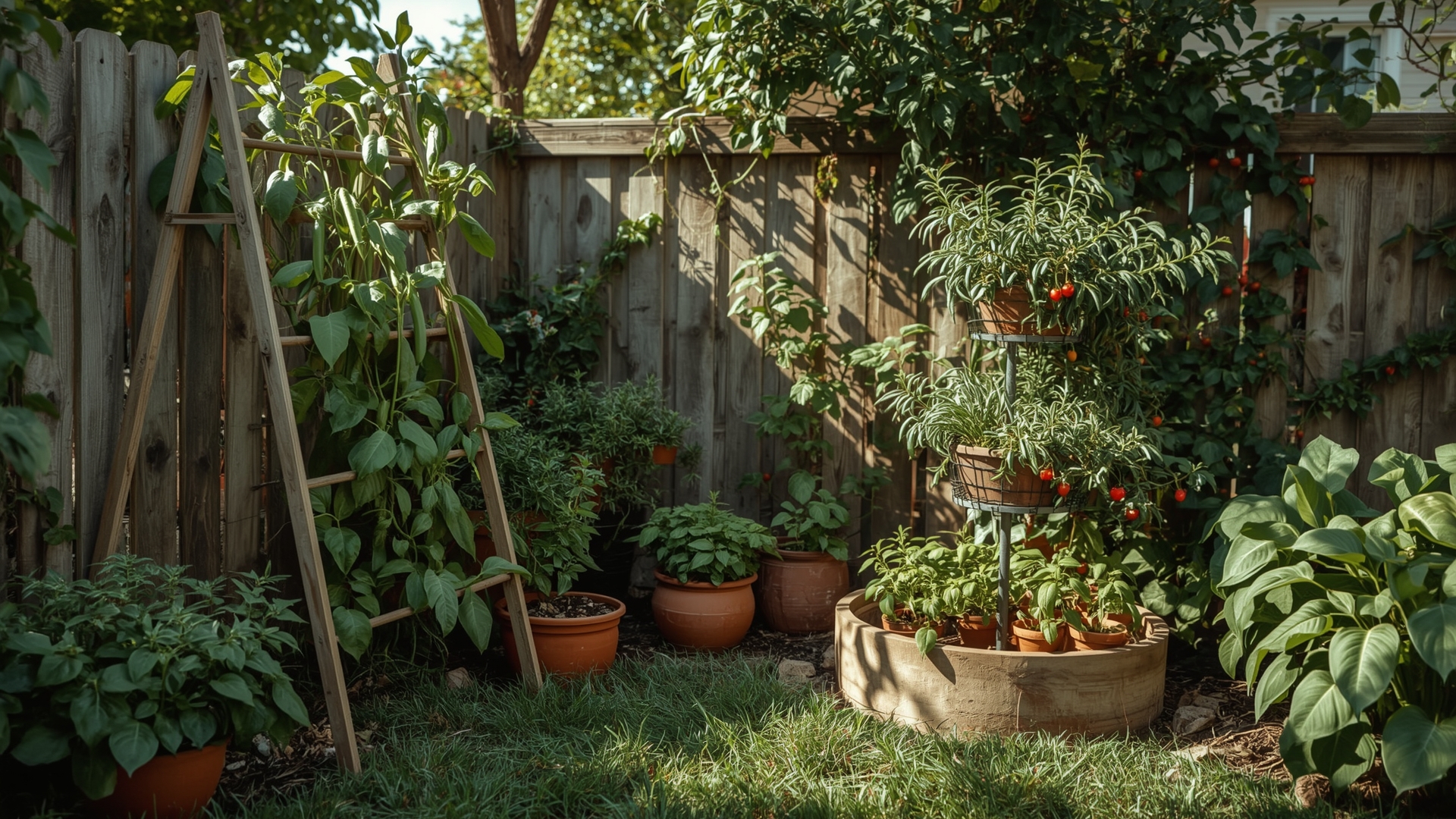
Quick Answer: Small backyards benefit most from vertical growing structures, container gardens, and wall-mounted planters. A single 4×4-foot raised bed plus a 6-foot trellis can yield as much produce as a flat 12-square-foot garden by using vertical space efficiently.
Limited space doesn’t mean limited output. Some of the most productive gardens are compact by design. The key is thinking in three dimensions instead of two.
What Is Vertical Gardening and How Does It Work for Beginners?
Vertical gardening means growing plants upward on trellises, cages, or wall-mounted structures instead of spreading outward. Vining plants like cucumbers, pole beans, and peas are natural climbers. They grow up a 5 to 6-foot trellis and take up almost no ground space compared to their horizontal equivalent.
A simple A-frame trellis made from two wooden panels hinged at the top costs $25 to $50 to build and supports up to 20 linear feet of planting. Place it over a 4-foot-wide bed and plant climbers on both sides.
Can Container Gardening Replace Raised Beds in Small Spaces?
Container gardening works well for herbs, cherry tomatoes, peppers, and lettuce. A 5-gallon container supports one tomato plant or three to four herb plants. A 10-gallon container handles one pepper plant comfortably.
Containers dry out faster than raised beds, so they need watering more frequently, sometimes daily in summer heat. Use a high-quality potting mix, never garden soil, in containers. Garden soil compacts in pots and blocks root growth.
What Are the Best Low-Effort Design Ideas for Small Backyard Gardens?
These layouts minimize maintenance while maximizing visual appeal and yield:
- The Herb Spiral: A spiral-shaped raised structure, 3 to 5 feet across and 2 to 3 feet tall, creates different microclimates. Drought-tolerant herbs like rosemary and thyme go at the top. Moisture-loving herbs like basil and cilantro go at the base.
- Corner Trellis Planting: Place a fan-shaped trellis in a corner and grow climbing beans or cucumbers against it. Uses dead corner space that’s usually wasted.
- Square Foot Gardening: Divide a 4×4-foot bed into 16 squares. Each square holds a different plant based on its spacing needs. This maximizes yield per square foot and makes rotation simple.
- Window Box Cascade: Stack two or three window boxes on a south-facing fence using tiered brackets. Grow lettuce in the top box (less sun), herbs in the middle, and strawberries trailing from the bottom.
What Are the Most Common Beginner Garden Design Mistakes to Avoid?
Quick Answer: The most common mistakes are planting too many species at once, skipping soil testing, choosing plants that don’t suit available sunlight, and overwatering. Starting with 3 to 5 plant varieties in one or two beds gives beginners better results than spreading across a large garden immediately.
Every experienced gardener has made these mistakes. The goal isn’t to avoid all failure. It’s to avoid the failures that end beginner gardens before they get started.
Why Do Beginners Plant Too Much Too Soon?
Garden centers are designed to make you buy more than you need. A first visit in spring can turn a one-bed plan into an eight-bed ambition in about twenty minutes. The result is an overextended garden that takes more time than expected and produces less than hoped.
Limit your first season to one or two beds and five or fewer plant varieties. Master those. Expand in year two when you understand your yard’s quirks.
How Does Poor Spacing Kill Plants in a Beginner Garden?
Plant spacing isn’t about aesthetics. It’s about airflow, root competition, and sunlight access. When plants are too close together, they compete for water and nutrients. Poor airflow between leaves creates humidity that encourages powdery mildew and other fungal diseases.
Always read the spacing recommendation on the seed packet or plant tag. If it says 18 inches apart, that’s not a suggestion. It’s the minimum distance for that plant to grow properly.
How Do You Keep a Beginner Garden Looking Good All Season?
Quick Answer: Three habits keep a garden productive and attractive all season: weekly weeding, consistent deadheading of flowers, and monthly top-dressing with compost. Each takes 15 to 30 minutes. Skipping these for two weeks creates problems that take hours to fix.
Garden maintenance sounds like a lot of work. Broken into weekly habits, it’s surprisingly manageable. The secret is consistency over intensity.
What Is Mulching and Why Do Beginners Need It?
Mulch is any material spread over the soil surface around your plants. Wood chips, straw, shredded leaves, and even cardboard count as mulch. A 2 to 3-inch layer of mulch does three important things: it holds soil moisture, blocks weed germination, and regulates soil temperature.
For vegetable beds, straw mulch is the most beginner-friendly option. It costs $8 to $15 per bale, covers a 4×8-foot bed with room to spare, and breaks down over the season to add organic matter to the soil.
When Should Beginners Feed Their Garden Plants?
Most vegetables benefit from feeding every 3 to 4 weeks during the growing season. A balanced granular fertilizer, labeled 10-10-10 (meaning 10% nitrogen, 10% phosphorus, 10% potassium), works for most vegetable gardens. Apply at the rate listed on the package and water in thoroughly after applying.
Heavy feeders like tomatoes and corn benefit from higher-nitrogen fertilizer during the first 4 to 6 weeks, then a switch to lower-nitrogen, higher-phosphorus fertilizer once flowering begins. Too much nitrogen after flowering produces lush leaves but few fruits.
Frequently Asked Questions
How much space does a beginner need to start a backyard garden?
A single 4×8-foot raised bed is enough for a productive beginner garden. That’s 32 square feet. You can grow tomatoes, herbs, beans, and lettuce in that space with room to practice crop rotation over two or three seasons.
What is the easiest garden layout for a beginner?
A single rectangular raised bed is the easiest layout to build, plant, and maintain. Straight lines are simpler to measure, fence, and mulch than curved or freeform designs. Once you’re comfortable, you can add more beds or try a keyhole design.
Do I need special tools to start a backyard garden?
You need five basic tools: a hand trowel, a cultivator (a small hand fork), a watering can or hose with a gentle nozzle, a pair of gloves, and a kneeling pad. That set costs $30 to $60. Avoid buying large tools like rototillers until you know you’ll need them.
What is the difference between topsoil and potting mix?
Topsoil is natural ground-level soil, denser and heavier, meant for in-ground beds and raised bed bases. Potting mix is a lightweight, peat-based blend designed for containers. Potting mix drains fast and stays loose in pots. Using topsoil in containers compacts quickly and suffocates roots.
How do I know if my garden is getting enough water?
Push your finger 2 inches into the soil near a plant’s base. If the soil feels dry at that depth, water. If it feels moist, skip watering that day. Over time, this simple test tells you more about your garden’s moisture needs than any schedule-based approach.
Can I start a garden if my backyard gets very little sun?
Yes, but your plant options are limited. Leafy greens like lettuce, spinach, arugula, and kale grow in partial shade with 3 to 5 hours of sunlight per day. Root vegetables like beets and carrots tolerate partial shade too. Fruiting vegetables like tomatoes and peppers need full sun and won’t perform well in shaded yards.