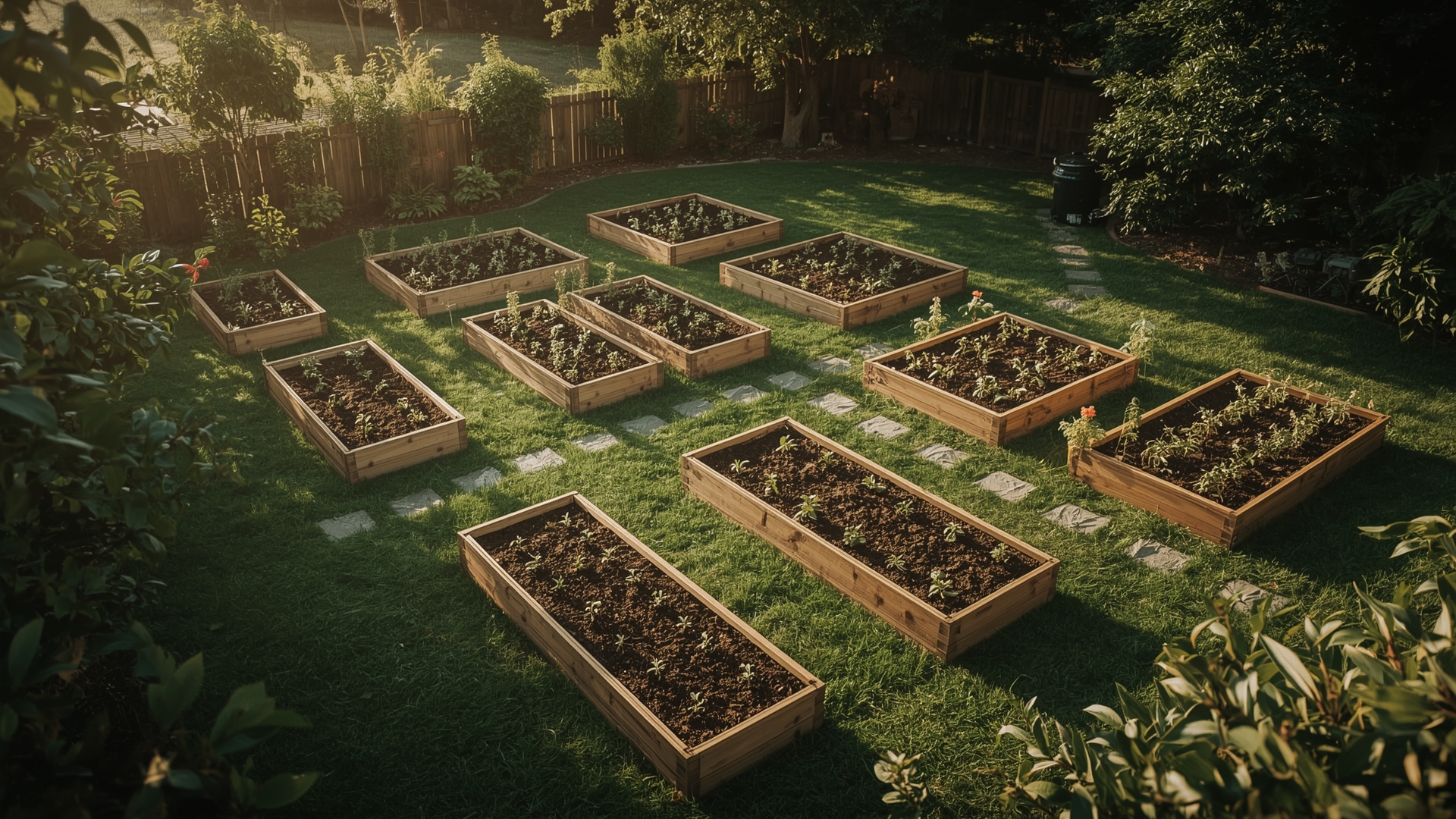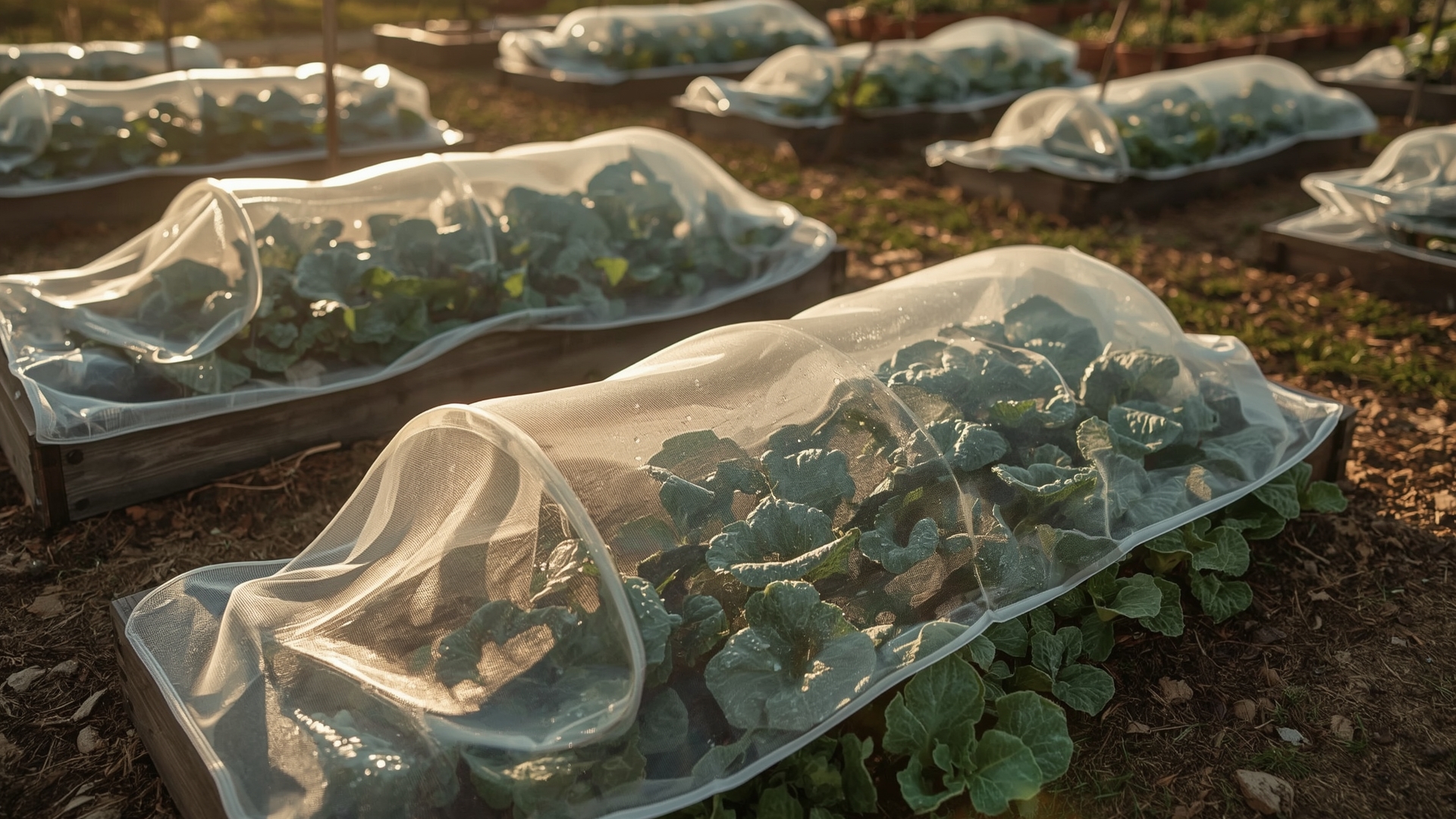
Row cover fabric is one of the most useful tools a vegetable gardener can own. It shields your plants from late frost, blocks insects before they cause damage, and extends your growing season on both ends of the year. The best part? You don’t need a greenhouse to get these benefits.
This guide covers everything you need to know: how row covers work, which weight to choose, how to install them correctly over raised beds, and when to take them off.
Key Takeaways
- Three fabric weights exist for different purposes: lightweight for pest exclusion, medium for frost protection, and heavyweight for hard freezes.
- Light transmission ranges from 30% to 95% depending on fabric weight — heavier fabric blocks more light.
- Frost protection varies by weight: lightweight covers protect down to 28°F, heavyweight covers down to 24°F.
- Row covers must be secured at the edges to block insects — any gap defeats the purpose of pest exclusion.
- Floating row covers rest directly on plants without supports, but hoops prevent damage to tender seedlings.
- Remove covers during bloom on crops that need pollination, or hand-pollinate under the cover.
What Is Row Cover Fabric and How Does It Work?
Quick Answer: Row cover fabric is a lightweight spunbonded or woven material you drape over crops to create a protective barrier. It traps heat, blocks insects, and filters sunlight. Most covers allow air and water to pass through freely, so plants stay healthy underneath.
The fabric is made from polypropylene fibers bonded together into a soft, breathable sheet. Unlike plastic sheeting, it lets rain and irrigation water pass through. This means you don’t have to remove it every time it rains.
Row covers work by creating a microclimate directly around your plants. On cold nights, the fabric traps heat radiating from the soil. During the day, it filters sunlight to a level plants can still use. The result is a small but meaningful temperature buffer that can mean the difference between a healthy crop and frost-killed seedlings.
Pest exclusion works through simple physical blocking. Insects like flea beetles, aphids, and cabbage moths can’t reach plants if a cover is in place before they arrive. This is a preventative strategy, not a treatment — the cover needs to go on before pests show up.
What Are the Different Weights of Row Cover Fabric?
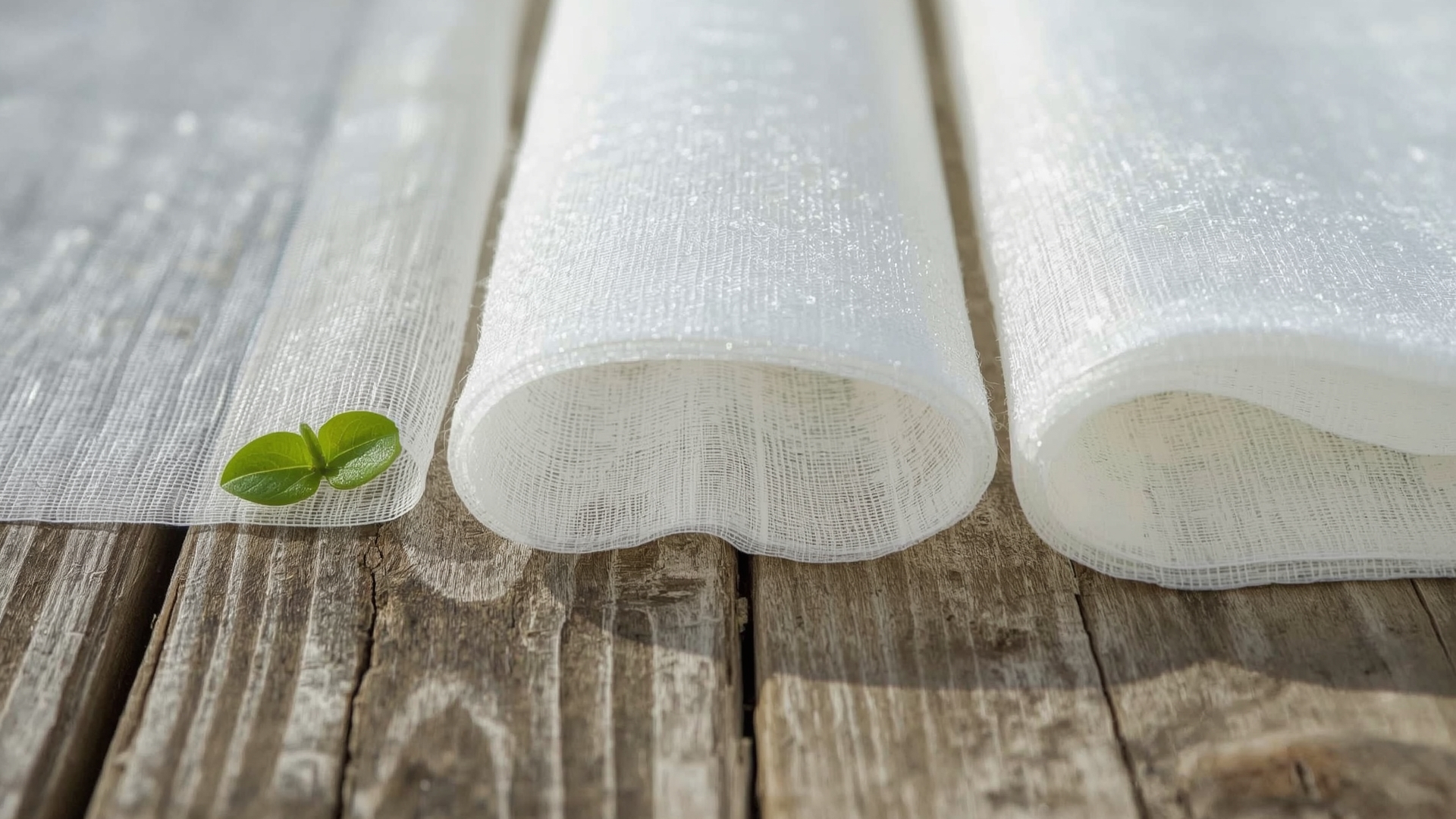
Quick Answer: Row cover fabric comes in three weights: lightweight (0.5–0.6 oz/sq yd) for pest control, medium (1.0–1.5 oz/sq yd) for frost protection to 28°F, and heavyweight (2.0–2.5 oz/sq yd) for hard freezes down to 24°F.
Lightweight Row Cover (Insect Barrier Grade)
Lightweight covers are the thinnest option. They transmit 85–95% of available sunlight, so plants grow almost as if there’s no cover at all. Their main job is blocking insects, not warming the air.
You can leave these on for extended periods without causing heat stress or light deprivation. They’re the best choice for leafy greens, brassicas, and root vegetables that face heavy pest pressure.
Medium-Weight Row Cover (All-Purpose Grade)
Medium-weight covers do double duty. They transmit around 70–85% of sunlight while providing frost protection down to about 28°F. This is the most popular weight for home gardeners because it handles both pest exclusion and mild frost events.
Use medium covers in spring and fall when temperatures fluctuate. They’re heavy enough to hold heat overnight but light enough to avoid cooking plants on warm afternoons.
Heavyweight Row Cover (Frost Blanket Grade)
Heavyweight covers are designed for cold protection, not pest management. They transmit only 30–50% of sunlight, which limits plant growth if left on too long during the day. Use them at night during hard freezes and remove them in the morning when temperatures rise.
These covers protect plants down to 24°F and sometimes lower when combined with the heat stored in raised bed soil. They’re ideal for overwintering crops like kale, spinach, and leeks.
Row Cover Fabric Comparison by Weight
| Fabric Weight | Weight (oz/sq yd) | Light Transmission | Frost Protection | Primary Use | Can Stay On Daytime? |
|---|---|---|---|---|---|
| Lightweight | 0.5–0.6 | 85–95% | Down to 28°F (light) | Pest exclusion | Yes |
| Medium-weight | 1.0–1.5 | 70–85% | Down to 28°F | Frost + pest control | Yes |
| Heavyweight | 2.0–2.5 | 30–50% | Down to 24°F | Hard freeze protection | No — remove at sunrise |
Which Vegetables Benefit Most From Row Covers?
Quick Answer: Brassicas like broccoli, cabbage, and kale benefit most from row covers because they face heavy pest pressure from caterpillars and beetles. Cool-season crops also gain the most from frost protection during early spring and fall planting windows.
Crops That Need Pest Exclusion
Brassica family vegetables are prime targets for cabbage worms, cabbage loopers, flea beetles, and imported cabbageworm caterpillars. A lightweight cover installed at transplanting prevents all of these without any sprays.
Carrots, radishes, and spinach benefit from covers that block carrot flies, leaf miners, and aphids. Root crops especially benefit because pest damage often goes undetected until harvest.
Crops That Need Frost Protection
Tomato, pepper, and eggplant transplants are cold-sensitive. A medium cover can protect them during an unexpected late frost in spring. Zucchini and summer squash seedlings are also vulnerable in their first two weeks after transplanting.
On the other end of the season, crops like lettuce, arugula, chard, and spinach can be pushed several weeks past their normal season limit with the right cover weight.
Crops That Require Removal for Pollination
Cucumbers, melons, squash, and beans need pollinators to set fruit. Row covers block bees along with pests. Remove covers once these crops start flowering, or check daily and hand-pollinate by transferring pollen with a small brush between male and female flowers.
Vegetable and Row Cover Weight Pairing Guide
| Vegetable | Main Threat | Recommended Cover Weight | When to Remove |
|---|---|---|---|
| Broccoli / Cabbage | Cabbage worms, flea beetles | Lightweight (0.5–0.6 oz) | At harvest |
| Carrots / Radishes | Carrot fly, leaf miners | Lightweight (0.5–0.6 oz) | At harvest |
| Tomatoes / Peppers | Late frost | Medium (1.0–1.5 oz) | After last frost date |
| Lettuce / Spinach | Early / late frost | Medium to heavyweight | When temps stabilize above 28°F |
| Cucumbers / Squash | Cucumber beetles, frost | Medium (remove at flowering) | First open flowers appear |
| Kale / Leeks | Hard freeze | Heavyweight (2.0–2.5 oz) | Remove mornings below 10°F ambient |
What Is Light Transmission and Why Does It Matter?
Quick Answer: Light transmission is the percentage of sunlight that passes through the fabric and reaches your plants. Lightweight covers allow 85–95% through. Heavyweight covers allow 30–50%. Plants kept under low-transmission covers too long will become pale, leggy, and weak.
Most vegetables need at least 6 hours of direct sunlight per day. A cover that blocks more than 30% of light starts to compete with the plant’s photosynthesis, which is the process plants use to turn sunlight into energy for growth.
On overcast days, the light reduction from a heavy cover can slow growth noticeably. This is why heavyweight covers are treated as overnight frost shields, not long-term season extenders. Medium and lightweight covers are far more forgiving because they barely reduce the light your plants receive.
If you’re growing in a shaded location — under a tree canopy or on a north-facing slope — stick with lightweight fabric. Any additional light loss from a heavier cover could stunt your crop.
How Do You Install Row Covers Over Raised Beds?
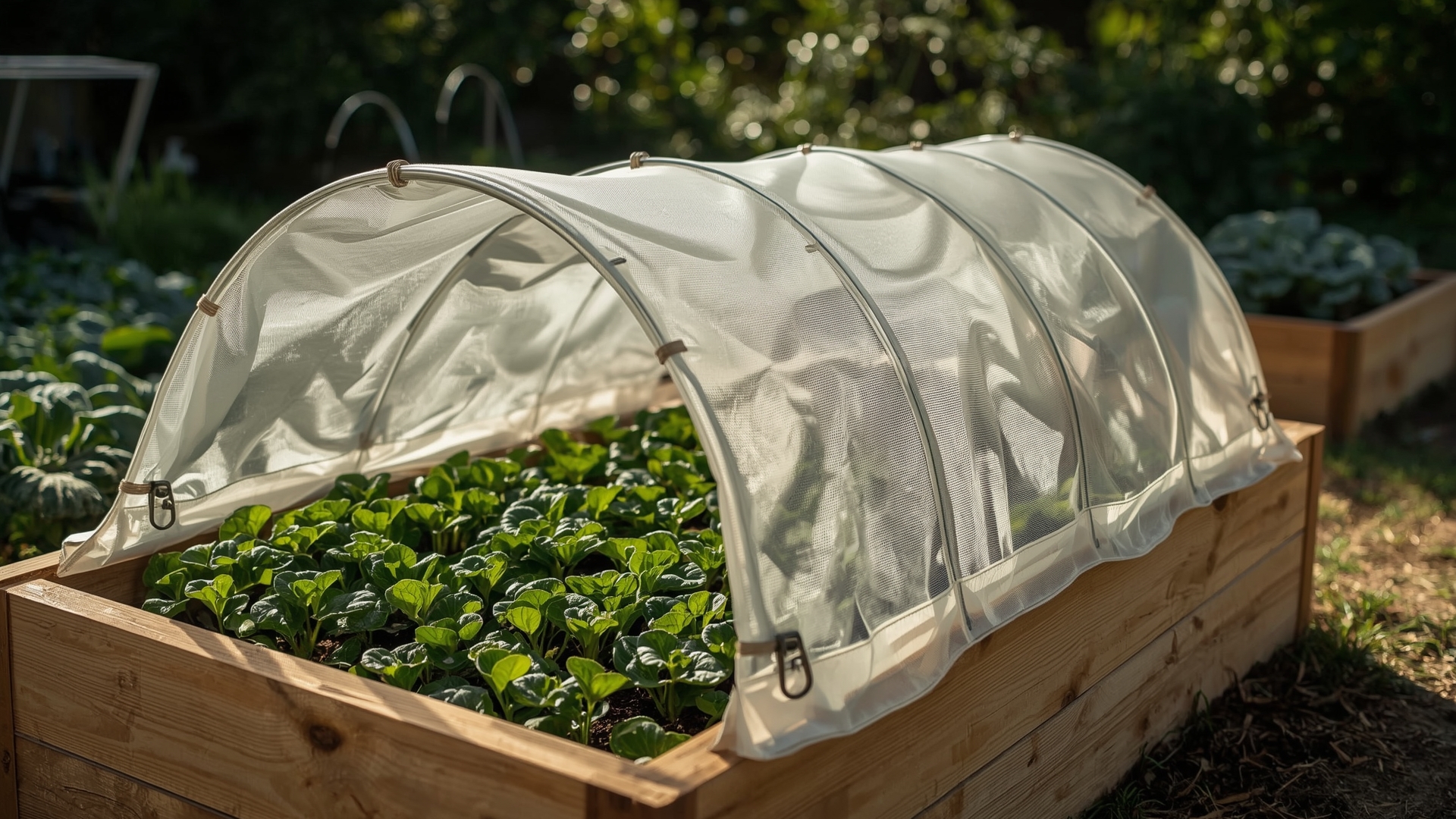
Quick Answer: Lay the fabric over your raised bed, extend it 6–12 inches beyond the bed edges on all sides, then secure the edges with fabric staples, sandbags, wooden boards, or row cover clips. For taller crops, install wire or PVC hoops first to hold the fabric above the plants.
Step 1: Choose Your Support Method
Row covers can float directly on low-growing plants without any support. This works well for dense crops like spinach, lettuce, and radishes. The plants hold the fabric up as they grow.
For taller crops or seedlings you don’t want damaged by fabric weight, install hoops first. Wire hoops made from 9-gauge galvanized wire or pre-formed fiberglass rods work well. Space hoops every 3–4 feet along the bed length. Push each end 4–6 inches into the soil or bed frame.
Step 2: Size the Fabric Correctly
Measure the length of your bed. Add 2–3 feet to account for fabric pulled over hoops and the extra needed at each end for anchoring. Measure the width across the hoops at their highest point, then double it and add 18–24 inches for the ground edge allowance on both sides.
Under-sizing the fabric is the most common installation mistake. You need enough material to fully seal the edges — gaps let insects in and let warm air escape.
Step 3: Drape and Secure the Fabric
Drape the fabric over your hoops or plants from one end to the other. Pull it taut but not tight — the fabric should have slight slack so it can move slightly in wind without tearing.
Secure the long sides first. Options include:
- Fabric staples or ground stakes: Push U-shaped metal staples through the fabric edge into the soil every 18–24 inches.
- Sandbags or rocks: Place weight along the fabric edge. Easy to remove for access.
- Wooden boards or bricks: Lay along the edges. Fast and reusable.
- Row cover clips: Snap directly onto raised bed frames or hoop ends. The cleanest option for raised beds with wood or metal sides.
Secure the short ends by gathering the fabric like a bag and tucking or clipping it tightly against the end of the bed.
Step 4: Check for Gaps at Soil Level
Walk around the bed and press the edge of the fabric flat against the ground or bed frame. Any gap wider than a quarter inch is large enough for flea beetles and cabbage moths to enter. Pest exclusion only works when the seal is complete.
Raised Bed Row Cover Installation: Materials and Specs
| Component | Material | Specs / Sizing | Best For |
|---|---|---|---|
| Hoops | 9-gauge galvanized wire | Cut to 6–8 ft length, arch over bed | All taller crops |
| Hoops (alternative) | Fiberglass rods (½ in dia.) | 6–8 ft, flexible | Wide raised beds 4 ft+ |
| Hoop spacing | — | Every 3–4 ft along bed length | All hoop systems |
| Fabric edge allowance | — | 6–12 in beyond bed edge on each side | All installation types |
| Row cover clips | Plastic spring clips | 1–2 in jaw width | Raised beds with rigid frames |
| Fabric staples | Galvanized steel U-pins | 6–8 in length, spaced 18–24 in | In-ground beds |
How Do Row Covers Protect Plants From Frost?
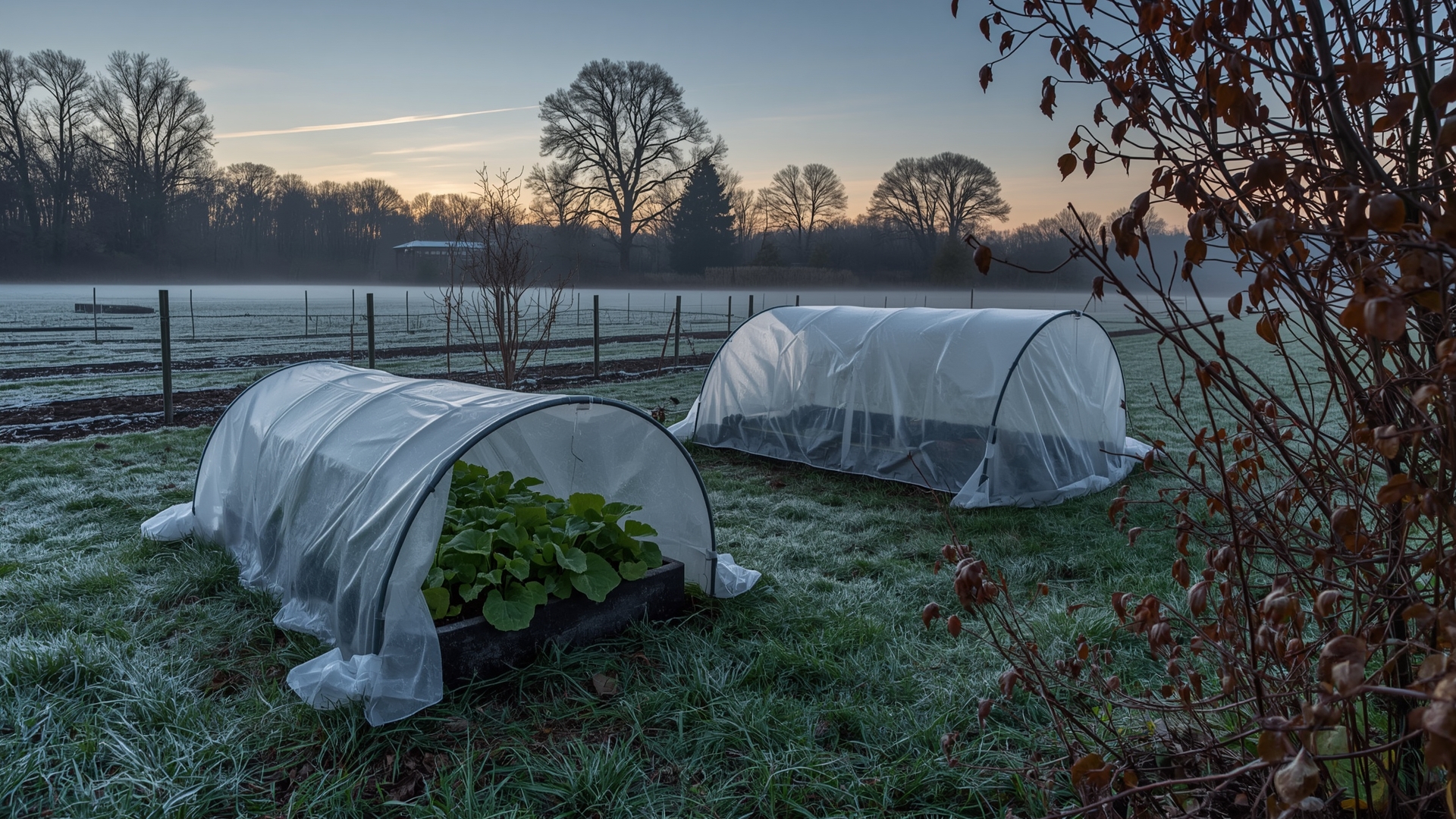
Quick Answer: Row covers trap heat that radiates upward from the soil after sunset. The fabric slows that heat loss, keeping the air inside the cover 4–8°F warmer than outside air. Medium covers protect to 28°F; heavyweight covers protect to 24°F.
The warming effect works best when soil has absorbed heat during the day. Moist soil holds and releases more heat than dry soil. On cold nights before expected frost, water your garden in the late afternoon. The wet soil acts as a thermal battery, releasing warmth through the night under the cover.
Row covers are not perfect frost shields. If outside temperatures drop below the cover’s protection rating, plants will still be damaged. Heavyweight covers protect better, but no fabric cover can substitute for bringing tender plants inside during a hard freeze event below 20°F.
How Do Row Covers Block Garden Pests?
Quick Answer: Row covers physically block insects from reaching plants. The fabric acts as a barrier that flying and crawling pests cannot pass through. For this to work, covers must go on before pests arrive and edges must be sealed completely with no gaps.
Which Pests Does Row Cover Fabric Stop?
Lightweight row covers are effective against a wide range of flying insects. These include:
- Flea beetles: Tiny jumping beetles that create small holes in brassica leaves
- Cabbage moths and cabbage white butterflies: Lay eggs that hatch into plant-eating caterpillars
- Aphids: Soft-bodied insects that cluster on new growth and transmit plant viruses
- Carrot fly: Lays eggs near carrot tops; larvae tunnel through roots
- Cucumber beetles: Spread bacterial wilt disease while feeding
- Leek moth and onion fly: Attack allium family vegetables
What Pests Do Row Covers Not Stop?
Row covers don’t prevent soil-dwelling pests that are already in the ground before the cover goes on. Cutworms, wireworms, and root maggots live in the soil and reach plants without flying. If your soil has a history of these pests, row covers alone won’t solve the problem.
Slugs can also shelter under warm, moist covers and feed at night. Check under your covers every few days in wet conditions.
When Should You Put Row Covers On and Take Them Off?
Quick Answer: Put row covers on immediately at transplanting or direct seeding for pest exclusion. For frost protection, install covers the afternoon before a forecasted frost event. Remove lightweight covers when crops finish or at flowering for pollination-dependent plants.
Spring Timing
In spring, install row covers at the same time you transplant seedlings or sow seeds. Don’t wait for pests to appear. By the time you see flea beetle damage, the population is already large enough to cause serious harm.
For frost protection in spring, watch your 10-day forecast. If nighttime lows are predicted below 32°F and your transplants are in the ground, cover them the afternoon before. Remove the cover once the threat has passed and daytime temperatures are above 40°F.
Fall Timing
In fall, put covers back on brassicas and leafy greens in early September before insect pressure picks up again. Cabbage white butterflies have a second flight in late summer that causes significant damage to fall crops.
For extending the season, add covers when nighttime temperatures begin dropping below 35°F regularly. Medium and heavyweight covers can push your harvest of lettuce, kale, spinach, and arugula by 3–6 weeks past the first frost date.
When to Remove Row Covers
Remove covers when plants start flowering and need pollinators. Remove heavyweight covers each morning to let in full light and heat. Replace them before sunset if another cold night is forecast. Remove all covers once temperatures are consistently above 50°F at night and pest pressure is low.
How Long Do Row Covers Last and How Do You Store Them?
Quick Answer: Quality spunbonded row covers last 3–5 seasons with careful handling. UV degradation shortens lifespan when stored outdoors. Fold covers loosely, store in a dry location away from direct sunlight, and rinse off soil and debris before storage to prevent fabric breakdown.
The fabric tears when snagged on sharp edges. Avoid dragging it over rough board ends or wire hoop tips without caps. Smooth any sharp points on your hoops before draping fabric over them.
Some gardeners label their covers by weight with a permanent marker on the fabric edge. This prevents confusion when pulling covers from storage in spring when you’re working fast.
Row Cover Fabric: Durability and Cost Reference
| Fabric Type | Expected Lifespan | Approx. Cost (per 50 ft roll) | Main Cause of Early Failure |
|---|---|---|---|
| Lightweight (0.5 oz) | 2–3 seasons | $15–$30 | Tearing on sharp edges or staples |
| Medium-weight (1.0–1.5 oz) | 3–5 seasons | $25–$50 | UV degradation from outdoor storage |
| Heavyweight (2.0–2.5 oz) | 3–5 seasons | $35–$65 | Compression damage from improper folding |
What Are Common Row Cover Mistakes and How Do You Avoid Them?
Quick Answer: The most common row cover mistakes are installing them after pests arrive, leaving gaps at the edges, and keeping heavyweight covers on during the day. A cover installed too late gives insects a head start they never recover from.
Installing After Pests Are Already Present
If you see flea beetle holes or caterpillar frass before covering, the insects may already be on the plants. A cover will protect against new arrivals, but any eggs or insects already on the plants will continue causing damage inside the cover. Inspect plants before covering and remove any visible pests first.
Leaving Too Much Slack or Too Little
Too much slack causes fabric to pool and create wet spots where disease can develop. Too little slack causes the fabric to strain against the hoops, which leads to tears and reduces its effective life. Aim for 3–4 inches of gentle draping over each hoop.
Forgetting to Open Covers on Warm Days
On days above 75°F, even medium covers can trap too much heat under them. Open one end or prop a section up to ventilate when temperatures are warm. Plants can heat-stress under covers the same way they can freeze without them.
Frequently Asked Questions About Row Cover Fabric
Can I water through row cover fabric?
Yes. Spunbonded polypropylene row cover fabric lets rain and irrigation water pass through freely. You can run a sprinkler or drip irrigation system without removing the cover. However, heavy watering directly on the fabric can pool if the fabric is lying flat on dense foliage.
Do row covers affect soil temperature as well as air temperature?
Yes. Covers trap radiant heat from the soil surface, which raises both air temperature inside the cover and soil surface temperature by a few degrees. This is especially useful in early spring when soil is still cold and slowing germination of direct-sown seeds like carrots and beets.
Can I use row covers on tomato cages or other existing supports?
Yes. Tomato cages, cattle panels, and T-posts all work as row cover support structures. Drape the fabric over the existing framework and secure the edges at ground level. This is an efficient way to protect established plants without setting up a separate hoop system.
What width of row cover do I need for a standard raised bed?
A 4-foot wide raised bed with 18-inch hoops requires fabric that is at least 8–10 feet wide to allow proper edge anchoring on both sides. Most row cover rolls come in widths of 5, 6, 8, 10, or 12 feet. Choose based on your hoop height plus 12 inches of ground allowance on each side.
Will row covers cause plants to bolt (flower early) due to heat buildup?
Lightweight and medium covers are unlikely to cause bolting on their own. Bolting in lettuce, spinach, and arugula is triggered mainly by day length and sustained heat, not short-term temperature spikes. Heavyweight covers left on during warm days can contribute to heat buildup, which may accelerate bolting in sensitive crops.
Are row covers reusable, or should I buy new ones each season?
Quality spunbonded row covers are reusable for multiple seasons. Inspect them after each use for tears or thinning spots. Small holes can be patched with garden tape. Replace covers when they show widespread thinning, significant UV yellowing, or tears too large to patch reliably.