Most people want a beautiful garden without spending every weekend pulling weeds or dragging out a hose. The good news is that the right plant choices can do most of the work for you. Low maintenance plants are designed by nature to thrive with minimal watering, little fertilizing, and almost no fussing once they’re established.
This guide covers the best low maintenance plants for home gardens, organized by category so you can match plants to your actual conditions. You’ll also find soil tips, sunlight requirements, and layout strategies to keep your garden looking great through every season.
Key Takeaways
- Drought-tolerant plants like lavender and sedum can survive weeks without watering once established in well-draining soil.
- Perennials come back every year, cutting your replanting costs and labor compared to annuals.
- Shade-tolerant plants like hostas and ferns thrive under tree canopies where other plants struggle.
- Soil preparation matters more than watering frequency — the right soil structure reduces both weeding and irrigation needs.
- Layered planting (tall, mid, ground cover) creates year-round visual interest while suppressing weeds naturally.
- Native plants are the lowest maintenance option for your region because they evolved to survive local conditions without help.
What Makes a Plant Truly Low Maintenance?
Quick Answer: A truly low maintenance plant needs minimal watering after the first growing season, tolerates your local soil without heavy amendments, resists common pests, and doesn’t require frequent pruning or deadheading to stay healthy and attractive.
The term “low maintenance” gets thrown around a lot in gardening content. But not every plant labeled that way is actually easy to grow in your specific yard.
A genuinely low maintenance plant checks several boxes at once. It has strong drought tolerance once its roots are established. It resists local pests without needing regular spraying. It stays looking tidy without constant trimming. And it doesn’t need rich, heavily amended soil to survive.
The single biggest factor most gardeners overlook is “establishment time.” Almost every plant needs more attention during its first season. After that first year, a truly low maintenance plant should be largely self-sufficient.
The Difference Between Low Maintenance and No Maintenance
No plant is truly zero maintenance. Even the toughest plants benefit from an annual cleanup, occasional dividing, and a light mulch application. The goal is to reduce your active gardening hours to a few sessions per year, not eliminate them entirely.
Think of it like a car. You still need to check the oil occasionally. But a reliable car doesn’t need daily repairs.
Which Drought-Tolerant Plants Work Best in Home Gardens?
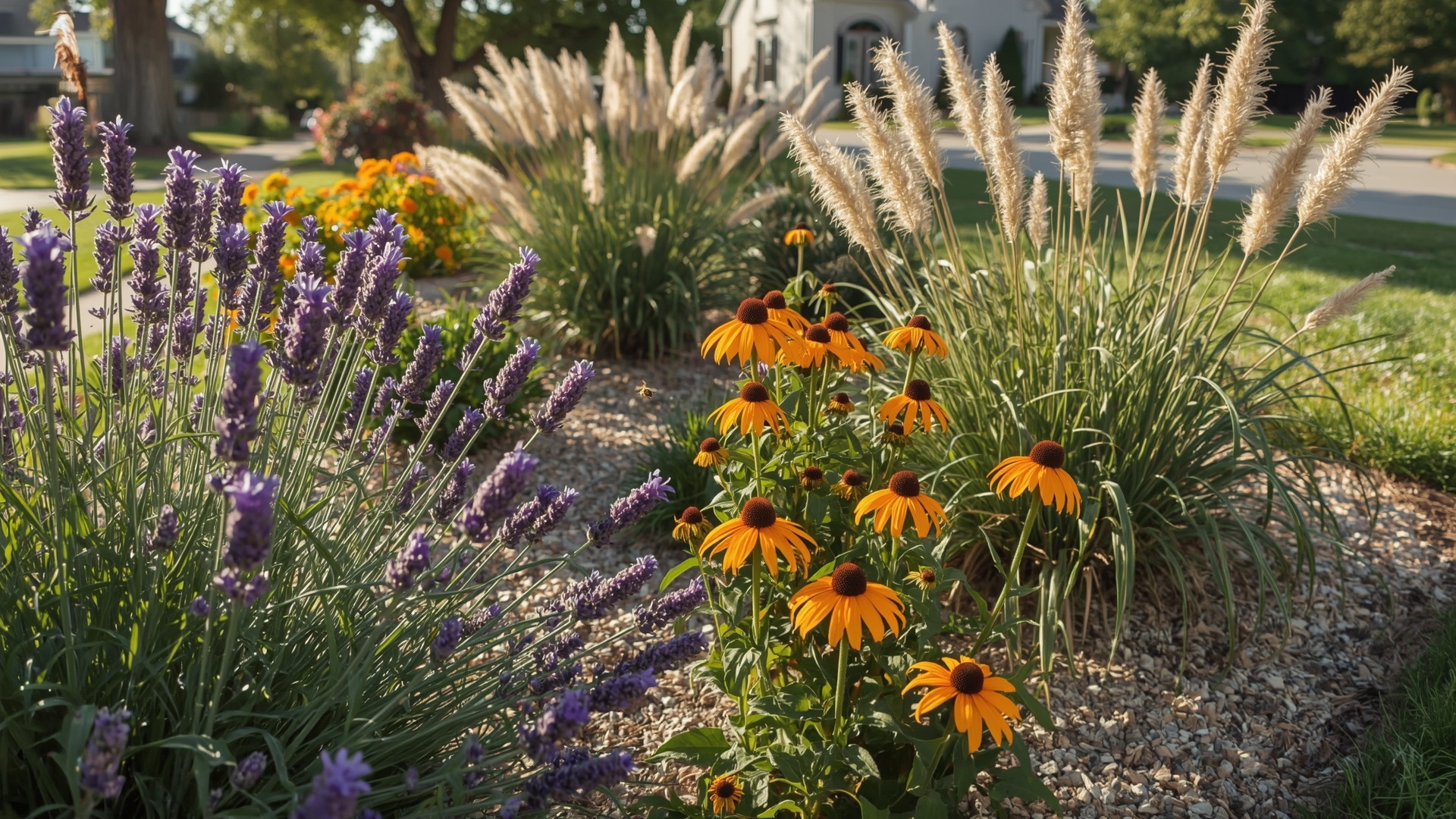
Quick Answer: Lavender, sedum, black-eyed Susan, Russian sage, and ornamental grasses are top drought-tolerant picks for home gardens. Most need well-draining soil, full sun, and minimal watering after a 6-to-8-week establishment period.
Drought-tolerant plants are the backbone of a low maintenance garden. They store water in their leaves, roots, or stems, which means they keep going even when rainfall is scarce.
These plants also tend to prefer lean soil over rich, heavily amended beds. Adding too much compost can actually make some drought-tolerant plants grow too fast and become floppy or prone to disease.
Top Drought-Tolerant Plants for Sun Exposure
| Plant | Sunlight Needed | Water After Establishment | Mature Height | Bloom Season | USDA Hardiness Zone |
|---|---|---|---|---|---|
| Lavender | Full sun (6+ hrs) | Every 2-3 weeks | 2-3 ft | Late spring to summer | 5-8 |
| Sedum (Stonecrop) | Full sun (6+ hrs) | Every 3-4 weeks | 6 in to 2 ft | Late summer to fall | 3-9 |
| Black-Eyed Susan | Full to part sun (4-6 hrs) | Weekly in dry spells | 2-3 ft | Summer to fall | 3-9 |
| Russian Sage | Full sun (6+ hrs) | Every 2-3 weeks | 3-5 ft | Summer to fall | 4-9 |
| Coneflower (Echinacea) | Full sun (6+ hrs) | Every 1-2 weeks | 2-4 ft | Summer | 3-9 |
| Ornamental Grass (Feather Reed) | Full sun (6+ hrs) | Every 2 weeks | 4-6 ft | Late summer (seed heads) | 4-9 |
Why Sandy or Loamy Soil Helps Drought-Tolerant Plants Thrive
Drought-tolerant plants hate sitting in wet, heavy clay. Their roots are built to pull moisture from dry conditions, so poor drainage causes root rot faster than drought does.
If your soil is heavy clay, mix in coarse sand or pea gravel before planting. A ratio of roughly one part coarse amendment to three parts native soil improves drainage without completely changing your soil profile.
What Are the Best Low Maintenance Shade Plants for Gardens?

Quick Answer: Hostas, astilbe, bleeding heart, hellebores, and ferns are reliable low maintenance shade plants. They grow well under trees or along north-facing walls with only 2-4 hours of indirect sunlight and moderate moisture in well-draining soil.
Shady spots are often the hardest areas to plant. Grass dies out, sun-loving flowers refuse to bloom, and the area looks bare. Shade-tolerant plants solve this problem by thriving in exactly the conditions other plants find hostile.
Most shade plants prefer consistent moisture and slightly richer soil than their sun-loving counterparts. A 2-to-3-inch layer of mulch keeps the soil cool and moist between waterings, reducing your effort significantly.
Shade-Tolerant Low Maintenance Plants: Attributes and Requirements
| Plant | Light Requirement | Soil Preference | Watering Frequency | Mature Spread | USDA Zone |
|---|---|---|---|---|---|
| Hosta | Part to full shade (0-4 hrs) | Moist, rich, well-draining | Weekly | 1-4 ft wide | 3-9 |
| Astilbe | Part shade (2-4 hrs) | Moist, humus-rich | 2x weekly in heat | 1-3 ft wide | 4-9 |
| Bleeding Heart | Part to full shade | Moist, well-draining | Weekly | 1-2 ft wide | 3-9 |
| Hellebore (Lenten Rose) | Part to full shade | Average to rich, well-draining | Every 10-14 days | 1-2 ft wide | 4-9 |
| Fern (Autumn Fern) | Part to full shade | Moist, acidic (pH 5.5-6.5) | Weekly | 2-3 ft wide | 5-9 |
| Coral Bells (Heuchera) | Part shade (2-4 hrs) | Well-draining, slightly acidic | Every 7-10 days | 1-2 ft wide | 4-9 |
How to Use Hostas as a Weed-Suppressing Ground Cover
Hostas are one of the most reliable shade plants available. Their wide, overlapping leaves create a dense canopy that blocks sunlight from reaching the soil below, which naturally suppresses weed growth.
Plant hostas 18 to 24 inches apart. Within two growing seasons, they fill in and form a living mulch layer that dramatically reduces your weeding time under trees and in shaded borders.
Which Perennial Plants Require the Least Upkeep Year After Year?
Quick Answer: Daylilies, coneflowers, salvia, ornamental grasses, and peonies are among the lowest upkeep perennials. They return each spring, spread slowly on their own, and only need dividing every 3-5 years to stay productive and healthy.
Perennials are the smart long-term investment in any low maintenance garden. You plant them once and they come back every year, growing a little larger and more impressive with each season.
The annual chore list for most perennials is short. Cut them back in late fall or early spring. Divide clumps when they get crowded, usually every three to five years. That’s often the full extent of the work required.
Low Maintenance Perennials: Performance Data by Category
| Plant | Sunlight | Dividing Frequency | Bloom Duration | Self-Seeds? | Deer Resistant? |
|---|---|---|---|---|---|
| Daylily | Full to part sun | Every 3-4 years | 4-6 weeks | No | Partially |
| Coneflower (Echinacea) | Full sun | Every 4-5 years | 6-8 weeks | Yes | Yes |
| Salvia (Perennial) | Full sun | Every 3-5 years | 8-10 weeks | Lightly | Yes |
| Peony | Full sun (6+ hrs) | Rarely (every 10+ years) | 2-3 weeks | No | Yes |
| Ornamental Grass | Full sun | Every 3-5 years | Late season seed heads | Some varieties | Yes |
| Sedum (Autumn Joy) | Full sun | Every 3-4 years | 8-10 weeks | No | Yes |
Why Peonies Are One of the Best Long-Term Investments
Peonies are famous for being planted once and then practically ignored for decades. A well-placed peony can bloom reliably for 50 to 100 years with nothing more than an annual cleanup and a light application of balanced fertilizer in spring.
The one critical requirement is sunlight. Peonies need at least six hours of direct sun daily to bloom well. Shade is the most common reason a peony stops flowering, not neglect.
What Are the Best Native Plants for Low Maintenance Home Gardens?
Quick Answer: Native plants are the lowest maintenance option for any region because they evolved to survive local rainfall, soil types, and climate extremes without help. Examples include coneflower, black-eyed Susan, switchgrass, and wild columbine, depending on your region.
Native plants have a built-in advantage over imported ornamentals. They developed alongside local insects, birds, and soil microorganisms over thousands of years. That means they’re naturally adapted to survive droughts, cold snaps, and soil conditions that would stress exotic plants.
They also support local pollinators, which improves your entire garden’s health over time. A native plant garden feeds itself through a complex web of soil biology that keeps the ecosystem in balance without much input from you.
How to Find Native Plants for Your Region
The USDA Plants Database is a free tool that lists native species by state. Your local cooperative extension office (a network of university-based agricultural advisors) also publishes region-specific plant lists for free. Local native plant societies often hold plant swaps in spring and fall where you can get established plants at low cost.
Regional Native Plant Recommendations
| Region | Recommended Native | Sunlight | Water Needs | Primary Benefit |
|---|---|---|---|---|
| Northeast US | Wild Columbine | Part shade | Low to moderate | Hummingbird magnet |
| Southeast US | Muhly Grass | Full sun | Low (drought tolerant) | Fall color, erosion control |
| Midwest US | Purple Coneflower | Full sun | Low to moderate | Pollinator support, self-seeds |
| Southwest US | Desert Marigold | Full sun | Very low | Long bloom season, deer resistant |
| Pacific Northwest | Oregon Grape | Part to full shade | Low | Evergreen, wildlife food source |
| Mountain West | Blanket Flower (Gaillardia) | Full sun | Very low | Long bloom, tolerates poor soil |
How Should You Arrange Low Maintenance Plants for Year-Round Visual Interest?
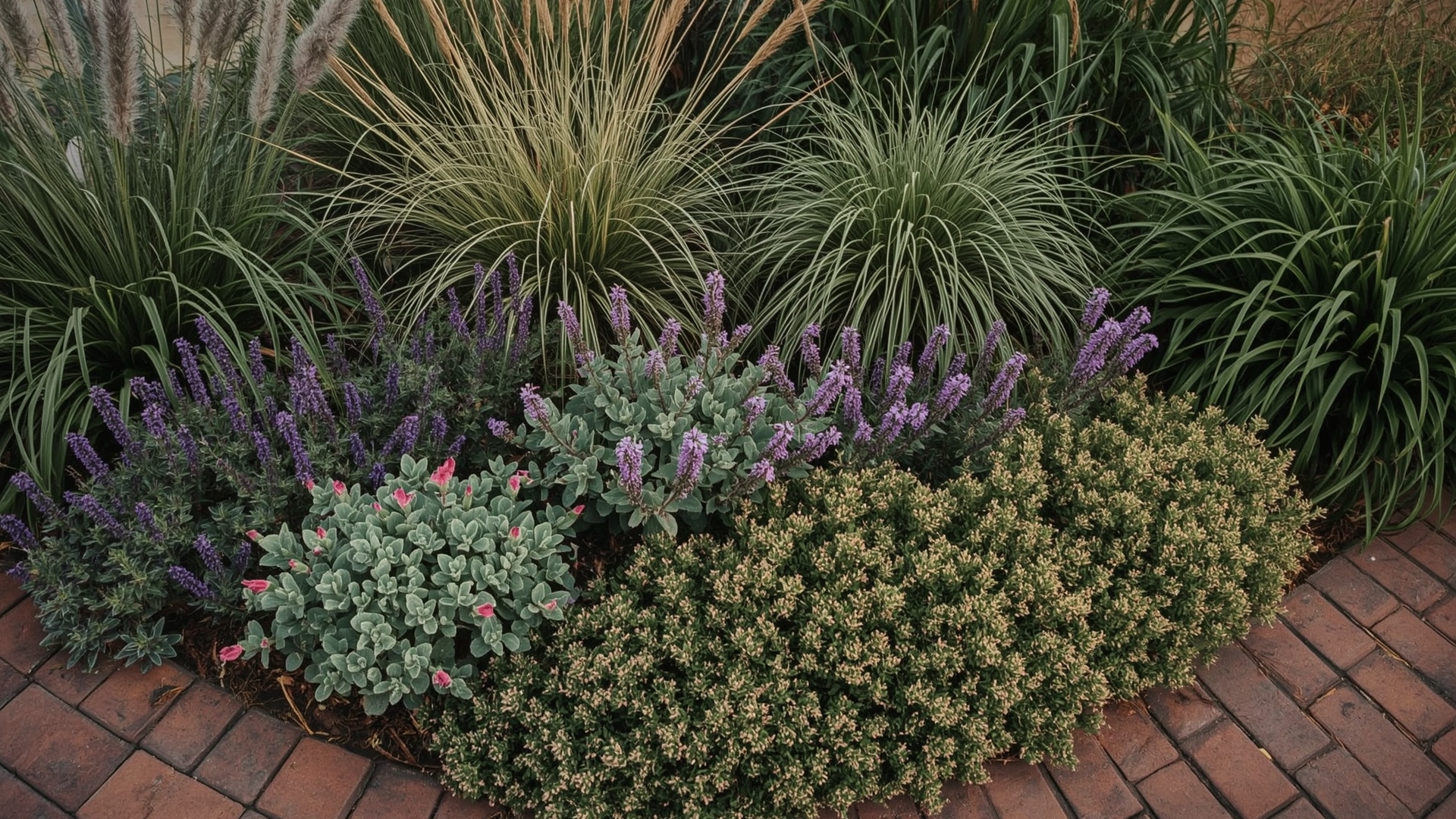
Quick Answer: Layer plants by height using tall grasses or shrubs in back, mid-height perennials in the middle, and ground covers in front. Choose plants with staggered bloom times so something is always flowering from early spring through late fall.
A low maintenance garden still needs thoughtful planning to look good. Random planting leads to patchy coverage, bare spots in certain seasons, and weeds filling in the gaps.
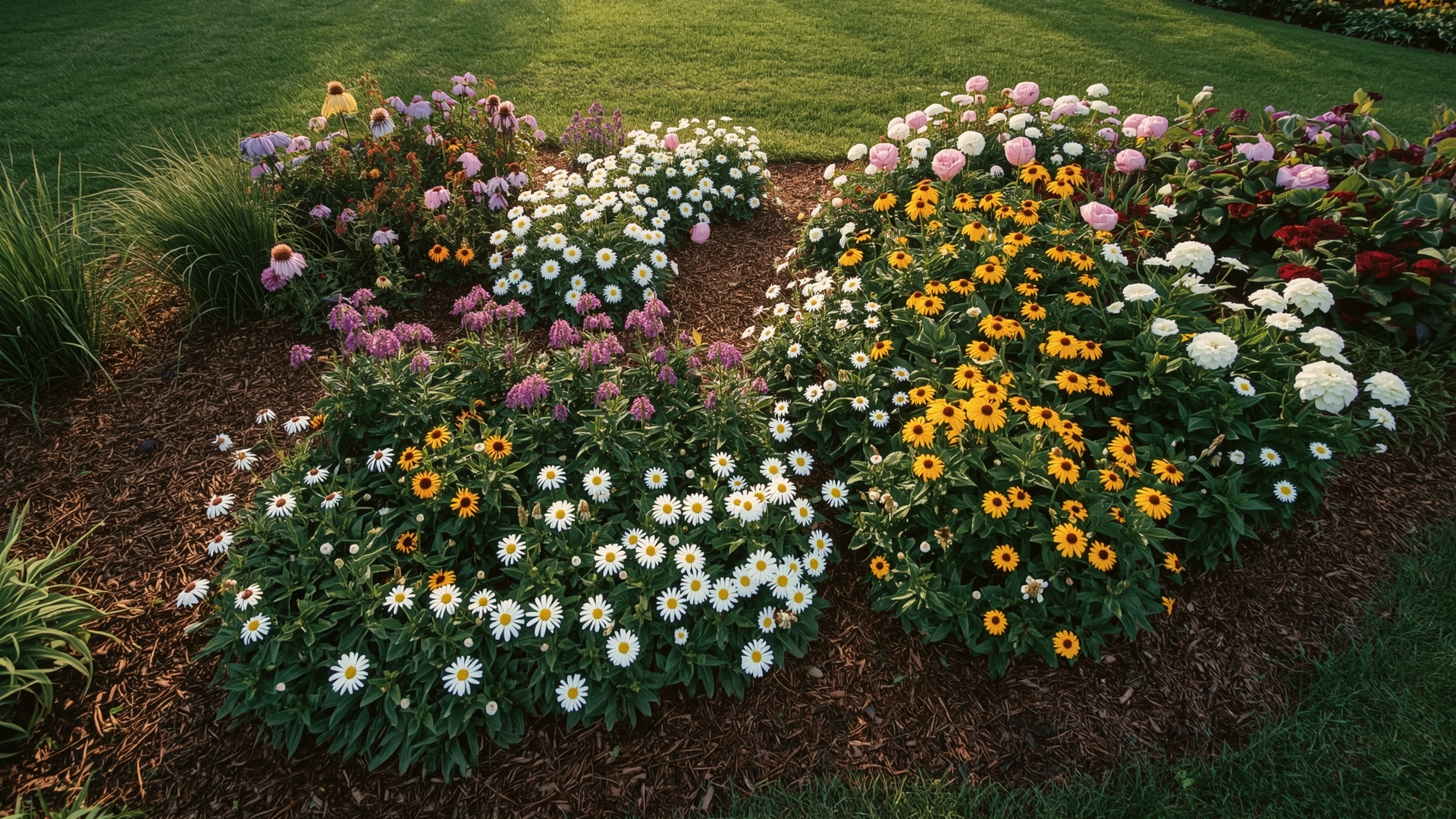
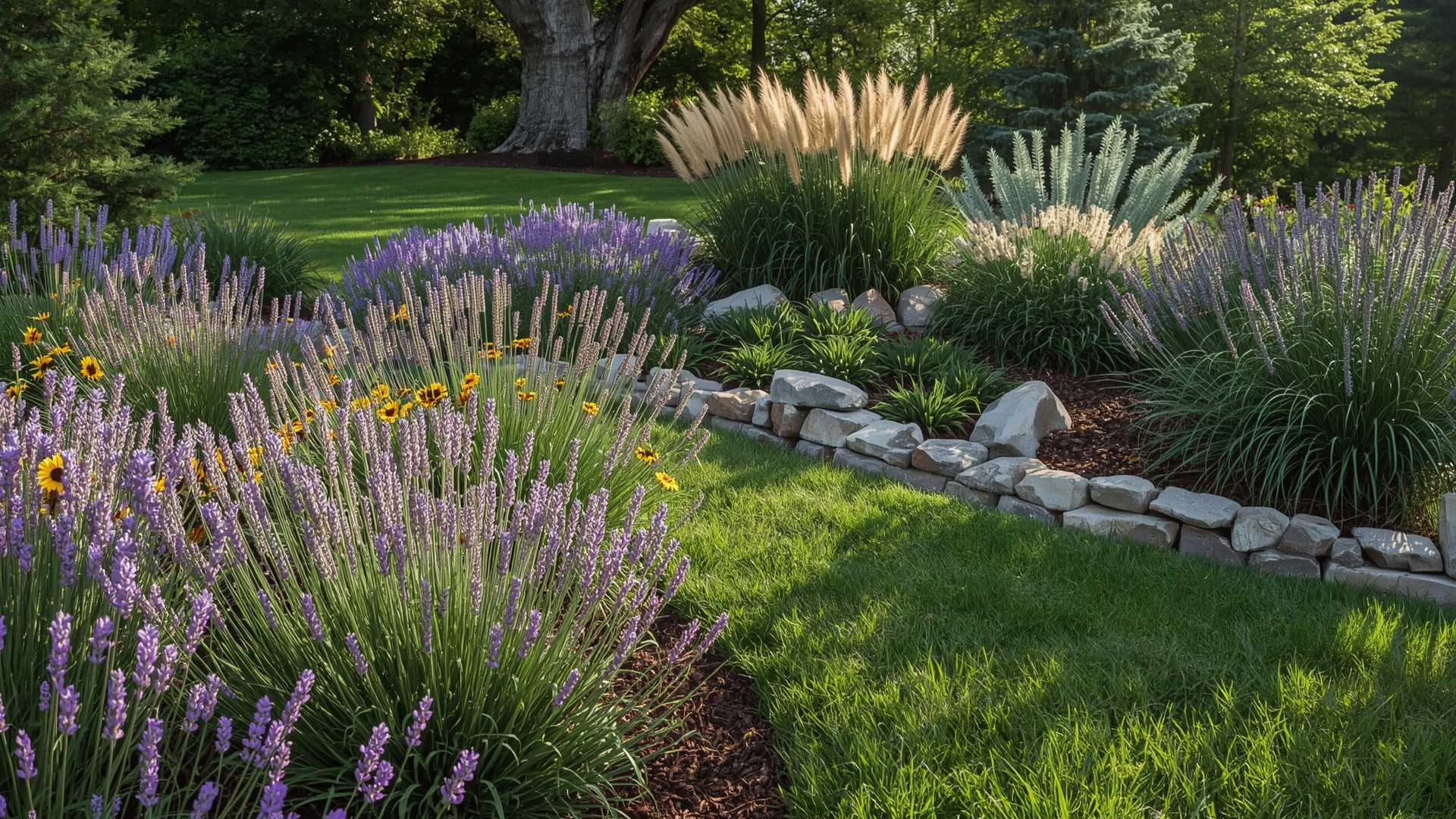
The most effective layout strategy uses three layers: tall background plants, mid-height feature plants, and low ground-cover plants. This structure creates depth, fills horizontal space efficiently, and reduces the bare soil where weeds take hold.
Seasonal Planting Calendar for Continuous Color
Staggering bloom times is the key to a garden that looks interesting all year without replanting. Choose at least one plant for each of the four seasonal windows below.
- Early spring (March to April): Hellebores, bleeding heart, creeping phlox, early daffodils
- Late spring to early summer (May to June): Salvia, peonies, iris, astilbe
- Midsummer (July to August): Coneflowers, black-eyed Susan, daylilies, lavender
- Late summer to fall (September to November): Sedum Autumn Joy, ornamental grasses, asters, Russian sage
Using Ground Covers to Cut Weeding Time
Ground covers are the unsung heroes of a low maintenance garden. Plants like creeping thyme, ajuga (also called bugleweed), and pachysandra spread horizontally to cover bare soil. Once established, they outcompete weeds by shading the ground and using up available moisture.
Use ground covers under trees, along path edges, and on slopes where mowing is difficult. A single flat of creeping thyme planted 6 inches apart will form a dense mat within one to two growing seasons.
The Three-Layer Planting Model
This structure works in beds of any size and dramatically reduces maintenance by eliminating bare soil.
- Back layer (tall, 3-6 ft): Ornamental grasses, Russian sage, Joe Pye weed, tall coneflowers
- Middle layer (mid-height, 1-3 ft): Daylilies, salvia, sedum, hostas, astilbe
- Front layer (low, under 1 ft): Creeping thyme, ajuga, coral bells, low sedums
What Soil Preparation Steps Reduce Long-Term Garden Maintenance?
Quick Answer: Improving soil drainage before planting and adding a 3-inch layer of organic mulch after planting are the two highest-impact steps. These reduce watering frequency by 30-50%, suppress weeds, and regulate soil temperature without ongoing effort.
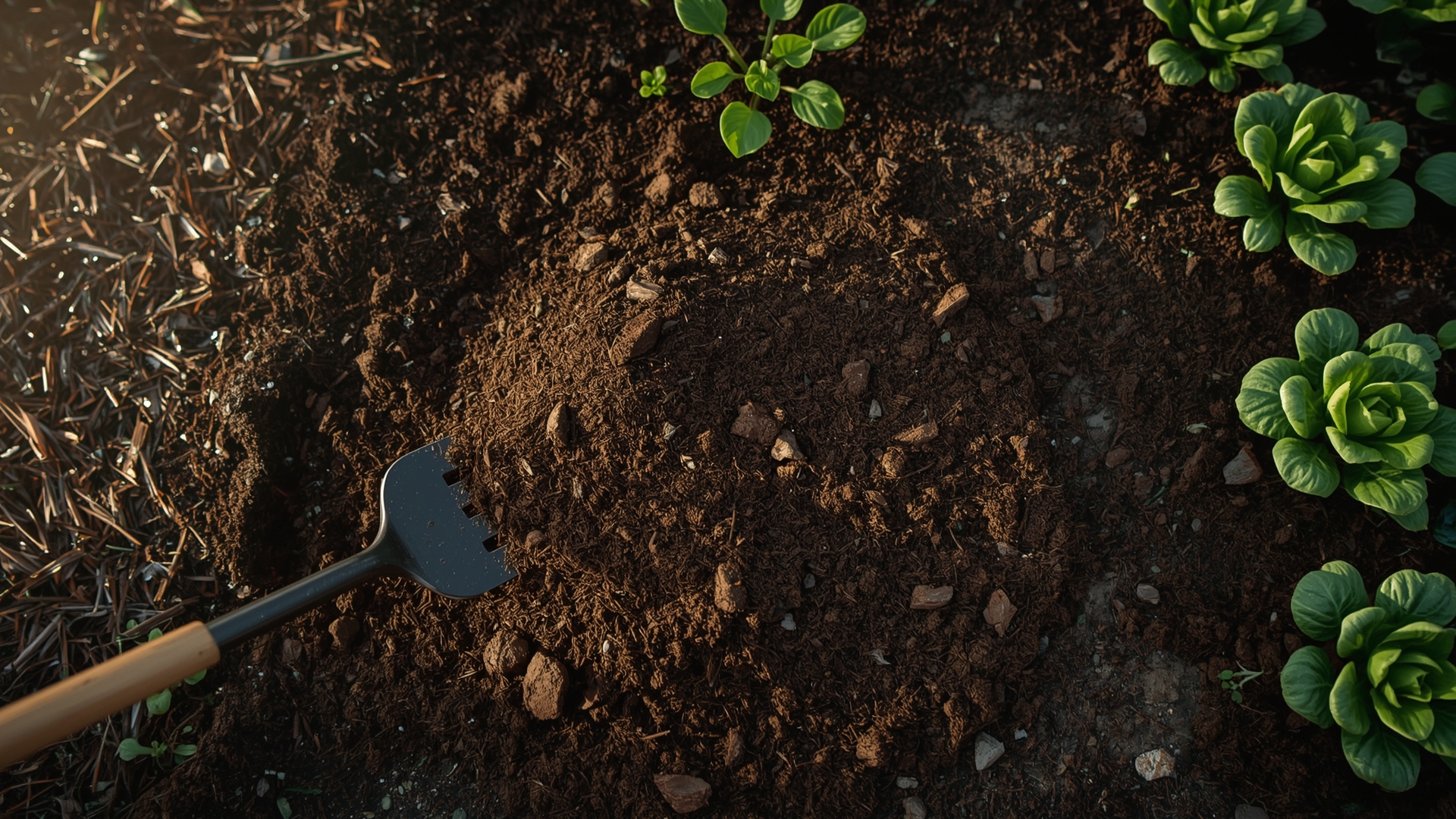
How you prepare your soil before planting determines how much work you’ll do for the next several years. Most low maintenance plants fail not because of bad care, but because of poor drainage or compacted soil that prevents roots from establishing properly.
A simple soil test (available at garden centers or through your cooperative extension office for $10 to $20) tells you your soil’s pH, nutrient levels, and organic matter content. This removes the guesswork and prevents you from adding amendments your soil doesn’t actually need.
Soil Preparation by Plant Type
| Plant Category | Ideal pH Range | Drainage Needs | Organic Matter | Key Amendment |
|---|---|---|---|---|
| Drought-tolerant plants | 6.0-7.5 | Fast-draining | Low (5-10%) | Coarse sand or gravel |
| Shade perennials | 5.5-7.0 | Moderate, consistent | Medium to high (15-25%) | Compost (2-3 inch layer) |
| Sun perennials | 6.0-7.0 | Moderate | Medium (10-15%) | Compost or aged manure |
| Native plants | Varies by species | Usually moderate | Low to medium | Minimal amendment needed |
| Ground covers | 5.5-7.0 | Moderate | Low to medium | Light compost at planting |
The Mulch Rule That Saves Hours of Watering
A 3-inch layer of organic mulch, like shredded bark, wood chips, or straw, around your plants does three things at once. It holds soil moisture so you water less often. It blocks sunlight from reaching weed seeds. And it slowly breaks down, adding organic matter to the soil over time.
Reapply mulch once per year, usually in spring. This single annual task replaces dozens of watering and weeding sessions throughout the season.
Are There Low Maintenance Container Plants That Work Outdoors Year-Round?
Quick Answer: Sedums, ornamental grasses, lavender, and evergreen hellebores work well in outdoor containers year-round in zones 5 and above. Use pots with drainage holes and a well-draining potting mix to prevent root rot during wet seasons.
Not every garden has ground space. Containers are a practical solution for patios, balconies, steps, and small courtyards. The challenge is that pots dry out faster than garden beds, which defeats the purpose of low maintenance planting.
The solution is choosing plants with low water needs and using larger containers. A pot with a diameter of 14 inches or more retains moisture longer than a small 6-inch pot. Self-watering containers with built-in reservoirs can extend the time between waterings to 5 to 10 days.
Best Practices for Low Maintenance Container Gardens
- Always use containers with at least one drainage hole to prevent waterlogging
- Choose a potting mix labeled “well-draining” or add 20% perlite (a lightweight volcanic mineral) to standard potting soil
- Group containers together so plants create a slightly humid microclimate and shade each other’s roots
- Overwinter tender container plants in an unheated garage once temperatures drop below 20°F (-6°C)
How Do You Reduce Watering Needs in a Home Garden Without Irrigation Systems?
Quick Answer: Deep watering once or twice per week is more effective than shallow daily watering. Deep watering encourages roots to grow downward where soil stays moist longer, reducing how often plants need watering by 40-60% compared to light surface irrigation.
Your watering technique matters as much as how often you water. Shallow, frequent watering trains plant roots to stay near the surface, where soil dries out quickly. That creates dependency on constant moisture.
Deep, infrequent watering pushes roots down into cooler, consistently moist soil layers. A plant with deep roots can go much longer between waterings without showing stress.
Simple Techniques to Extend Time Between Waterings
- Water at the base, not the leaves. Wet foliage dries more slowly and can encourage fungal disease.
- Water in the morning. Morning moisture absorbs before the heat of the day evaporates it.
- Use rain gauges. A $5 rain gauge tells you if your area already received an inch of rain this week, so you skip unnecessary watering.
- Group plants by water needs. Placing drought-tolerant plants together prevents you from overwatering them while caring for thirstier neighbors.
Frequently Asked Questions
What is the single easiest plant to grow for a beginning gardener?
Sedum is the most forgiving choice for beginners. It tolerates poor soil, full drought, and some neglect without showing damage. Plant it in full sun with well-draining soil and it will thrive with almost no intervention. Daylilies are a close second for ease.
Can low maintenance plants still attract pollinators like bees and butterflies?
Yes. Coneflowers, lavender, salvia, and black-eyed Susan are all excellent pollinator plants that also require minimal care. Native plants are especially valuable because local bee and butterfly species evolved alongside them. You don’t have to choose between easy gardening and supporting wildlife.
How do I keep weeds out of a low maintenance garden without herbicides?
Dense planting and mulch are your two best tools. A 3-inch mulch layer blocks most weed seeds from germinating. Ground covers like creeping thyme and ajuga fill gaps that weeds would otherwise occupy. Manual weeding in early spring, before weeds set seed, handles most of what gets through.
Do low maintenance plants work in raised garden beds?
Yes, and raised beds actually improve drainage for drought-tolerant plants. Fill a raised bed with a mix of 60% topsoil, 30% compost, and 10% coarse sand for a versatile growing medium. Most perennials and drought-tolerant plants thrive in raised beds with very little additional care.
How long does it take for low maintenance plants to establish after planting?
Most perennials need one full growing season to establish strong root systems. During that first season, water regularly, about once or twice per week during dry periods. By the second year, most plants are largely self-sufficient and match the low maintenance expectations on their label.
What is the best time of year to plant low maintenance perennials?
Early fall is often the best planting window. Cooler temperatures reduce transplant stress, and fall rains help roots establish before winter. Spring planting works well too, but summer-planted perennials need more frequent watering during establishment because of heat stress.