Square foot gardening lets you grow more food in less space by dividing a raised bed into a grid of one-foot squares. Each square holds a specific number of plants based on their size. You get organized beds, less waste, and harvests that keep coming all season long.
Mel Bartholomew created the method in 1981 after noticing how much space traditional row gardens wasted. His book, Square Foot Gardening, became one of the best-selling garden books ever published. The core idea is still the same: work smarter, not harder.
Key Takeaways
- Grid layout is everything. A simple 4×4-foot bed divided into 16 squares forms the foundation of the entire system.
- Plant spacing drives the grid. Each square holds 1, 4, 9, or 16 plants depending on the crop’s mature size.
- Mel’s Mix is the official soil blend. It’s one-third compost, one-third peat moss (or coconut coir), and one-third coarse vermiculite.
- Succession planting keeps beds productive. When one square finishes, you replant it immediately with a new crop.
- Square foot beds use up to 80% less space than row gardens while producing comparable yields.
- No tilling required. The raised bed and custom soil mix eliminate the need to dig up existing ground.
What Is the Square Foot Gardening Method?
Quick Answer: Square foot gardening is a raised-bed system where you divide growing space into one-foot squares and plant each square with a set number of crops. It reduces space waste, simplifies spacing decisions, and keeps maintenance low for home gardeners.
The method works on one central idea: right-sizing your garden to what you actually need. Traditional row gardening was designed for large-scale farming with tractors. Home gardeners copied that layout, then spent most of their effort maintaining empty space between rows.
Square foot gardening eliminates that wasted ground. Every inch of soil is used intentionally. You plant only what fits, only what you’ll eat, and only what you have time to tend.
Who Created Square Foot Gardening?
Mel Bartholomew was a retired efficiency expert who applied industrial thinking to backyard gardens. He noticed that row gardens used about 80% of their space just for walking paths and row spacing. His solution was a compact grid system that fit real backyards and real schedules.
The method has gone through revisions since 1981. The most significant update came in 2006 with All New Square Foot Gardening, which introduced Mel’s Mix as the official soil blend and moved the system fully into raised beds above ground.
What Makes It Different From Other Garden Systems?
Most garden systems focus on what to grow. Square foot gardening focuses on how to organize the growing space. The grid structure makes every decision concrete: how many plants, exactly where they go, and when to replant after harvest.
That clarity removes guesswork. New gardeners don’t need years of experience to lay out a functional bed. They just follow the grid.
How Do You Set Up a Square Foot Garden Bed?
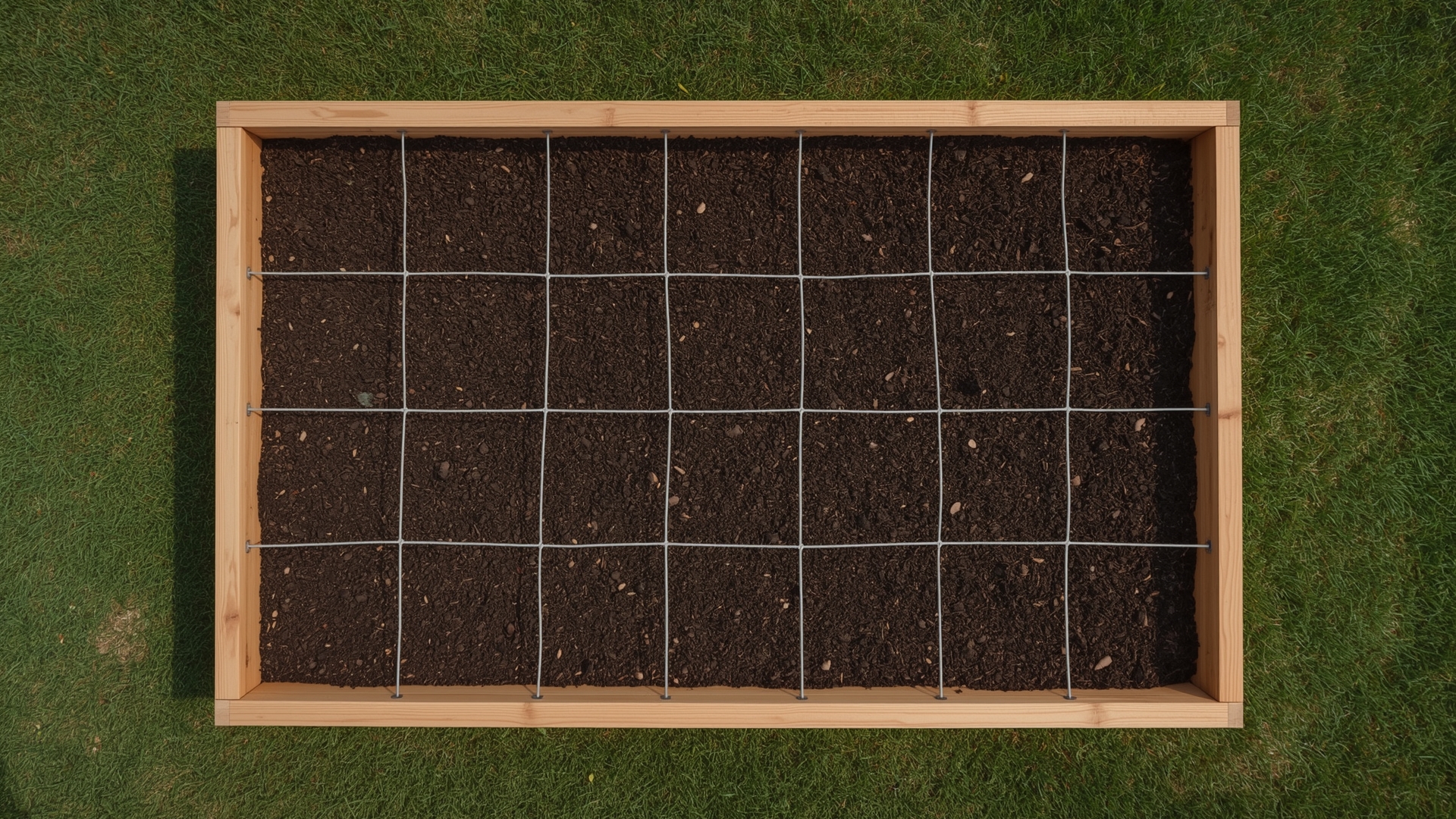
Quick Answer: Build a 4×4-foot raised box that’s 6 to 12 inches deep. Fill it with Mel’s Mix. Lay a grid of strings or slats across the top to mark 16 one-foot squares. Place the bed where it gets at least six hours of direct sunlight daily.
What Are the Ideal Bed Dimensions?
The standard square foot garden bed is 4 feet wide and 4 feet long. That 4-foot width is deliberate. You can reach the center of the bed from either side without stepping in, which keeps the soil loose and uncompacted.
Length can extend beyond 4 feet if you prefer a rectangular bed. Common sizes are 4×4, 4×8, and 4×12. Just keep the width at 4 feet or less. Depth should be at least 6 inches for most vegetables, and 12 inches for root crops like carrots and parsnips.
What Materials Work Best for the Box?
Untreated cedar and redwood are the most popular choices. Both resist rot naturally without chemicals. Pine is cheaper but breaks down faster, typically lasting 3 to 5 years compared to cedar’s 10 to 20 years.
| Material | Typical Lifespan | Approximate Cost (4×4 bed) | Chemical Risk | Best For |
|---|---|---|---|---|
| Cedar (untreated) | 10–20 years | $40–$80 | None | Long-term beds |
| Redwood (untreated) | 15–25 years | $60–$100 | None | Long-term beds |
| Pine (untreated) | 3–5 years | $15–$30 | None | Budget-first builds |
| Galvanized steel | 20–30 years | $80–$150 | Low (food-safe grades) | Modern aesthetics |
| Composite lumber | 25+ years | $100–$200 | Low (varies by brand) | Low-maintenance builds |
How Do You Create the Grid?
The grid is what separates this system from a plain raised bed. You can create it with wooden slats screwed onto the frame, lattice strips, or lengths of cord tied to screws along the edges. Aim for a visible, permanent grid that stays in place all season.
Each intersection marks a planting center. Once the grid is down, you stop guessing where things go. The structure does the thinking for you.
What Soil Mix Does Square Foot Gardening Use?
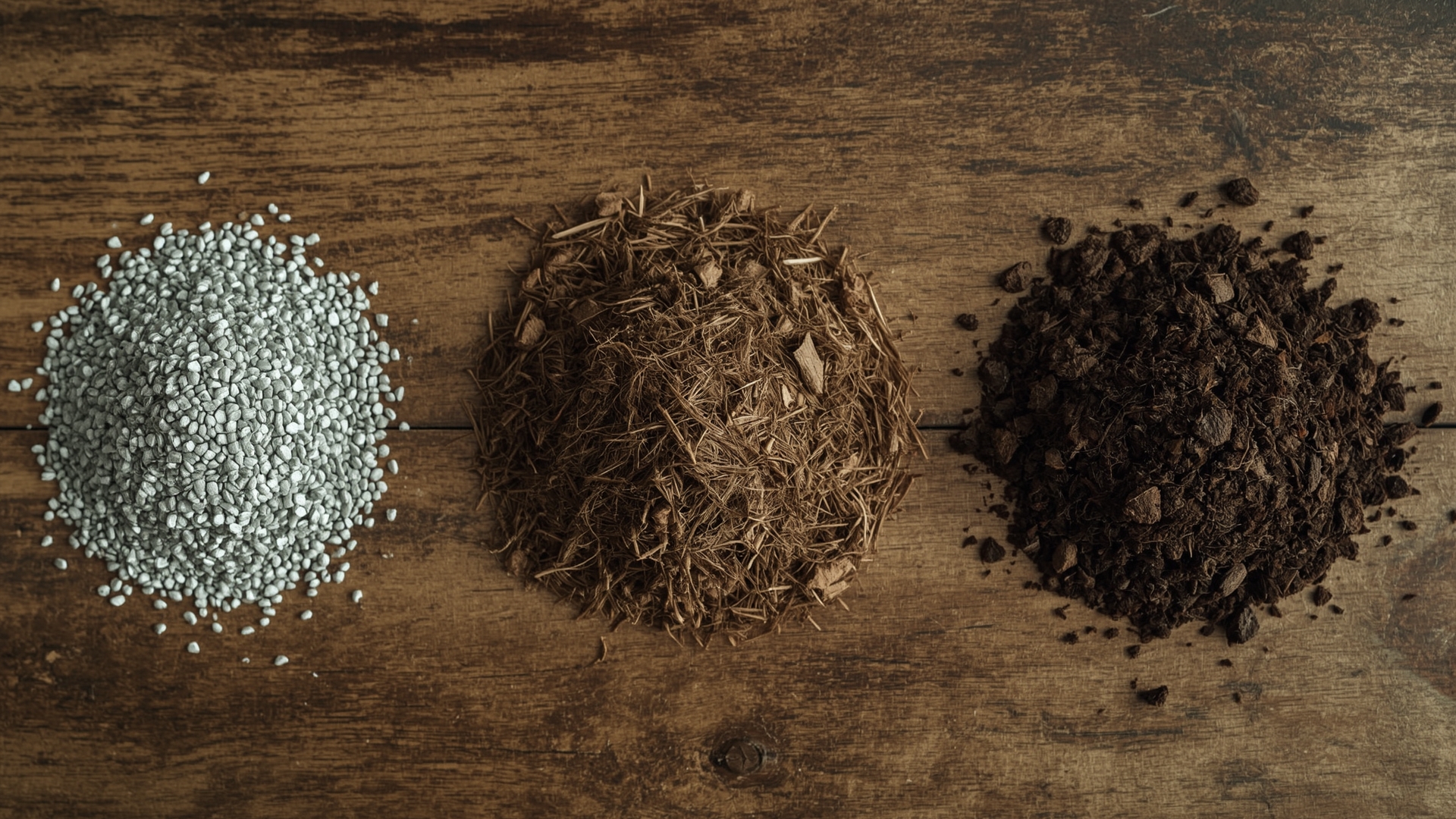
Quick Answer: Square foot gardening uses Mel’s Mix: equal parts coarse vermiculite, peat moss or coconut coir, and blended compost. This mix drains well, holds moisture, stays loose over time, and never compacts the way garden soil does.
Mel’s Mix is the most important part of the system. Regular garden soil packs down, drains poorly, and brings weed seeds into the bed. Mel’s Mix does none of those things.
The three ingredients each do a specific job. Vermiculite holds air pockets and prevents compaction. Peat moss or coconut coir retains moisture without staying soggy. Compost supplies nutrients and feeds soil biology.
What Quantities Do You Need for a 4×4 Bed?
A standard 4×4 bed at 6 inches deep holds 8 cubic feet of soil. At 12 inches deep, it holds 16 cubic feet. You split that volume equally between the three ingredients.
| Bed Size | Depth | Total Volume | Vermiculite | Peat/Coir | Compost |
|---|---|---|---|---|---|
| 4×4 ft | 6 inches | 8 cu ft | 2.67 cu ft | 2.67 cu ft | 2.67 cu ft |
| 4×4 ft | 12 inches | 16 cu ft | 5.33 cu ft | 5.33 cu ft | 5.33 cu ft |
| 4×8 ft | 6 inches | 16 cu ft | 5.33 cu ft | 5.33 cu ft | 5.33 cu ft |
| 4×8 ft | 12 inches | 32 cu ft | 10.67 cu ft | 10.67 cu ft | 10.67 cu ft |
Can You Substitute Any Ingredients?
Coconut coir is the most common substitute for peat moss. It performs similarly, holds moisture well, and is considered more sustainable since it’s a byproduct of coconut processing rather than a mined resource.
For compost, using multiple sources is better than one. Mixing homemade compost, mushroom compost, and worm castings gives a broader range of nutrients and microbial life than any single product can provide.
How Many Plants Go in Each Square Foot?
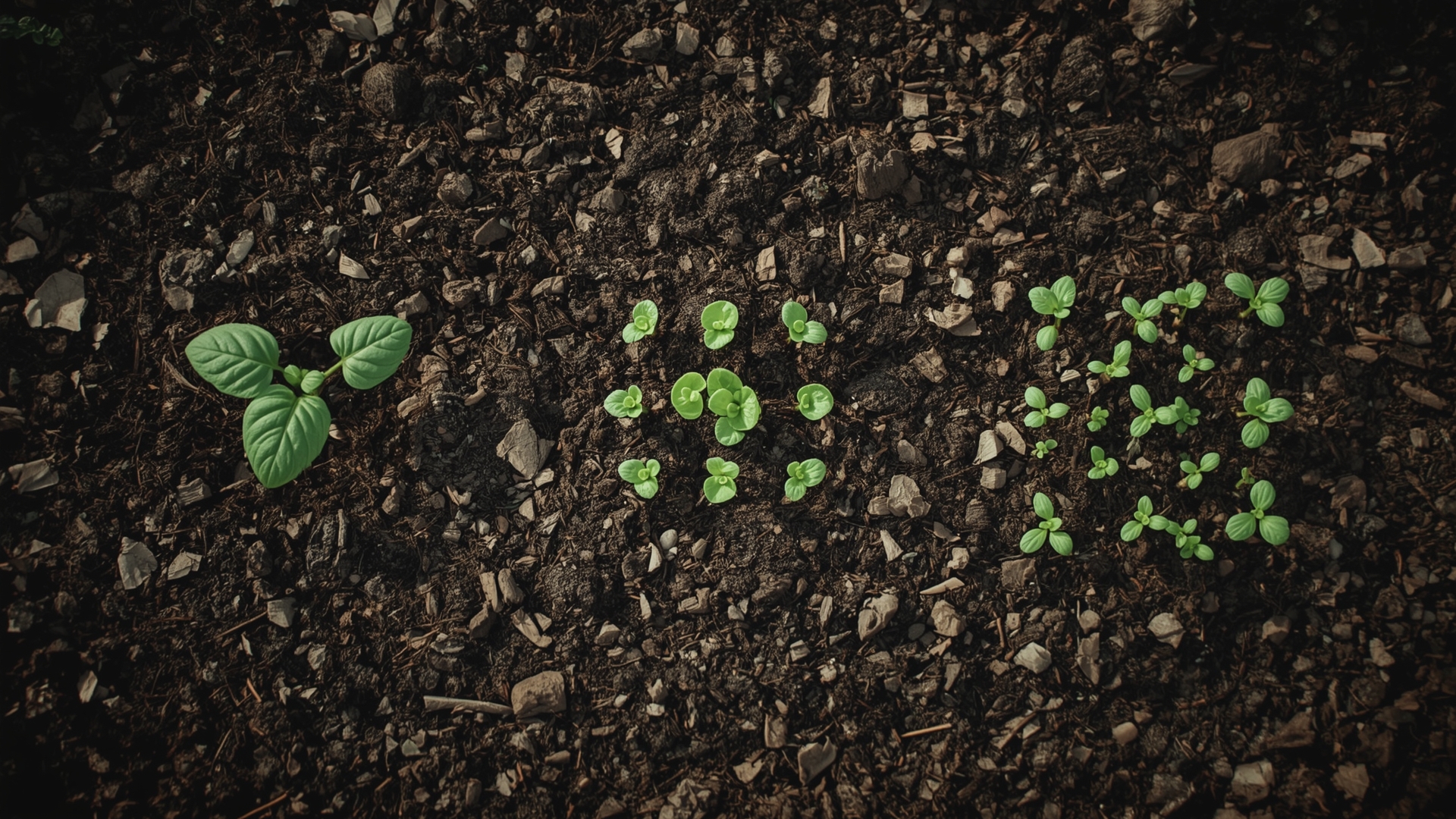
Quick Answer: Plant density per square depends on mature plant size. Large plants like tomatoes or peppers get one square each. Medium crops like lettuce or Swiss chard fit four per square. Small crops like radishes or carrots fit 16 per square.
This spacing system is based on the mature canopy size of each plant. You want leaves to touch their neighbors but not crowd them. That means you get maximum use of the soil without competing root zones strangling each other.
Square Foot Plant Spacing Reference by Crop
| Crop | Plants Per Square | Spacing (inches) | Mature Height | Days to Harvest |
|---|---|---|---|---|
| Tomato (indeterminate) | 1 | 12 inches | 4–6 ft | 60–80 days |
| Pepper | 1 | 12 inches | 18–24 inches | 60–90 days |
| Broccoli | 1 | 12 inches | 18–24 inches | 60–80 days |
| Cabbage | 1 | 12 inches | 10–15 inches | 70–120 days |
| Swiss chard | 4 | 6 inches | 12–18 inches | 50–60 days |
| Lettuce (leaf) | 4 | 6 inches | 6–10 inches | 45–60 days |
| Kale | 4 | 6 inches | 12–24 inches | 55–75 days |
| Bush bean | 9 | 4 inches | 12–18 inches | 50–60 days |
| Spinach | 9 | 4 inches | 6–10 inches | 40–50 days |
| Beet | 9 | 4 inches | 8–12 inches | 55–70 days |
| Radish | 16 | 3 inches | 6–8 inches | 22–30 days |
| Carrot | 16 | 3 inches | 6–8 inches (top) | 70–80 days |
| Green onion | 16 | 3 inches | 12–16 inches | 60–80 days |
What About Tall Plants and Vertical Space?
Tomatoes, cucumbers, pole beans, and peas can go in a square foot bed if you add a trellis or cage. Place tall plants on the north side of the bed so they don’t shade shorter crops to the south.
Vertical growing effectively gives you a second dimension of production. A single square with a tall trellis behind it can produce far more than its footprint suggests.
How Does Succession Planting Work in a Square Foot Garden?
Quick Answer: Succession planting means replanting a square immediately after harvest. When radishes finish in 25 days, you pull them and plant lettuce in the same square that same week. This keeps every square producing throughout the entire growing season.
A square foot bed without succession planting peaks once and then sits empty. Succession planting turns a single bed into a continuous production system.
The key is knowing your days-to-harvest for each crop. Short-season crops like radishes (25 days), spinach (40 days), and lettuce (50 days) are ideal succession crops. You can cycle through three or four plantings in one square before the season ends.
How Do You Plan a Succession Schedule?
Start with your first and last frost dates. Count backward from your last frost to find your final planting window for each crop. Then work forward from your first frost-free date to build a planting calendar.
A simple approach: stagger plantings by two to three weeks. Plant lettuce in square one on April 1st, square two on April 14th, and square three on April 28th. You’ll have staggered harvests instead of everything maturing at once.
What Crops Work Best for Succession Planting?
- Radishes – 22 to 30 days. The fastest succession crop you can grow.
- Lettuce (leaf varieties) – 45 to 60 days. Grows again after cutting if you harvest outer leaves.
- Spinach – 40 to 50 days. Best planted in spring and fall to avoid summer bolt.
- Arugula – 40 days. Bolts in heat, so plant in succession during cool seasons only.
- Bush beans – 50 to 60 days. Plant a new square every three weeks for extended harvests.
- Cilantro – 45 to 70 days. Bolts quickly; succession planting is the only way to have it all season.
How Does Square Foot Gardening Compare to Traditional Row Gardening?
Quick Answer: Square foot gardening uses about 20% of the space that row gardening needs for equal production. Row gardens are better for large-scale harvests of single crops. Square foot gardens suit small yards, mixed plantings, and gardeners who want variety over volume.
Row gardening made sense when horses and tractors needed room to turn. Most home gardeners don’t have that problem. They have a 10×10-foot patch behind the house and want to grow as much as possible in it.
That’s where the square foot system wins. It’s not better for every situation, but it’s clearly better for small-space, mixed-crop, hands-on gardening.
Side-by-Side Comparison: Square Foot vs. Row Gardening
| Factor | Square Foot Gardening | Traditional Row Gardening |
|---|---|---|
| Space required for equal yield | ~20% of row garden footprint | Full footprint with row paths |
| Water use | Up to 10x less (no bare soil) | High (watering paths and rows) |
| Weeding time | Minimal (dense planting crowds weeds) | High (open rows allow weed growth) |
| Soil preparation | No tilling, fill with Mel’s Mix | Annual tilling often required |
| Crop variety per season | High (many small batches) | Low (long rows of one crop) |
| Best for large single-crop harvest | No | Yes |
| Startup cost | Higher (bed construction + Mel’s Mix) | Lower (work existing ground) |
| Yield per square foot | Higher (dense planting) | Lower (spacing waste) |
When Does Row Gardening Make More Sense?
Row gardening is better when you’re growing large quantities of one crop for preserving or selling. Canning 50 jars of tomatoes or selling pumpkins at a farm stand makes more sense in a row layout where equipment can help.
For most home gardeners who want fresh produce throughout the season, square foot gardening is the more practical choice.
What Are the Most Common Square Foot Gardening Mistakes?
Quick Answer: The most common mistakes are using regular garden soil instead of Mel’s Mix, placing the bed in too little sun, planting too many of one crop, and skipping the grid. Each mistake either reduces yields or defeats the purpose of the system entirely.
Mistake 1: Skipping Mel’s Mix
Regular soil compacts under rain and irrigation. Once it compacts, roots struggle to penetrate it and water sits on the surface. Mel’s Mix stays loose season after season because vermiculite physically prevents the particles from pressing together.
Using cheap potting mix is a partial fix but not a full one. Potting mixes often lack the nutrient density of proper compost ratios and can still compact over time.
Mistake 2: Not Enough Sunlight
Most vegetables need six to eight hours of direct sunlight per day. A shaded bed produces weak, leggy plants that give poor yields even with perfect soil and spacing. Choose your bed location based on sun exposure first, everything else second.
Mistake 3: Overplanting One Crop
It’s tempting to fill four squares with tomatoes and two with zucchini. By July, you’ll have more than you can eat and nothing else growing. One tomato plant and one zucchini plant is often enough for a family of four.
Diversity is one of the core advantages of the square foot system. Use it. Fill your 16 squares with 8 to 10 different crops.
Mistake 4: Ignoring Vertical Space
A 4×4 bed without any vertical structure misses a significant opportunity. Adding a 6-foot trellis along the back edge of the bed for cucumbers, pole beans, or peas can double your effective growing area.
Mistake 5: No Succession Plan
Planting everything at once means everything matures at once. Then half the bed sits empty for the rest of summer. A written succession schedule, even a simple one on paper, prevents this completely.
How Do You Water a Square Foot Garden Efficiently?
Quick Answer: Water square foot gardens at the base of plants, not from overhead. Drip irrigation or a soaker hose delivers water directly to roots and keeps foliage dry, which reduces disease. A 4×4 bed needs roughly one inch of water per week during the growing season.
Dense planting reduces moisture loss from the soil surface. The leaves create a microclimate that shades the ground and slows evaporation. You’ll water far less than a row garden needs.
Hand watering works fine for one or two beds. For three or more beds, a simple drip irrigation setup on a timer saves significant time and keeps watering consistent even when you travel.
How Do You Know When to Water?
Push your finger one inch into the soil. If it feels dry at that depth, water. If it still feels damp, wait. Overwatering causes root rot and fungal disease far more commonly than underwatering does.
Can Square Foot Gardening Work in Containers or Small Spaces?
Quick Answer: Yes. The grid concept scales to any container or small raised bed. A single 2×2-foot planter divided into four squares can grow lettuce, radishes, herbs, and onions simultaneously. The spacing rules apply regardless of the container size.
Balconies, patios, rooftops, and even windowsills can support modified square foot gardens. The key is using Mel’s Mix or a quality lightweight growing medium in the container and choosing crops appropriate for the available depth.
Shallow containers (6 inches) work for lettuce, herbs, radishes, and green onions. Deeper containers (12 inches or more) open the door to peppers, tomatoes, and root vegetables.
Frequently Asked Questions
Do you need to replace Mel’s Mix every year?
You don’t need to replace the entire mix. Each season, top the bed off with one to two inches of fresh compost to replenish nutrients. The vermiculite and coir base stay functional for many years before needing refreshing.
Can you use square foot gardening for herbs?
Herbs are excellent candidates for the square foot system. Basil fits four per square. Parsley and cilantro fit nine per square. Chives fit 16 per square. Larger herbs like rosemary or sage need one square each due to their woody spread.
Is a 4×4 bed enough to feed a family?
A single 4×4 bed won’t feed a full family, but it will provide meaningful supplemental produce. Most experienced square foot gardeners recommend two to four 4×4 beds per adult to see consistent, meaningful harvests throughout the season.
What do you do with empty squares in winter?
Cover empty squares with a two-inch layer of compost and a protective cover like burlap or a cold frame. This protects the soil biology, prevents erosion, and prepares the bed for early spring planting. Some cool-season crops like kale and spinach can overwinter in milder climates.
Can you use square foot gardening in the ground without a raised bed?
Yes, though you lose some key advantages. In-ground square foot gardening requires amending existing soil with compost and coarse sand to improve drainage. You also lose the weed suppression and soil control that a raised box provides. It’s a workable budget alternative for those who can’t build a raised bed.
How do you handle pests in a square foot garden?
Dense planting naturally deters some pests by reducing visible soil and confusing insects that rely on open rows to find crops. Physical barriers like row cover fabric work well in confined beds. Many square foot gardeners also use floating row covers (lightweight fabric tunnels) to exclude aphids, cabbage moths, and cucumber beetles without chemicals.